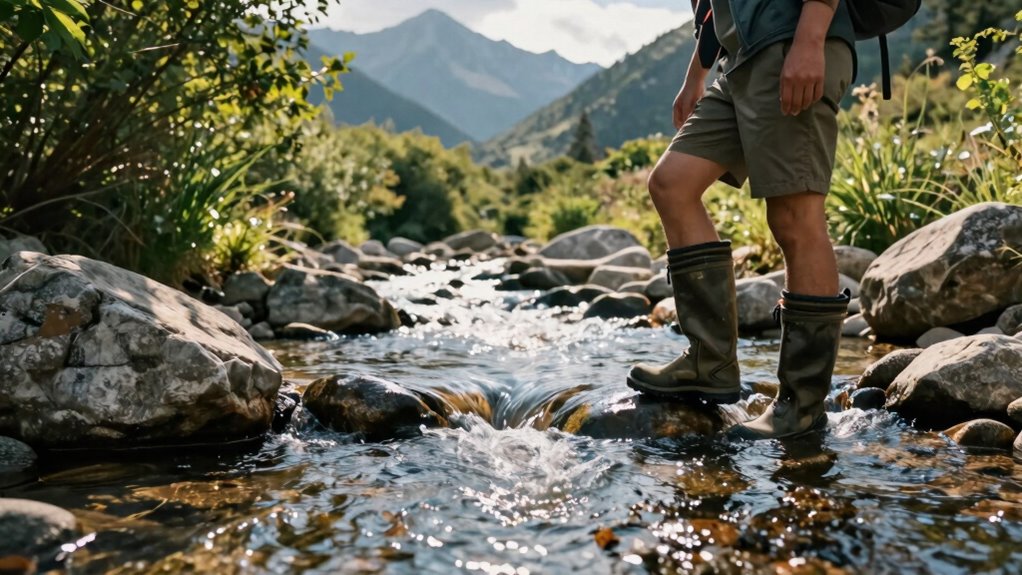

When tackling water crossings as a hiker, assess the risks first. Check the water depth, current strength, and surrounding terrain. Choose quick-drying footwear and use trekking poles for stability. Cross small streams by facing upstream and keeping your weight low, while for wider rivers, look for shallow points. Always be aware of the potential for flash floods and know what to do if the unexpected happens. There’s much more to learn about managing these crossings effectively.
Key Takeaways
- Conduct a thorough risk assessment of water depth, current strength, and surrounding terrain before attempting a crossing.
- Select quick-drying footwear and sturdy trekking poles to enhance stability and comfort during water crossings.
- Assess water clarity and conditions; use a stick to measure depth and be cautious of strong currents.
- Utilize proper crossing techniques, like facing upstream and taking small steps, to maintain balance and control.
- Stay alert for flash flood warning signs and seek higher ground immediately if conditions worsen.
As an affiliate, we earn on qualifying purchases.
Understanding the Risks of Water Crossings
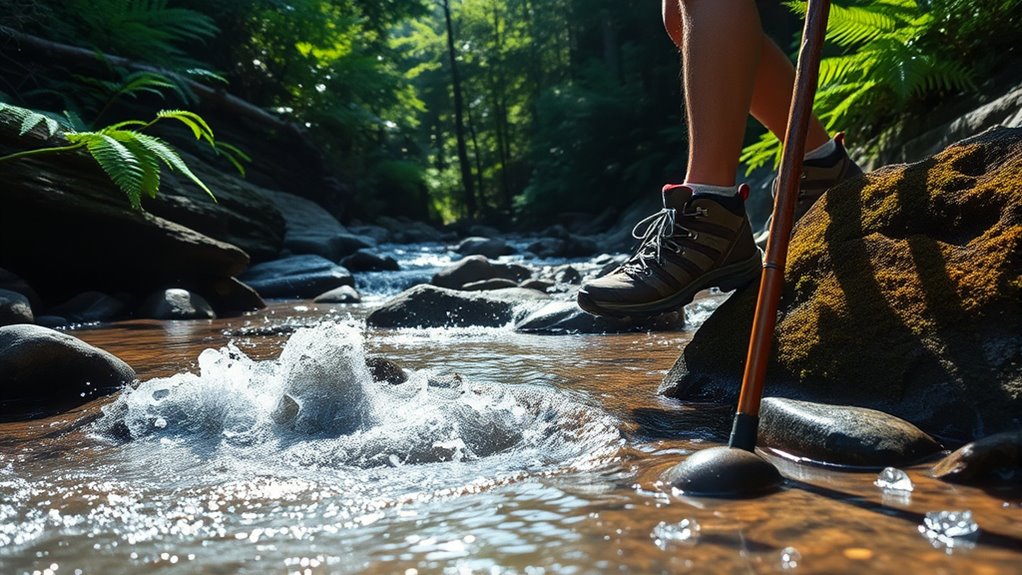
When you’re out on the trail, understanding the risks of water crossings is essential for your safety. Before attempting any crossing, conduct a thorough risk assessment. Evaluate the water’s depth, current strength, and the surrounding terrain. It’s vital to identify potential hazards like slippery rocks or sudden drops.
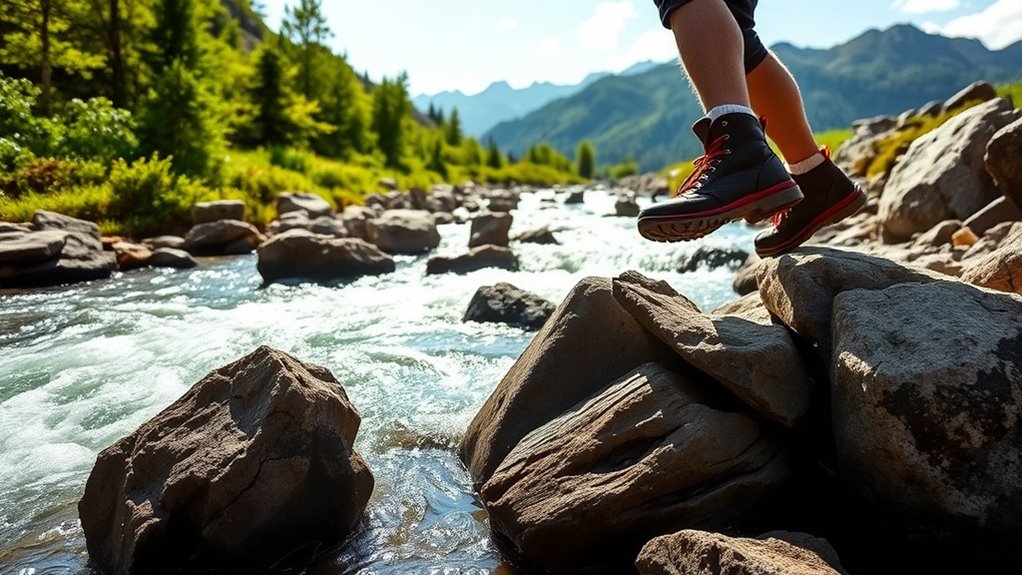
When you’re ready to cross, use effective crossing techniques. Position yourself sideways to the current, allowing your body to maintain balance. Keep your feet firmly planted and test each step before committing your weight. If the water looks too treacherous, don’t hesitate to find an alternative route or wait for conditions to improve. Always prioritize your safety over reaching your destination quickly; it’s better to be cautious than to risk injury.

Fizan Compact 3 Trekking Poles – 5.6 oz Ultralight, Backpacking, Thru Hiking Poles, Adjustable, Collapsible, Customized Fit, EVA Grips, Aluminum Walking Sticks (Compact 3 / Water Green)
- Made in Italy: 7001 aluminum construction and strong locking system
- Ergonomic EVA Grips: Cushioned, rounded top for comfort
- Breathable Hand Straps: Wider, smoother, reduces chafing
As an affiliate, we earn on qualifying purchases.
As an affiliate, we earn on qualifying purchases.
Essential Gear for Safe Water Crossings
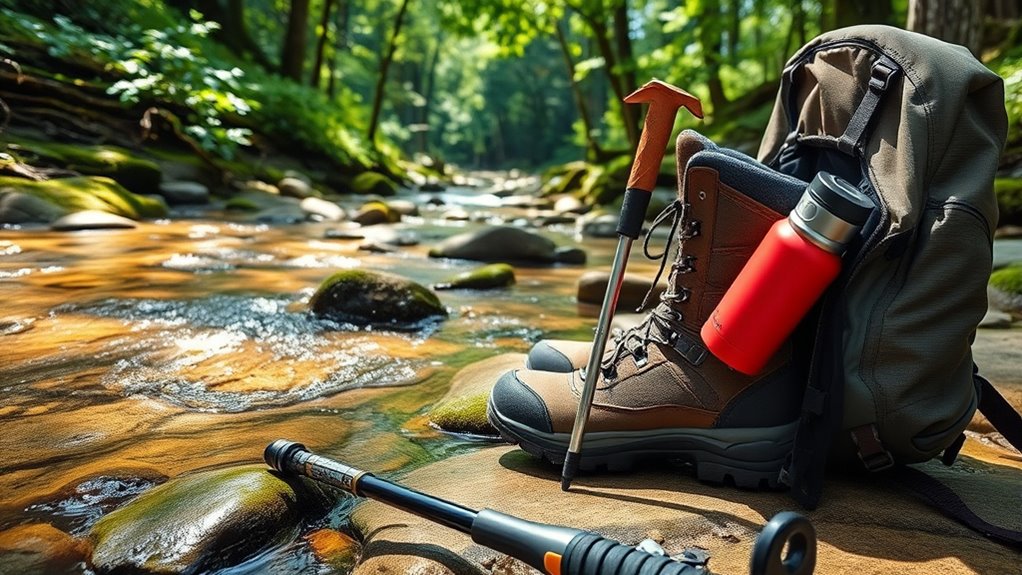
When you’re preparing for water crossings, having the right gear can make all the difference. Choosing the right footwear, using trekking poles for stability, and packing dry bags for your essentials are key steps to guarantee your safety. Let’s explore these items to help you cross with confidence. Proper pants fit can prevent chafing and discomfort during crossing, enhancing your overall experience. Additionally, selecting water-resistant clothing can keep you dry and comfortable in unpredictable conditions. Being aware of metal detecting etiquette can also help you avoid unnecessary hazards and respect the environment during your crossing. Understanding outdoor safety principles further ensures you’re prepared for unexpected situations in and around water. Familiarity with water crossing risk assessment can help you evaluate whether conditions are safe before attempting to cross.
Footwear Selection Tips
Choosing the right footwear for water crossings can make all the difference in your hiking experience. Look for shoes made from quick-drying footwear materials like mesh or synthetic fabrics, which help keep your feet comfortable and minimize weight. When it comes to traction types, opt for soles with aggressive lugs that provide grip on slippery rocks and wet surfaces. Waterproof options can be tempting, but they might trap water inside, so prioritize breathability instead. Consider using sandals or water shoes if you’ll be wading through shallow streams, as they allow for better drainage. Additionally, selecting footwear with high-quality traction features ensures better stability on uneven or slippery terrain. Ultimately, the right footwear will enhance your stability and confidence, making those water crossings safer and more enjoyable.
Trekking Poles Benefits
Trekking poles can be a game changer for hikers maneuvering water crossings. These versatile tools provide stability and support, helping you maintain balance on slippery rocks or uneven terrain. When selecting trekking pole types, consider adjustable poles for varying heights and shock-absorbing features for added comfort.
Employing proper trekking pole techniques is essential; plant your poles firmly in the water before stepping, and keep them slightly ahead of your body. This way, you distribute your weight evenly, reducing the risk of falls. Use a wide stance for better balance, and don’t be afraid to lean on your poles while crossing. With the right trekking poles and techniques, you’ll navigate water crossings confidently and safely.
Dry Bags Importance
Dry bags are essential for keeping your gear safe and dry during water crossings. When you’re out on the trail, unexpected splashes can quickly ruin your electronics, clothing, and food. The dry bags benefits include their waterproof design, lightweight materials, and versatility, making them perfect for various conditions. When choosing materials, look for durable options like nylon or vinyl that can withstand rough handling and sharp objects. A good dry bag should also have a reliable closure system to prevent leaks. Whether it’s a short creek or a wide river, using dry bags lets you focus on the hike without worrying about your gear getting soaked. Stay safe and dry by making dry bags a key part of your hiking essentials.

TANGYUGEN Water Shoes Men Women Outdoor Hiking Shoes Quick Drying Beach Aqua Shoes for Water Sport Diving Sailing Swim Travel Trailing Trekking Walking Climbing Sneakers Army Green
- Quick Drying and Breathable: Knit mesh upper for quick drying and breathability
- Lightweight and Durable: Stretchy rubber sole for protection and stability
- Non-Slip Traction: Anti-slip rubber outsole with reliable grip
As an affiliate, we earn on qualifying purchases.
As an affiliate, we earn on qualifying purchases.
Choosing the Right Crossing Technique
When you approach a water crossing, start by evaluating the depth to make certain it’s safe to proceed. Choosing the right footwear is essential, as it can provide the traction and support you need to navigate slippery surfaces. By taking these steps, you’ll set yourself up for a safer and more successful crossing.
Assessing Water Depth First
How can you guarantee a safe crossing when faced with a stream or river? First, assess the water depth. A good rule of thumb is to avoid crossing if the water reaches your thighs. Also, consider the water temperature; cold water can rapidly decrease your body temperature, increasing the risk of hypothermia. Next, evaluate the current strength. A swift current can easily knock you off balance or sweep you away, even in shallow water. If the current feels strong, it’s best to find another way or wait for conditions to improve. Always approach water crossings with caution—your safety depends on understanding these essential factors before making your move. Trust your instincts, and don’t hesitate to turn back if it feels unsafe.
Choosing Proper Footwear
After evaluating water depth and current strength, the next step is choosing proper footwear for your crossing. Selecting the right footwear materials and traction types can greatly impact your stability and safety. Here’s a quick reference:
| Footwear Type | Materials | Traction Types |
|---|---|---|
| Water Shoes | Synthetic mesh | Rubber soles |
| Hiking Boots | Leather/Synthetic | Lugged soles |
| Sandals | EVA foam | Textured rubber |
Water shoes offer flexibility and quick drying but may lack ankle support. Hiking boots provide stability and protection, while sandals are great for warm weather but may not be ideal for slippery surfaces. Choose wisely to guarantee a safe and successful crossing!

NORTIV 8 Men's Ankle High Waterproof Hiking Boots,Brown/Black/Tan,12
- Comfortable All-Day Wear: Removable cushioned insoles for support
- Lightweight & Flexible: EVA midsoles reduce fatigue and provide cushioning
- Non-Slip & Durable: High-quality rubber soles with advanced traction
As an affiliate, we earn on qualifying purchases.
As an affiliate, we earn on qualifying purchases.
How to Assess Water Depth and Current
Evaluating water depth and current is essential for safely crossing streams and rivers on your hike. Start by examining water clarity; murky water can hide dangerous obstacles. Measure the depth using a stick or your hiking pole, noting that deeper water increases risk. Pay attention to current strength; a strong current can sweep you off your feet. Environmental factors like recent rainfall or seasonal changes can alter conditions quickly, so always stay alert. Evaluate visibility conditions to gauge how well you can see the water’s surface and any potential hazards. Maintain a safety margin by choosing a crossing point that allows for easy retreat if things don’t look right. Always perform a risk evaluation before proceeding.
Best Gear for Small Stream Crossings
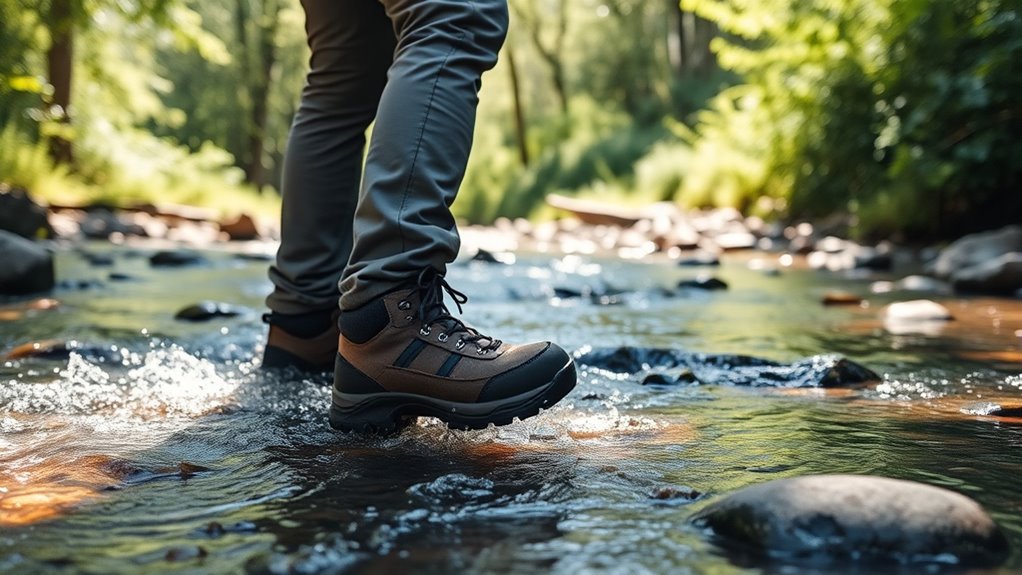
Once you’ve assessed the water depth and current, having the right gear can make all the difference during small stream crossings. First, consider wearing water-resistant footwear with good grip, like hiking sandals or shoes. They’ll keep your feet protected while allowing for better traction on slippery rocks. Trekking poles are also invaluable; they provide stability and help you maintain balance as you navigate the stream. For added safety, a quick-dry towel can be useful to dry off after crossing. When it comes to crossing techniques, always face upstream, step carefully, and use your poles to test the water depth ahead. With these gear recommendations in mind, you’ll tackle small stream crossings with confidence and ease.
Crossing Wider Rivers
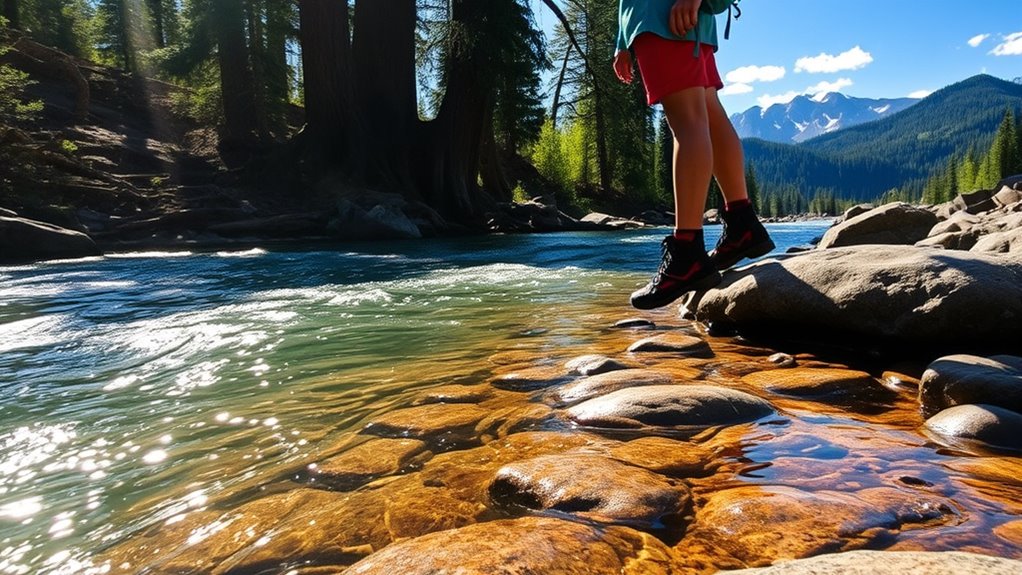
How do you confidently approach crossing wider rivers? First, assess the river’s current and depth to guarantee your safety. Look for a narrow point to cross, as it’s usually shallower. Use proper crossing techniques: facing upstream, take small steps, and keep your weight low. If possible, use a sturdy walking stick for balance. Always be aware of potential hazards like rocks or sudden drops. If you’re with a group, link arms for stability, but guarantee everyone’s comfortable with the crossing. Remember, river safety is paramount; don’t hesitate to turn back if conditions seem too risky. Trust your instincts, and never rush—take your time to navigate the crossing successfully. Your safety is worth the extra effort.
What to Do in a Flash Flood?
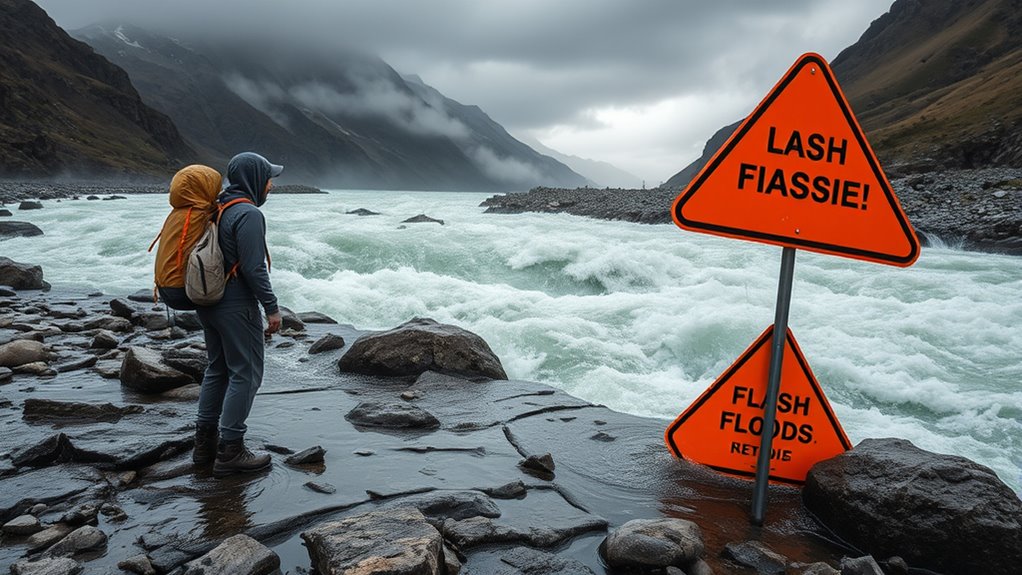
When you notice warning signs of a flash flood, it’s vital to act quickly. Your first step should be to seek higher ground immediately, as rising waters can be unpredictable. Stay informed constantly through weather updates to guarantee your safety throughout your hike.
Identify Warning Signs
As you navigate through the wilderness, it’s crucial to be aware of warning signs that indicate a potential flash flood. Look for dark, ominous clouds gathering quickly or a sudden drop in temperature—these are critical warning signals. If you hear a distant roar or notice sudden changes in water levels, treat these as serious hazard indicators. Watch for debris floating downstream or unusual water color changes, which can signal an impending flood. Additionally, be cautious of increased animal activity; wildlife often senses danger before you do. Trust your instincts—if something feels off, it’s better to err on the side of caution. Stay alert and informed, as recognizing these signs can save your life during unpredictable weather.
Seek Higher Ground
If you find yourself caught in a flash flood, seeking higher ground is your best course of action. First, identify the nearest elevation and head there quickly. Use higher ground strategies like moving to a hilltop or climbing a sturdy tree if necessary. Avoid low-lying areas where water gathers rapidly. As you ascend, keep an eye out for safe paths and obstacles.
Remember elevation safety tips: don’t rush; stay calm to prevent accidents. If you can’t reach higher ground, find a solid object to cling to until help arrives. Always prioritize your safety over your gear. Flash floods can be unpredictable, so be prepared to act swiftly and decisively. Your best chance of survival lies in elevation.
Stay Informed Constantly
Staying informed constantly is essential during a flash flood. You need to monitor the water level and stay updated on weather forecasts. Check your phone or a portable radio for alerts, and don’t rely solely on your surroundings; conditions can change rapidly. If you receive a warning, don’t ignore it. Move to higher ground immediately and avoid crossing any water bodies, as even a small stream can swell dangerously. Keep an eye on local news for updates that can help you plan your route to safety. Remember, it’s better to be cautious than to underestimate the power of rushing water. Always prioritize your safety by staying aware and prepared for sudden weather changes.
When to Turn Back: Recognizing Unsafe Conditions
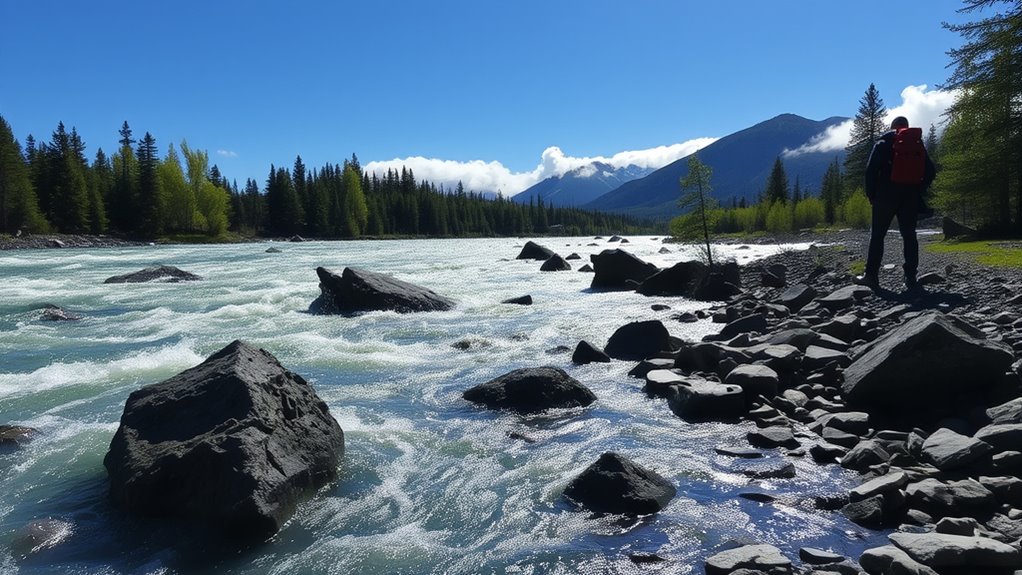
Recognizing when to turn back is crucial for your safety during water crossings, especially when conditions can change rapidly. Always assess the water’s depth, current speed, and visibility before crossing. If the water appears too deep or the current looks strong, consider turning back. You should also be cautious of rising water levels after rain or melting snow—these can create unsafe conditions in a matter of minutes. Pay attention to weather changes and listen to your instincts; if something feels off, it’s best to retreat. Remember, it’s not worth risking injury or worse just to push through. Prioritize your safety, and don’t hesitate to turn back if you doubt the crossing’s viability.
Practicing Water Crossings Before Your Hike
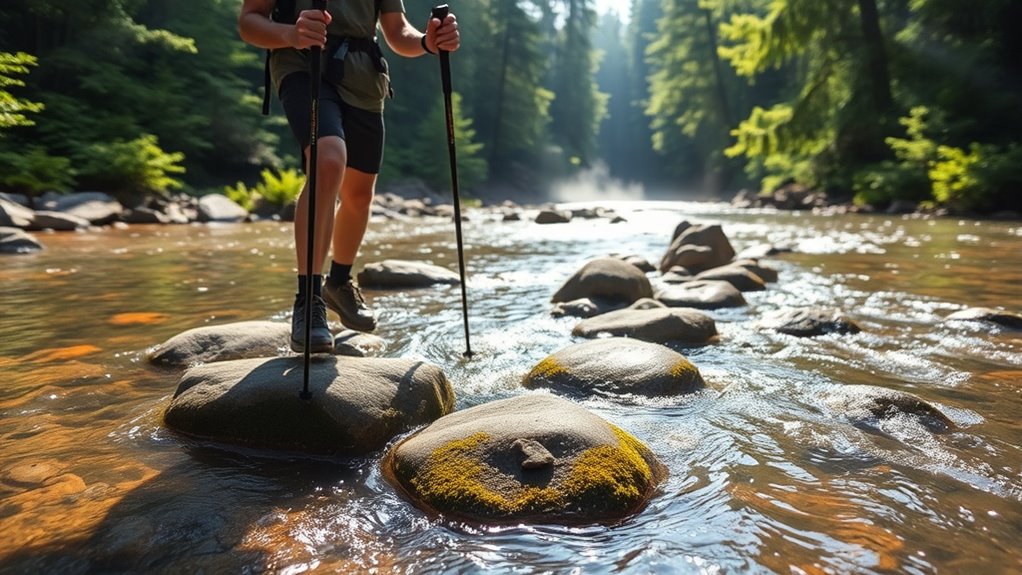
Before you hit the trail, it’s wise to practice water crossings to build your confidence and guarantee you’re prepared for the challenges ahead. Find a local stream or river where you can simulate various crossing scenarios. Start with shallow waters to learn basic crossing techniques, like using a sturdy walking stick for balance and positioning your body against the current. Gradually increase the difficulty by finding deeper or faster-moving water. Consider practicing with a partner to enhance safety and share tips. Each practice scenario helps you develop the skills needed to navigate real challenges effectively. Remember, it’s better to make mistakes in a controlled environment than to face unexpected situations on the trail.
Resources for Further Learning and Safety Tips
How can you guarantee you’re fully prepared for water crossings? Start by seeking out safety training programs that focus on outdoor navigation and water hazards. These courses can equip you with essential skills and knowledge. Additionally, consult resource guides that provide tips on gear, techniques, and local water conditions.
Here’s a quick reference table to help you:
| Resource Type | Examples |
|---|---|
| Safety Training | Wilderness First Aid, CPR |
| Resource Guides | “The Ultimate Hiking Guide”, Local Park Websites |
| Online Tutorials | YouTube Channels on Hiking |
| Hiking Forums | Reddit, Outdoor Gear Exchange |
Invest time in these resources, and you’ll feel more confident tackling water crossings safely.
Frequently Asked Questions
Can I Use Trekking Poles While Crossing Water?
Yes, you can use trekking poles while crossing water. Trekking poles offer stability and balance, making it easier to navigate slippery rocks or uneven surfaces. When crossing, plant your poles firmly in the water to gauge depth and support your weight. Keep your feet shoulder-width apart for better balance, and move slowly. Remember, the benefits of trekking poles can greatly enhance your safety during water crossings, so don’t hesitate to use them!
What Should I Do if I Drop Gear in the Water?
If you drop gear in the water, it’s like watching a piece of your adventure slip away. First, prioritize your safety—don’t rush into swift currents. Assess the situation; if it’s safe, wade in carefully to retrieve your gear. Use a sturdy stick or pole to reach for it if needed. Remember, gear recovery is essential, but water safety comes first. Always have a backup plan to prevent future mishaps!
How Can I Dry Wet Footwear Quickly?
To dry wet footwear quickly, remove the insoles and let them air out. Place your shoes in a warm, dry spot, avoiding direct sunlight. Stuff them with newspaper to absorb moisture and change the paper as needed. If you have a campfire, hold them at a safe distance to speed up drying. These quick drying tips will help you get back on your feet without soggy shoes slowing you down.
Are There Specific Water-Crossing Techniques for Different Terrains?
Yes, there are specific techniques for river crossings in different terrains. In rocky terrain, you’ll want to choose stable rocks and avoid slippery surfaces. Look for wider areas with slower currents to minimize risk and maintain balance. Use trekking poles for added support, and take your time. If the water’s deep, consider finding a safer route or using a buddy system to cross together, ensuring both your safety and stability.
Is It Safe to Cross Water During Heavy Rain?
Crossing water during heavy rain isn’t safe—about 50% of water-related accidents occur in such conditions. When the current weather worsens, river conditions can change rapidly, making even familiar crossings dangerous. Increased rainfall can elevate water levels and speed, leading to swift currents that can sweep you away. If you’re unsure about the safety of a crossing, it’s best to wait until conditions improve or find an alternative route. Always prioritize your safety!
Conclusion
To sum up, mastering water crossings can make your hiking adventures safer and more enjoyable. Remember to assess the conditions, gear up appropriately, and practice your techniques. Just like your smartphone helps you navigate trails, staying informed and prepared will keep you out of trouble. When in doubt, it’s always better to turn back than to risk your safety. So lace up those boots, stay cautious, and embrace the journey ahead! Safe trails!