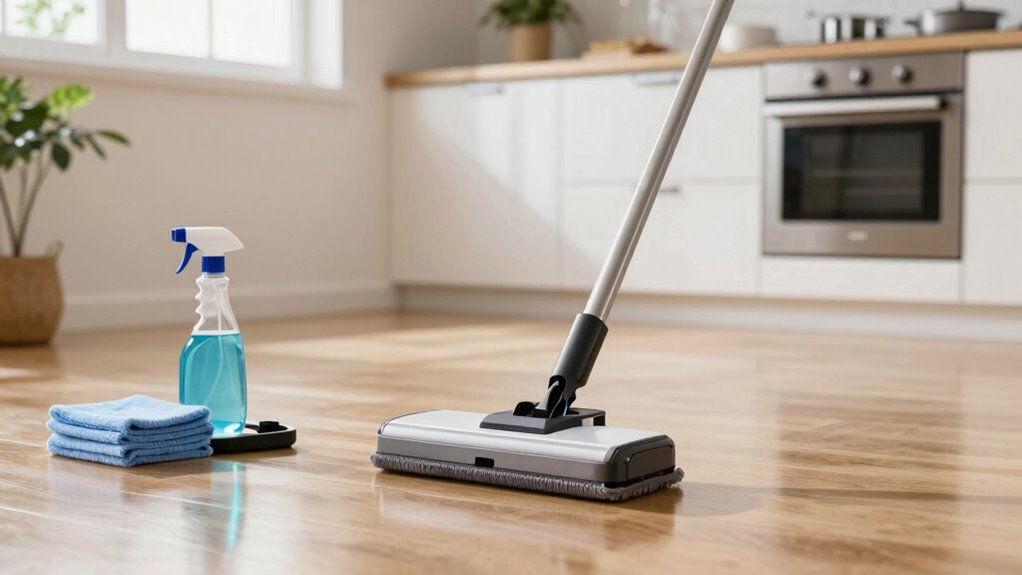

A robot mop is a high-tech device that automates cleaning floors, making your life easier. There are different types, like spin, wet and dry, and smart mops, each suited for various cleaning needs. When choosing a robot mop, consider features like sensor technology and battery life. Proper setup and maintenance will maximize efficiency. Plus, understanding pricing and performance can help you find the best fit. Stick around to discover more tips for choosing and using your robot mop effectively!

Get the little things that make your day delivered free with Prime
- Fast, free delivery on millions of items
- Prime Video, Amazon Music and more included
- Member-only deals all year
Key Takeaways
- Robot mops automate cleaning tasks using sensors and can be programmed for scheduled operations, making them convenient for busy households.
- Types include spin mops, wet and dry mops, smart mops, basic mops, and hybrid mops, catering to various cleaning needs and budgets.
- Essential features like navigation systems, battery life, and water tank capacity significantly impact cleaning efficiency and user experience.
- Regular maintenance, including charging, filter replacement, and pad cleaning, is necessary for optimal performance and longevity of the robot mop.
- Consider cleaning effectiveness on different surfaces and indoor air quality features when choosing a robot mop for your home.
robot mop with navigation system
As an affiliate, we earn on qualifying purchases.
As an affiliate, we earn on qualifying purchases.
What Is a Robot Mop and How Does It Work?
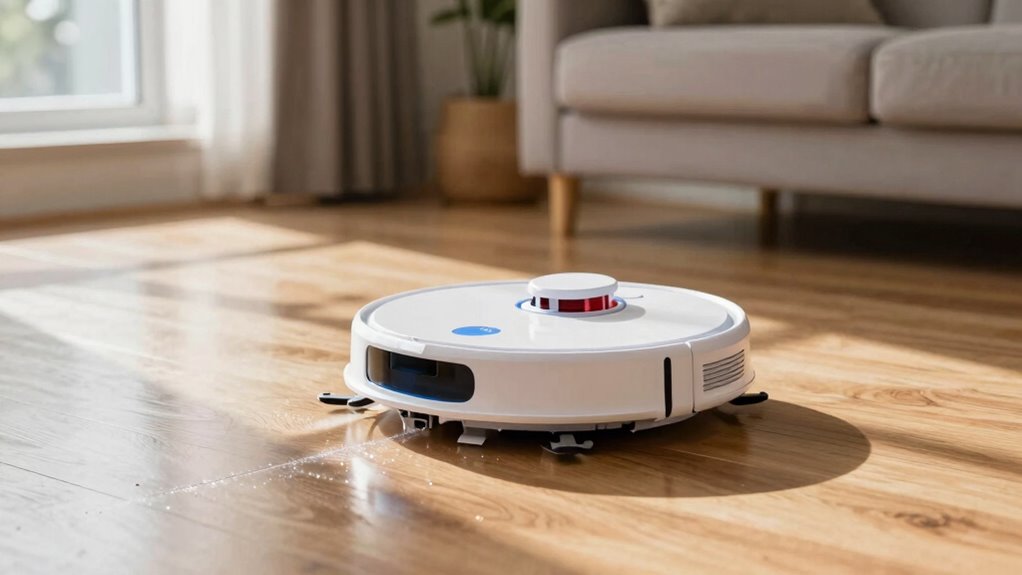
A robot mop is an innovative cleaning device designed to automate the tedious task of mopping your floors. Utilizing advanced robot mop technology, these devices navigate your home, efficiently tackling dirt and spills. Equipped with sensors, they map your space, ensuring they cover every corner without missing a spot. You can program them to operate on a schedule, so you’ll come home to clean floors without lifting a finger. The cleaning efficiency of a robot mop is remarkable; they use water and cleaning solutions to break down grime, leaving your floors sparkling. Plus, many models adapt to different surfaces, making them versatile for various floor types. With a robot mop, maintaining a clean home becomes effortless.
As an affiliate, we earn on qualifying purchases.
Different Types of Robot Mops: Which One Is Right for You?
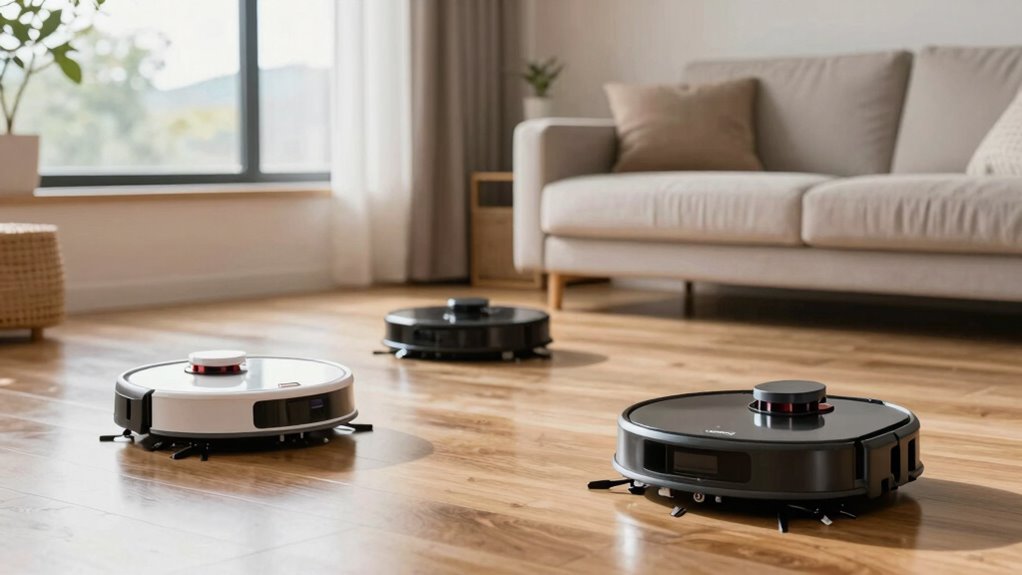
With various models available, choosing the right robot mop can feel overwhelming. Understanding different mop types can help you match one to your user preferences. Here’s a quick comparison:
| Mop Type | Best For | Price Range |
|---|---|---|
| Spin Mops | Stubborn stains | $150 – $300 |
| Wet and Dry Mops | Versatile cleaning | $200 – $400 |
| Smart Mops | Tech-savvy users | $300 – $600 |
| Basic Mops | Budget-friendly option | $100 – $200 |
| Hybrid Mops | All-in-one solution | $250 – $500 |
Consider your cleaning needs and budget. Whether you want advanced features or something simple, there’s a robot mop perfect for you!
smart robot mop with long battery life
As an affiliate, we earn on qualifying purchases.
As an affiliate, we earn on qualifying purchases.
Essential Features to Consider When Choosing a Robot Mop
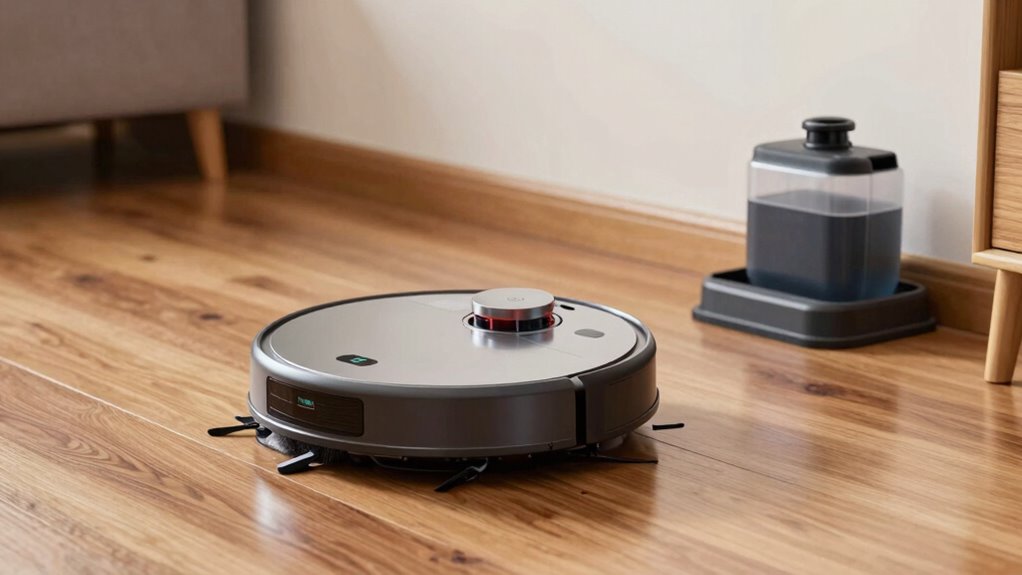
When selecting a robot mop, it’s essential to focus on important features that can enhance your cleaning experience. Key aspects can make a significant difference in efficiency and effectiveness. Here are some features to take into account:
- Sensor Technology: Guarantees the mop can detect dirt and navigate around obstacles. Incorporating advanced navigation systems can further optimize cleaning paths and coverage.
- Navigation Systems: Advanced systems allow for systematic cleaning patterns. Proper navigation helps in avoiding missed spots and reducing cleaning time.
- Battery Life: Longer battery life means less frequent charging and more cleaning time. This is especially important for larger areas or multiple rooms.
- Water Tank Capacity: A larger tank allows for extended cleaning sessions without constant refilling. Regular maintenance of water systems ensures consistent performance.
- Smart Features: Wi-Fi connectivity and app control let you schedule cleanings and monitor progress remotely. These features can also provide alerts for maintenance needs such as filter replacements.
- Filtration and Suction Mechanics: Understanding filtration and suction basics can help you choose a robot mop that effectively handles debris and dust while maintaining air quality. Proper maintenance of these components is crucial for optimal operation.
hybrid robot mop for all surfaces
As an affiliate, we earn on qualifying purchases.
As an affiliate, we earn on qualifying purchases.
Setting Up Your Robot Mop for Maximum Efficiency
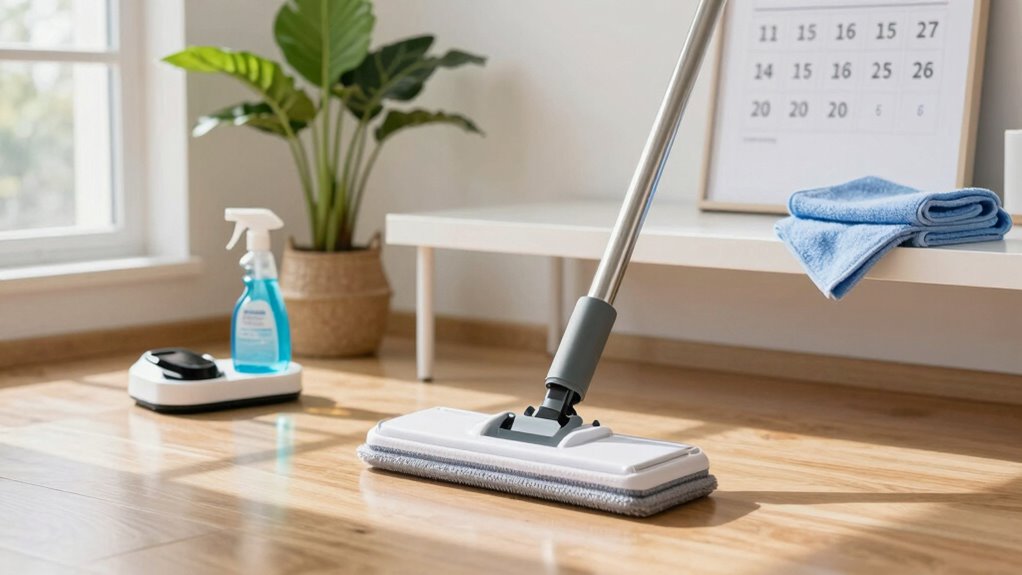
To guarantee your robot mop operates at peak performance, start by strategically placing it in your home. Choose a central location where the robot mop can easily access all areas. Make certain there are no obstacles like furniture or cables in its path for ideal cleaning. Next, set up the charging dock in a dry, level space, making sure it’s easily reachable for the robot mop. During the robot mop setup, connect it to your Wi-Fi network and download the accompanying app for easy control. Schedule cleaning sessions when you’re out or least active at home. Regularly check the water reservoir and cleaning pads to maximize efficiency. By following these steps, you’ll make certain your robot mop delivers high-quality cleaning results every time.
Maintaining Your Robot Mop: Best Practices
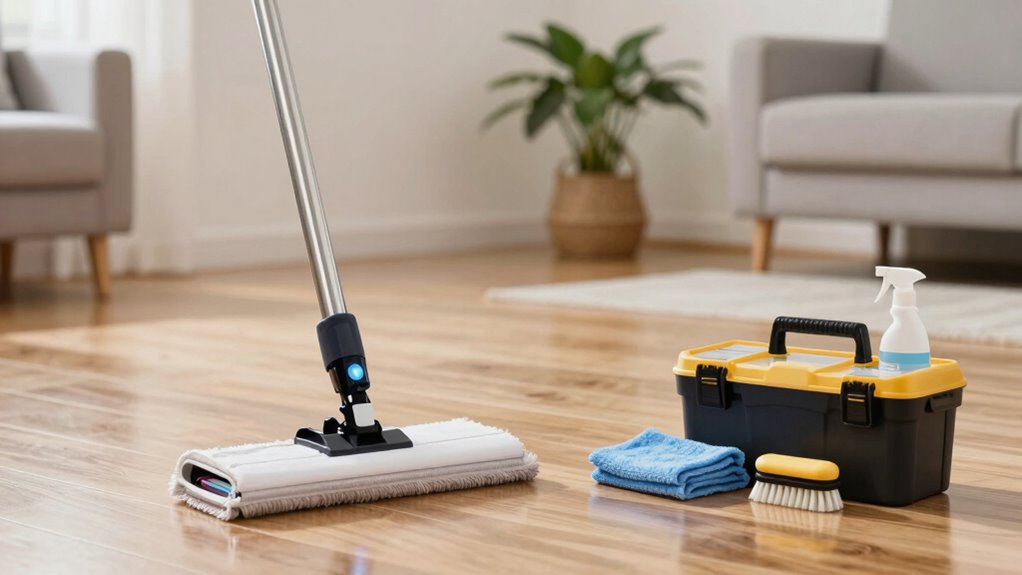
Maintaining Your Robot Mop: Best Practices
To keep your robot mop running smoothly, set up a regular cleaning schedule to prevent dirt buildup. Pay attention to battery maintenance and replace the filter as needed for peak performance. With these best practices, you’ll guarantee your robot mop stays efficient and effective. Additionally, regularly inspecting and cleaning your device’s HEPA filters can help improve air quality and prolong its lifespan.
Regular Cleaning Schedule
Although your robot mop does the heavy lifting of maintaining clean floors, establishing a regular cleaning schedule is essential for peak performance. Consider your cleaning frequency based on your lifestyle and scheduling preferences. A consistent routine helps your robot mop work more effectively, ensuring you always have clean floors. Regularly monitoring your robot’s performance can help identify when adjustments are needed to maintain optimal cleaning results. Keep track of any missed spots and adjust your schedule accordingly.
Battery Maintenance Tips
Keeping your robot mop in top condition involves more than just scheduling regular cleaning sessions; battery maintenance plays a significant role as well. To extend your battery lifespan, adopt good charging habits. Here are some tips to help you:
| Tip | Description | Benefits |
|---|---|---|
| Charge Regularly | Keep the mop charging after each use | Guarantees full battery |
| Avoid Deep Discharge | Recharge before it drops below 20% | Prolongs battery life |
| Store Properly | Keep in a cool, dry place | Prevents damage |
Filter Replacement Frequency
Regularly replacing the filter in your robot mop is essential for maintaining its cleaning efficiency, as a clogged filter can hinder performance and reduce suction power. Depending on usage, the filter lifespan can vary, but a good rule of thumb is to check it every month. Watch for replacement indicators such as reduced suction or visible dirt buildup.
To keep your robot mop running smoothly, consider these tips:
- Replace filters at least every 1-3 months.
- Clean the filter regularly to extend its lifespan.
- Monitor the condition of the filter after heavy cleaning sessions.
- Follow the manufacturer’s recommendations for filter types.
- Keep spare filters on hand for quick replacements.
Comparing Robot Mops: Price and Performance Factors
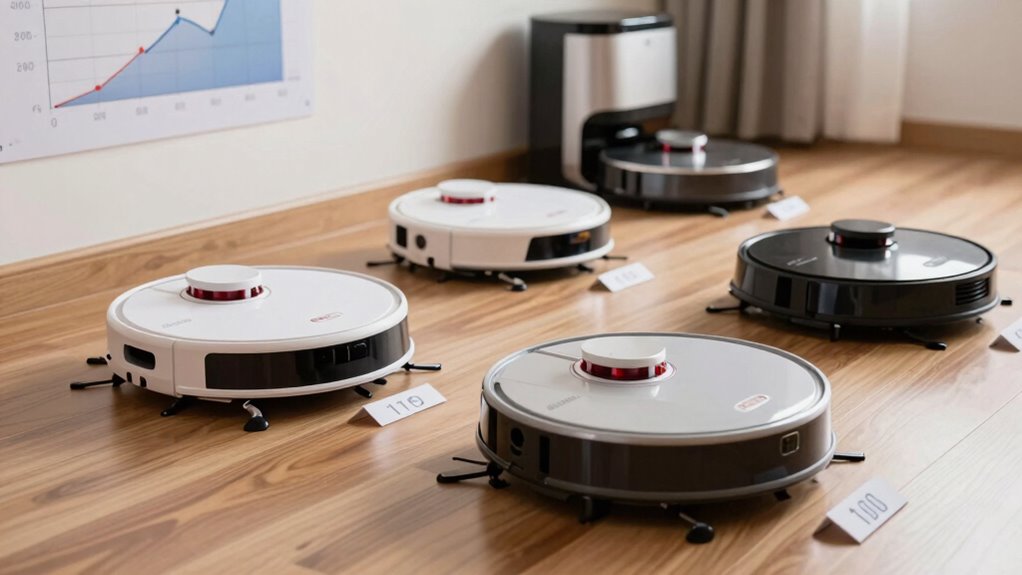
When choosing a robot mop, it’s essential to take into account both price and performance features. You’ll want to compare the price range of different models while evaluating the long-term value they offer. Additionally, considering top-rated models and their specific features can help identify options that balance cost with effectiveness, ensuring you select a device that meets your cleaning needs without overspending. It’s also helpful to look into effective stain removal methods and how well each model handles common messes to ensure comprehensive cleaning performance.
Price Range Overview
Choosing the right robot mop involves more than just picking a model that looks sleek; it’s essential to evaluate how price correlates with performance. Understanding budget considerations can help you find the best fit for your needs without overspending. Pricing trends in the robot mop market show a range of options, from budget-friendly to high-end models. Here are some factors to keep in mind:
- Basic models often lack advanced features.
- Mid-range options typically balance price and performance.
- Premium models may offer superior navigation technology.
- Battery life can vary considerably across price points.
- Warranty and customer support often improve with higher-priced units.
Performance Features Comparison
While price serves as a guiding factor in your choice of a robot mop, performance features play a pivotal role in determining how well the device meets your cleaning needs. You’ll want to compare performance metrics like suction power, battery life, and navigation technology. For instance, a robot mop with advanced mapping capabilities can enhance cleaning efficiency by covering more areas without missing spots. Additionally, consider how well it handles different floor types, as some models excel on hard surfaces while struggling with carpets. Remember, a higher price often reflects better performance features, but it’s essential to evaluate how these metrics align with your specific cleaning requirements. Ultimately, you want a robot mop that delivers value through effective cleaning.
Long-Term Value Assessment
To guarantee you get the best value from your investment in a robot mop, it is crucial to assess both price and performance factors over the long term. A thorough durability assessment helps you understand how well your mop will withstand wear and tear, while also considering potential cost savings. Additionally, understanding the home appliances and air systems ecosystem can provide insights into compatible accessories and maintenance best practices. Incorporating device longevity considerations can help you choose options that remain reliable over time and reduce the need for frequent replacements. Evaluating smart programming features can also enhance long-term efficiency and effectiveness of your cleaning routines. Moreover, assessing cleaning service quality and the availability of repair services can further influence your decision-making process. Furthermore, considering the impact of indoor air quality on your environment can influence the choice of features such as dust sensors and air filtration compatibility to optimize overall home health.
Can Robot Mops Really Get Your Floors Clean?
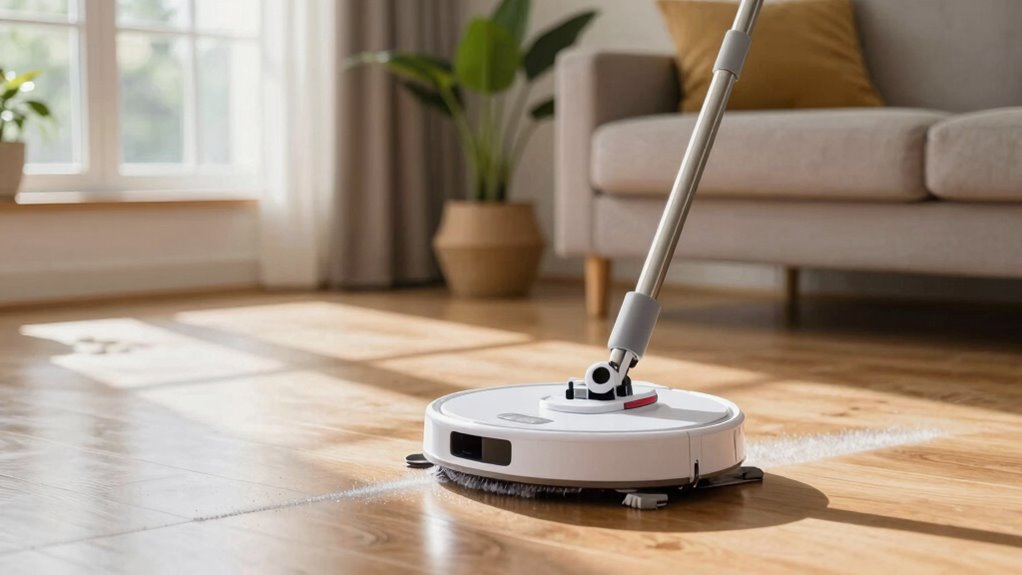
How effective are robot mops at cleaning your floors? These devices can be surprisingly efficient, especially on hard floor surfaces like tile and hardwood. They use a combination of sweeping and mopping actions to enhance their cleaning effectiveness. However, keep in mind that robot mops excel at light cleaning and maintaining already clean floors rather than deep cleaning heavily soiled areas.
For best results, regularly remove debris and make certain the mop pads are clean. While they can’t replace traditional mopping entirely, they’re great for daily upkeep. So, if you’re looking for a convenient way to keep your floors tidy, a robot mop might just be the solution you need!
Frequently Asked Questions
Can Robot Mops Work on Carpets or Just Hard Floors?
Robot mops typically excel on hard floors, but some models have carpet compatibility. These advanced mops can provide decent cleaning performance on low-pile carpets, using specialized features like scrubbing or suction. However, you shouldn’t expect the same level of cleaning as with traditional vacuum cleaners. If you’ve got a mix of surfaces, look for a robot mop designed for both to guarantee your carpets get the attention they need!
How Loud Are Robot Mops During Operation?
You might expect robot mops to roar like a lion, but they’re surprisingly gentle, operating at noise levels similar to a soft conversation. While you’re relaxing, they quietly glide across the floor, tackling dirt without disrupting your peace. Most models emit sound frequencies that hover around 50 to 60 decibels, making them perfect companions for homes where tranquility reigns supreme. So, you can enjoy clean floors without the chaos of traditional vacuuming!
Do Robot Mops Require Special Cleaning Solutions?
Robot mops don’t typically require special cleaning solutions; most are designed to work with plain water or mild detergents. To keep your robot mop in top shape, follow these maintenance tips: regularly clean the mop pads and water tanks, and avoid using harsh chemicals that could damage the system. By sticking to recommended cleaning solutions, you’ll guarantee effective cleaning and prolong your robot mop’s lifespan.
Are Robot Mops Effective on Pet Hair?
Yes, robot mops are effective on pet hair, especially if you choose a model designed for that purpose. Their cleaning efficiency improves with features like strong suction and specialized brushes that grab hair from various surfaces. To maximize performance, make sure you regularly empty the dustbin and clean the mop pads. This way, you’ll keep your floors spotless and free from pesky pet hair, making your cleaning routine much easier.
How Long Do Robot Mop Batteries Typically Last?
Robot mop batteries typically last between 90 to 120 minutes on a full charge. The battery lifespan can vary based on usage and model, but regular maintenance helps prolong it. Most robot mops take about 3 to 4 hours to fully recharge. To maximize efficiency, you should keep the charging dock accessible so your mop can recharge when needed, ensuring it’s always ready to tackle your cleaning tasks.
Conclusion
In the domain of automated cleaning, robot mops can be your trusty companions, subtly maneuvering around your home while you focus on life’s more delightful pursuits. Though they may not replace a thorough scrub, these clever devices can certainly lend a hand in maintaining your floors’ charm. By carefully selecting the right model and following best practices, you’ll invite a little extra ease into your routine—making your living space just a touch more inviting.
NFL season / tailgating Picks
team gear
As an affiliate, we earn on qualifying purchases.