To make a home first aid kit effective, include essentials like adhesive bandages of various sizes, antiseptic wipes, sterile gauze pads, medical tape, scissors, tweezers, gloves, and common pain relievers. You should organize everything in a sturdy, clearly labeled container for quick access. Regularly check your supplies for expiration or damage, and consider adding special items for kids, seniors, or allergies. Keep exploring to learn more about maintaining and using your kit efficiently.

Get the little things that make your day delivered free with Prime
- Fast, free delivery on millions of items
- Prime Video, Amazon Music and more included
- Member-only deals all year
Key Takeaways
- Stock various sizes of adhesive bandages, antiseptic wipes, and sterile gauze pads for different minor injuries.
- Include scissors, tweezers, gloves, and medical tape for safe wound care and handling.
- Add pain relievers, antihistamines, and personal medications tailored to household needs.
- Store supplies in a waterproof, clearly labeled container for quick and easy access.
- Regularly check and replace expired or used items to keep the kit ready for emergencies.
As an affiliate, we earn on qualifying purchases.
What Should Be in Your Home First Aid Kit?
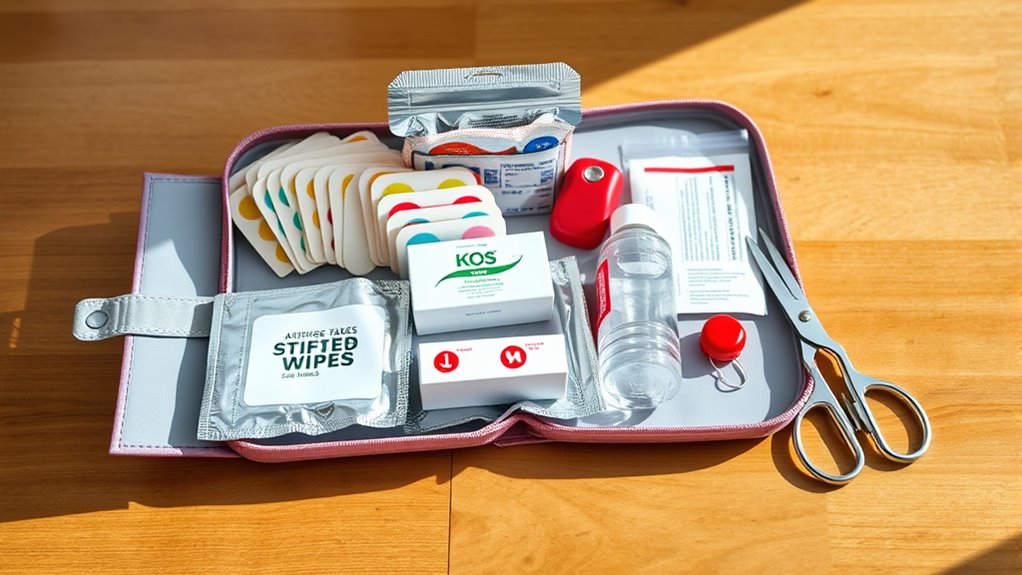
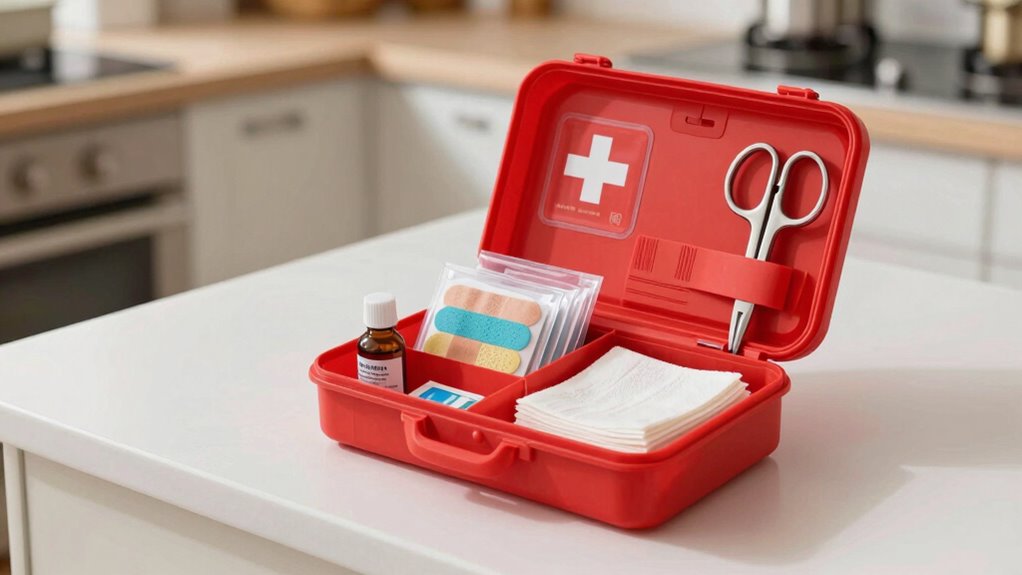
What essential items should you include in your home first aid kit? Your first aid kit essentials should cover basic medical needs and support emergency preparedness. Start with adhesive bandages of various sizes to treat cuts and blisters. Include antiseptic wipes and ointments to prevent infection. Have sterile gauze pads and medical tape for larger wounds. Scissors, tweezers, and gloves are vital for safe handling and removal of debris. Don’t forget pain relievers, antihistamines, and any personal medications. A digital thermometer and instant cold packs can help manage fevers and swelling. Keep a first aid manual nearby as a quick reference. Incorporating Free Floating elements like a flashlight or emergency whistle can be helpful during power outages or when signaling for help. Having these supplies on hand ensures you’re prepared for minor injuries, promoting safety and confidence during emergencies. Additionally, consider including emergency contact information and medical history cards to assist responders in case of serious incidents. Understanding the contrast ratio of your supplies and equipment can further enhance your preparedness by ensuring clear visibility and organization in critical moments. Proper storage methods help prevent contamination and ensure quick access when needed.
waterproof first aid kit container
As an affiliate, we earn on qualifying purchases.
As an affiliate, we earn on qualifying purchases.
How to Organize and Store Your First Aid Supplies for Quick Access

Properly organizing and storing your first aid supplies guarantees you can access what you need quickly during an emergency. Use a clear labeling system to identify each container’s contents, so you don’t waste time searching. Designate specific storage locations for different categories, such as bandages, antiseptics, and medications. Keep frequently used items in easily accessible spots, like a dedicated first aid cabinet or portable kit. Store all supplies in a sturdy, waterproof container to prevent damage. Arrange items logically, grouping similar supplies together. Regularly check and update your organization system to ensure everything remains in place and current. Good organization minimizes stress and saves valuable seconds when seconds count. Incorporating proper safety practices can also enhance your kit’s preparedness for diverse situations. Implementing a storage plan that considers potential emergencies ensures your supplies are ready when needed most. Additionally, maintaining a comprehensive inventory helps you keep track of what’s available and when supplies need replenishing. Periodic inventory assessments are essential to identify expired or depleted items, keeping your kit reliable in critical moments.
As an affiliate, we earn on qualifying purchases.
Using Your First Aid Kit for Common Minor Injuries
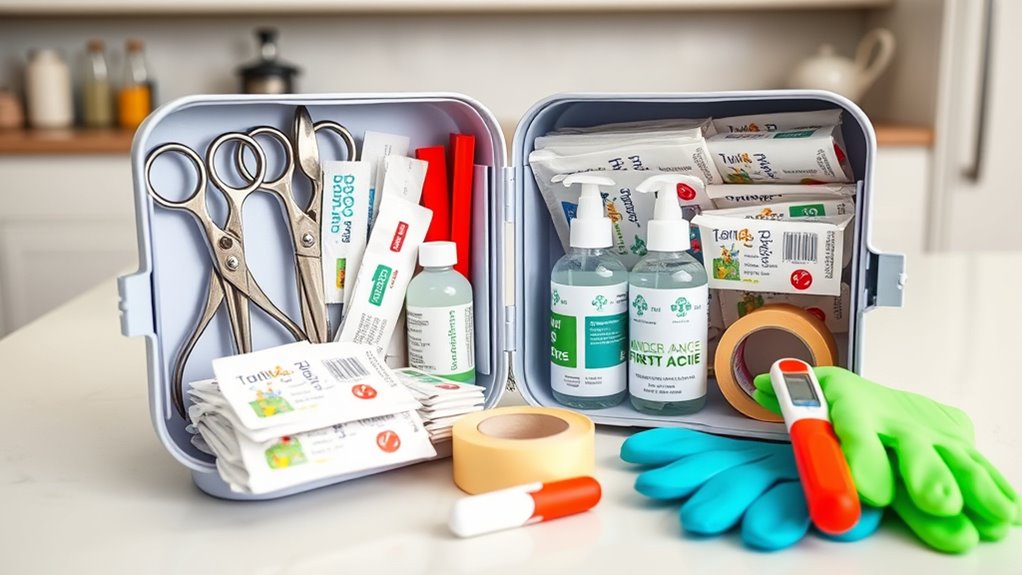
When minor injuries occur, knowing how to use your first aid kit efficiently can make a significant difference in providing immediate relief. For minor cuts, start by cleaning the area with soap and water, then apply an antiseptic wipe or solution from your kit. Cover the cut with a sterile bandage to prevent infection. For insect bites, use an antiseptic wipe to clean the area, then apply a cold pack or ice wrapped in a cloth to reduce swelling. If needed, use an antihistamine cream or take an oral antihistamine for itching. Always monitor the injury, and seek medical attention if it worsens or signs of infection appear. Proper storage of your first aid supplies can also ensure that your kits remain test accurate and ready for use when needed. Being prepared helps you handle common minor injuries quickly and confidently, minimizing discomfort and preventing complications.
As an affiliate, we earn on qualifying purchases.
Extra First Aid Supplies for Kids, Seniors, and Allergies
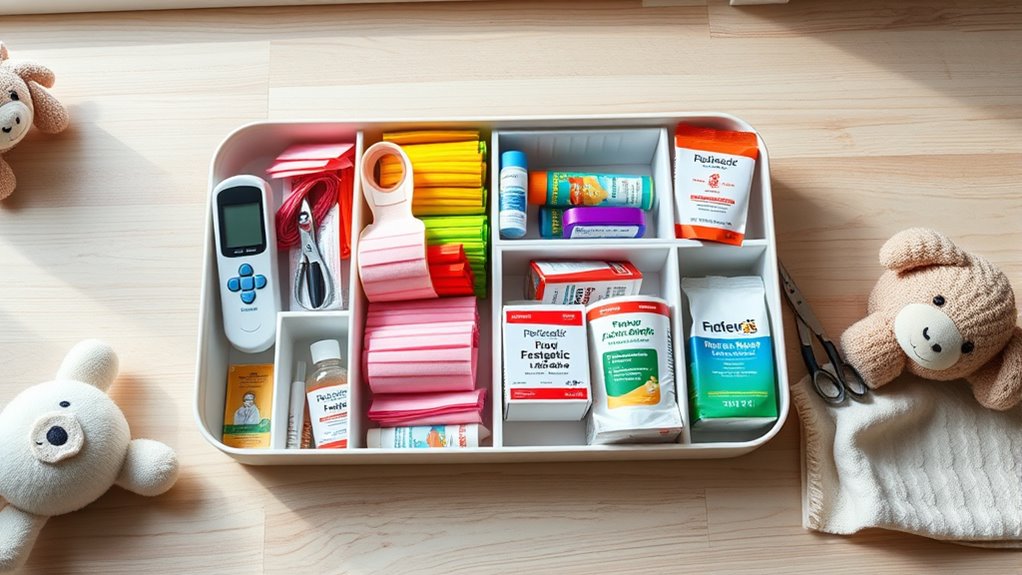
Adding extra supplies tailored for kids, seniors, and allergy sufferers guarantees you’re prepared for a wider range of emergencies. For child safety, include items like child-safe adhesive bandages, temperature-sensitive thermometer, and pediatric pain relievers. Seniors may need easy-to-open bandages, blood pressure monitors, and mobility aids. Allergy management requires antihistamines, allergy-specific medications, and epinephrine auto-injectors. Recognizing the importance of evidence collection can improve your response to emergencies, especially when documenting incidents involving children or seniors. Staying organized and aware of emergency preparedness can make a significant difference during urgent situations. Incorporating appropriate first aid supplies ensures you are ready for specific needs, helping you manage child safety, age-related issues, and allergies effectively. Here’s a quick guide:
| For Kids | For Seniors |
|---|---|
| Child-safe bandages | Easy-open dressings |
| Pediatric pain relievers | Blood pressure monitor |
| Thermometers | Mobility aids |
| Fever reducers | Hearing aids batteries |
Having these supplies ensures you’re ready for specific needs, helping you manage child safety, age-related issues, and allergies effectively. Also, including herbal remedies can be beneficial for minor ailments and stress relief in emergencies.
How to Check and Keep Your First Aid Kit Up to Date
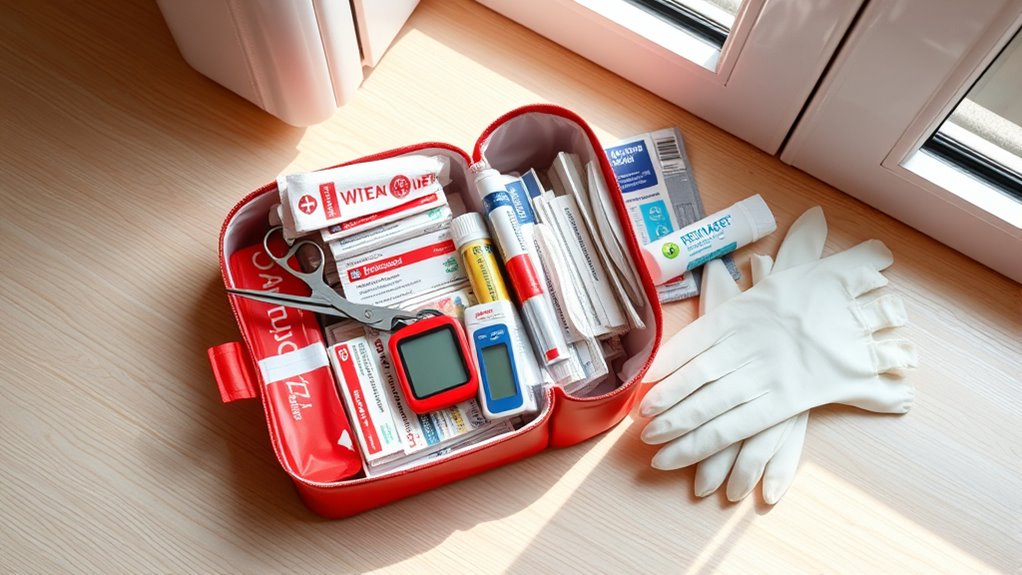
Regularly inspecting your first aid kit guarantees it’s ready when you need it most. Make it a habit to check your supplies at least once a month. Look for expired items, as supply expiration can compromise effectiveness and safety. Replace any used or damaged supplies immediately. Keep your kit organized so you can quickly find what you need during an emergency. Check the expiration dates on medications, ointments, and antiseptics, and discard anything past its prime. Updating your kit is a key part of emergency preparedness, ensuring you’re always prepared for minor injuries or accidents. Keep a list of supplies to restock, and review it regularly. Staying vigilant helps maintain a reliable, effective first aid kit that’s ready when it counts. Additionally, understanding first aid essentials can help you better assess which supplies are most crucial to keep on hand. Being aware of emergency preparedness strategies can further enhance your readiness in unexpected situations. Incorporating safety protocols into your routine can also help prevent injuries and reduce the need for first aid. Regular checks and first aid training are vital to ensure you can respond confidently during emergencies. For added peace of mind, consider keeping a first aid manual in your kit to guide you through unfamiliar situations.
Frequently Asked Questions
How Often Should I Replace Expired First Aid Supplies?
You should replace expired first aid supplies as part of regular first aid kit maintenance, ideally once a year or whenever you notice items have passed their expiration dates. Keep supply expiration updates in mind, and review your kit periodically to make certain all contents are safe and effective. This prevents using outdated materials during emergencies, ensuring you’re always prepared with reliable supplies. Regular checks are key to maintaining an effective first aid kit.
Can I Customize My First Aid Kit for Specific Health Conditions?
Ever thought about creating a custom kit tailored to your needs? Yes, you can definitely customize your first aid kit for specific health conditions by adding specialized supplies. Do you need extra allergy medication, diabetic supplies, or asthma inhalers? Including these items guarantees you’re prepared for your unique health risks. Personalizing your kit means you’re ready for emergencies that relate directly to your health, providing peace of mind and better care.
What Are Some Common Mistakes to Avoid With First Aid Kits?
You should avoid overpacking supplies, which can make your first aid kit bulky and hard to use quickly. Also, neglecting instructions on how to properly use or store items can reduce their effectiveness in emergencies. Keep your kit organized and only include essential items. Regularly check expiry dates and replace used or outdated supplies. Staying prepared means avoiding these common mistakes to make sure you’re ready when it really counts.
Are There Legal Requirements for First Aid Kits at Home?
Did you know that over 60% of households experience injuries requiring first aid? You should know that legal compliance for home first aid kits varies by location, with some regions having kit regulations for specific contents or accessibility. While there aren’t universal laws, ensuring your kit is well-stocked and accessible helps you stay prepared. Check your local regulations to make sure your kit meets any specific legal requirements.
How Do I Handle a Medical Emergency Before Professional Help Arrives?
If a medical emergency occurs, stay calm and assess the situation. If someone is unresponsive, perform CPR techniques by checking for breathing and giving chest compressions. For bleeding control, apply firm pressure with a clean cloth or bandage to stop the bleeding. Keep the person comfortable, monitor their condition, and call emergency services immediately. Your quick actions can make a crucial difference until professional help arrives.
Conclusion
Think of your home first aid kit as a safety net—always there when you need it most. Just like a well-tied knot holds tight, keeping your supplies organized and current guarantees you’re prepared for life’s unexpected scrapes and bumps. Regularly checking your kit is like tightening that knot, so it doesn’t come loose when you need it most. Stay proactive, stay prepared, and you’ll be ready to handle minor injuries with confidence.
Halloween Picks
halloween
As an affiliate, we earn on qualifying purchases.