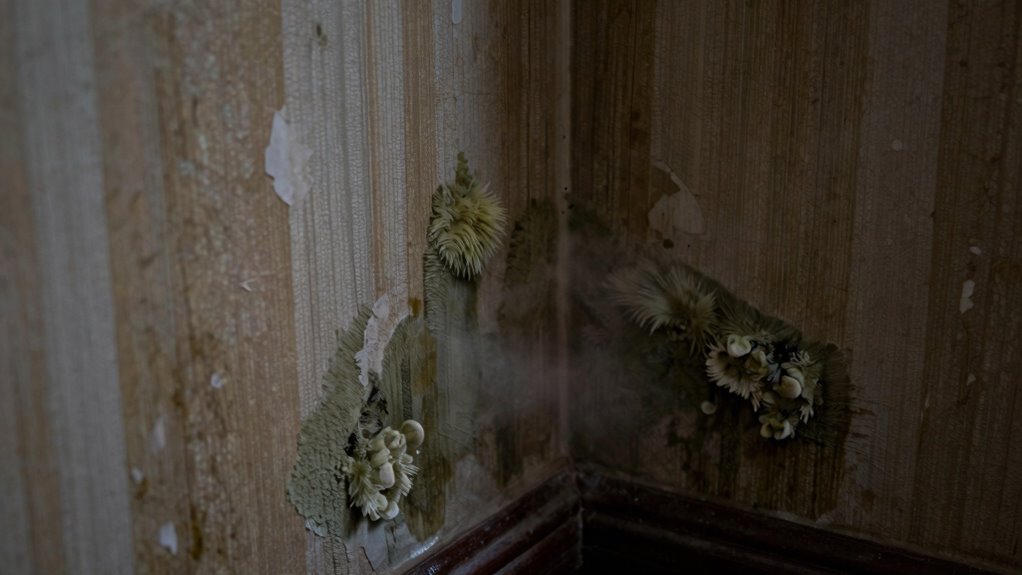

If you notice a persistent musty smell, visible patches of mold, or water stains on your walls and ceilings, you could have hidden mold. Symptoms like allergy flare-ups, sneezing, or irritated eyes also signal potential mold issues, especially if they worsen indoors. Keep an eye on moisture problems, such as leaks and condensation, since mold thrives in damp environments. Stay alert—additional clues are available if you continue exploring the signs and how to address them.

Get the little things that make your day delivered free with Prime
- Fast, free delivery on millions of items
- Prime Video, Amazon Music and more included
- Member-only deals all year
Key Takeaways
- Persistent musty odors often indicate hidden mold behind walls or inside HVAC systems.
- Visible mold patches on surfaces such as walls, ceilings, or windows signal potential mold growth.
- Water stains, discoloration, or peeling paint suggest ongoing or past moisture issues conducive to mold.
- Health symptoms like sneezing, coughing, and irritated eyes may point to indoor mold exposure.
- High indoor humidity above 60% and moisture buildup in bathrooms, basements, or kitchens promote mold development.
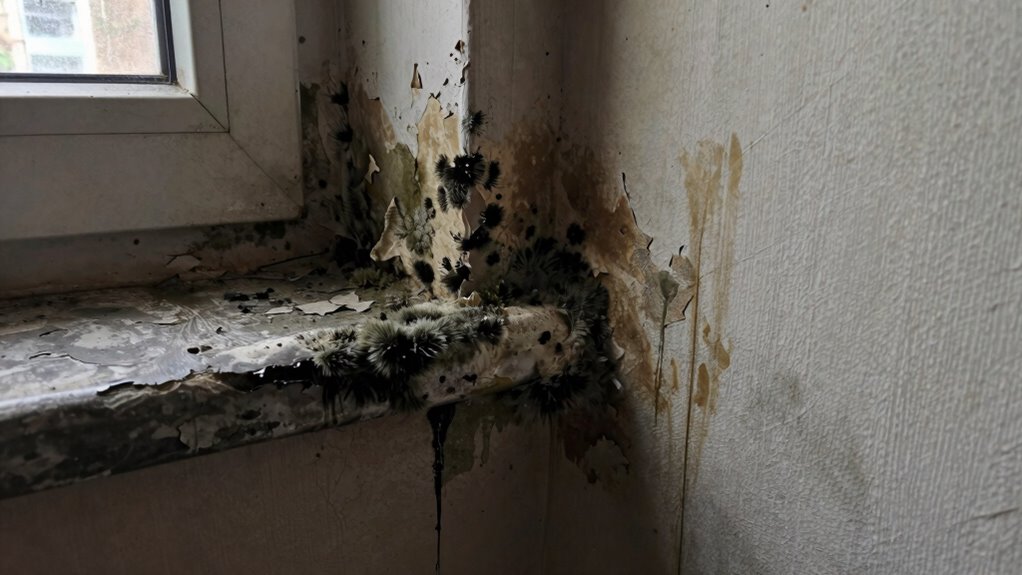
Indoor mold can often go unnoticed until it starts causing health issues or damaging your property, making it essential to recognize the warning signs early. Mold thrives in damp, humid environments, and its presence can substantially impact your indoor air quality. Poor air quality caused by mold spores can lead to respiratory problems, allergies, and other health concerns. Being aware of the signs can help you take quick action to prevent mold growth before it becomes a major problem.
Early detection of indoor mold prevents health issues and property damage. Stay alert to signs and act promptly.
One of the most noticeable signs is a persistent musty smell that seems to linger in specific areas of your home. This odor often indicates mold growth hidden behind walls, under flooring, or inside HVAC systems. If you notice this smell, it’s a clear sign that your indoor air quality is being compromised, and you should inspect your home for mold. Visible mold growth is another obvious warning sign. It appears as black, green, or white patches on surfaces like walls, ceilings, or around windows. Don’t ignore these spots—they often indicate an ongoing moisture problem that needs immediate attention.
You may also notice health symptoms such as sneezing, coughing, irritated eyes, or respiratory issues that worsen indoors but improve when you’re outside. These symptoms are common with mold exposure and can be especially problematic for allergy sufferers or those with asthma. If you experience these symptoms regularly and notice they coincide with certain areas in your home, it could be due to hidden mold. Addressing the source of moisture and improving ventilation are key steps in mold prevention and maintaining healthy air quality.
In addition to health signs and visible mold, look out for water stains, discoloration, or peeling paint on walls and ceilings. These are signs of past or ongoing water damage, which creates the perfect environment for mold to grow. Check areas prone to excess moisture, like bathrooms, kitchens, and basements, regularly. Even small leaks or condensation can lead to mold if left unchecked. Keeping humidity levels below 60%, using exhaust fans, and fixing leaks promptly are essential moisture control strategies. Proper ventilation can significantly reduce moisture buildup and inhibit mold development. Understanding the importance of proper ventilation and moisture control can significantly reduce mold risks in your home. Regularly inspecting your home for hidden mold and moisture problems is crucial for maintaining a healthy living environment. Recognizing indoor mold warning signs early can save you time, money, and health issues in the long run.
As an affiliate, we earn on qualifying purchases.
Frequently Asked Questions
Can Indoor Mold Cause Long-Term Health Issues?
Yes, indoor mold can cause long-term health issues. When you breathe in mold spores, it can lead to persistent respiratory issues, especially if you’re exposed over time. Mold triggers allergic reactions and worsens asthma symptoms, which may become chronic. Prolonged exposure can even cause more severe problems like lung infections or other health complications. It is crucial to address mold promptly to protect your long-term health and prevent these issues from developing.
How Quickly Does Mold Grow After Water Damage?
Mold can start growing within 24 to 48 hours after water damage, so acting fast is essential. You can slow this process by improving air circulation and controlling humidity levels. Keep indoor humidity below 60%, ideally around 30-50%, and use fans or dehumidifiers. Quick response helps prevent mold spores from settling and multiplying, reducing health risks and property damage. Stay vigilant and act promptly to protect your home.
Are All Mold Types Visible or Detectable Without Testing?
Not all mold types are visible or detectable without testing because hidden spores can grow behind walls or under flooring. You might see some mold, but others are hidden, making mold identification tricky. If you suspect mold but see no signs, it’s best to get professional testing. This way, experts can identify hidden spores and determine the type of mold present, ensuring you address the problem effectively and safely.
What Is the Best Method to Prevent Indoor Mold?
Think of your home as a garden—keeping it healthy means preventing mold growth. To do this, you should improve ventilation by opening windows or using exhaust fans, and control humidity levels to stay below 60%. Regularly fixing leaks and cleaning damp areas also helps. These steps create an environment less inviting to mold, ensuring your indoor space stays dry, healthy, and mold-free.
Can I Remove Mold Myself, or Should I Hire a Professional?
You can attempt DIY cleaning if the mold is minor and confined to a small area, using mold-resistant paints afterward to prevent future growth. However, for larger infestations or if mold keeps returning, it’s best to hire a professional. They have specialized equipment and expertise to safely remove stubborn mold, especially if it’s caused by hidden issues or extensive damage. Your safety and health should always come first.
As an affiliate, we earn on qualifying purchases.
Conclusion
Being aware of indoor mold warning signs can protect your health and home. Look out for musty odors, discoloration, or persistent allergies—these are clues mold might be lurking. Did you know that over 70% of indoor environments have some mold presence? Catching it early can save you from costly repairs and health issues. Stay vigilant, and don’t ignore these signs—they’re your first line of defense against hidden mold threats.
As an affiliate, we earn on qualifying purchases.
As an affiliate, we earn on qualifying purchases.
Halloween Picks
halloween
As an affiliate, we earn on qualifying purchases.