
Choosing the right mini split size for your garage or detached room is key to staying comfortable and saving energy. An undersized unit won’t cool or heat effectively, leading to discomfort and higher bills. An oversized system will cycle on and off often, wasting energy and causing wear. Proper sizing considers your space’s size, insulation, and usage patterns. Keep these factors in mind, and you’ll find out how to optimize your system for long-term comfort and efficiency.
Listen free for 30 days with Audible
Thousands of audiobooks and originals — cancel anytime.
As an affiliate, we earn on qualifying purchases.
Key Takeaways
- Properly size mini splits based on room size, insulation, and usage to ensure effective temperature regulation and energy efficiency.
- Ductless mini splits are ideal for garages and detached rooms due to easier installation and reduced energy loss.
- Accurate sizing prevents frequent cycling or insufficient heating/cooling, enhancing comfort and system longevity.
- Good insulation and ventilation improve system performance and overall energy savings in outbuildings.
- Choose units with high SEER ratings and inverter technology for optimal efficiency and long-term cost savings.
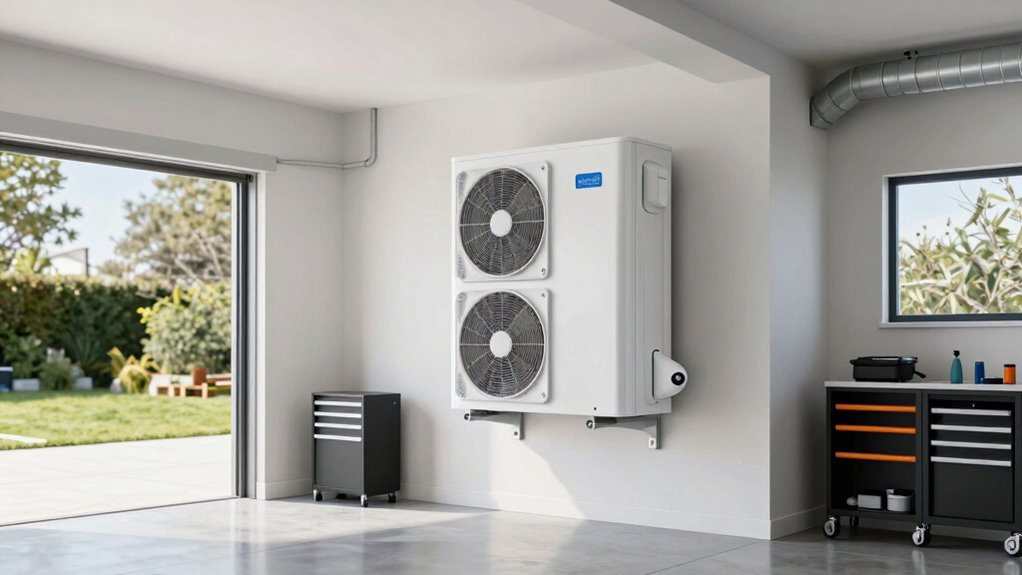
When you’re installing a mini split in a garage or detached room, choosing the right size is essential for efficient heating and cooling. An undersized unit won’t effectively regulate temperature, leading to discomfort and higher energy bills. Conversely, an oversized system will cycle on and off too frequently, wasting energy and wearing out faster. To find the perfect fit, you need to consider the space’s size, insulation, and usage patterns. Proper sizing ensures your mini split operates efficiently, saving you money while maintaining comfort.
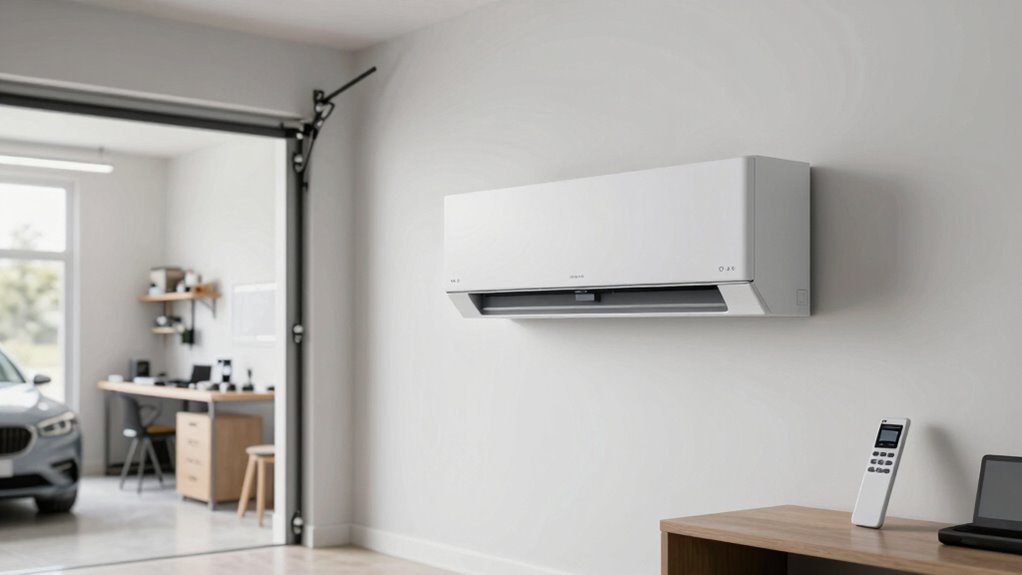
Deciding between ductless and ducted systems plays a significant role in your choice. Ductless mini splits are popular for garages and detached rooms because they are easier to install and more energy-efficient. They don’t require bulky ducts, which often lose energy through leaks or poor insulation. Ductless systems deliver conditioned air directly into the space, minimizing energy loss and providing precise temperature control. Ducted systems, on the other hand, involve a network of ducts to distribute air from a central unit. While they can be more discreet and suitable for larger or multi-room setups, they tend to be less energy-efficient due to duct leakage and additional maintenance.
Energy efficiency is a crucial factor when selecting a mini split for an outbuilding. A correctly sized ductless system uses inverter technology to adjust its compressor speed based on the room’s needs, reducing energy consumption. Proper sizing ensures the system doesn’t run constantly or cycle too often, both of which waste energy. Also, look for units with high SEER (Seasonal Energy Efficiency Ratio) ratings, indicating better energy efficiency. Proper insulation of the garage or detached room further boosts efficiency, ensuring the conditioned air stays inside and reduces the workload on your mini split. Additionally, understanding mini split sizing is vital to selecting the most efficient system for your space. A thorough assessment of building insulation can significantly impact the overall energy savings and comfort. Recognizing how room usage patterns influence system requirements can help optimize your setup for maximum efficiency. Incorporating proper ventilation can also enhance overall comfort and energy performance in your outbuilding, especially when considering indoor air quality and air exchange needs.
mini split AC heating system for garage
As an affiliate, we earn on qualifying purchases.
As an affiliate, we earn on qualifying purchases.
Frequently Asked Questions
How Energy-Efficient Are Mini Splits Compared to Traditional HVAC Systems?
Mini splits are generally more energy-efficient than traditional HVAC systems. They offer significant energy savings because they allow you to heat or cool specific areas, reducing wasted energy. This targeted approach also lowers environmental impact by decreasing overall energy consumption. Plus, their modern design and advanced technology often result in better efficiency, helping you save money on energy bills while being eco-friendly.
Can a Mini Split Be Installed Without Professional Help?
You can try DIY installation, but it’s a case of “bite off more than you can chew.” Mini split installation involves electrical work, refrigerant handling, and mounting skills, making it tricky for beginners. Skipping professional help may save money upfront, but cost considerations include potential errors or damage. For safety and efficiency, it’s best to retain a pro to guarantee proper setup and avoid costly mistakes later on.
What Is the Typical Lifespan of a Mini Split System?
A mini split system typically lasts between 12 to 20 years with proper maintenance. To guarantee longevity, follow maintenance tips like regularly cleaning filters and checking for refrigerant leaks. Installation requirements should be strictly followed to avoid early failure, so professional help is recommended for ideal setup. Proper upkeep and correct installation can maximize your mini split’s lifespan, keeping it efficient and reliable for many years.
Are Mini Splits Suitable for Extreme Weather Conditions?
Imagine your garage or detached room staying cozy even as storms rage outside—that’s what mini splits with extreme weather durability can do. They’re designed to handle harsh conditions, but proper insulation is key to maximizing their performance. While they generally perform well in cold or hot weather, you’ll want to check specific models for extreme temperatures. With the right setup, you can enjoy reliable comfort year-round, no matter the weather outside.
How Noisy Are Mini Split Units During Operation?
Mini split units are generally quiet during operation, with noise levels often ranging between 30-50 decibels, similar to a soft conversation. You might notice some sound from the compressor or fan, but good sound insulation can reduce this noise further. If noise is a concern, look for models with quiet operation features, and consider installing soundproofing around the unit to keep your garage or detached room peaceful.
ductless mini split for detached room
As an affiliate, we earn on qualifying purchases.
As an affiliate, we earn on qualifying purchases.
Conclusion
Choosing the right mini split size is like finding the perfect key to access comfort. When you select wisely, your garage or detached room becomes a sanctuary, a cozy nook where every season feels just right. Think of your mini split as a trusted guardian, ensuring your space remains a haven amid the unpredictable weather outside. With the right fit, you create a warm embrace of comfort, turning your extra room into a true retreat.
high SEER mini split air conditioner
As an affiliate, we earn on qualifying purchases.
As an affiliate, we earn on qualifying purchases.
inverter mini split for energy efficiency
As an affiliate, we earn on qualifying purchases.
As an affiliate, we earn on qualifying purchases.
NFL season / tailgating Picks
team gear
As an affiliate, we earn on qualifying purchases.