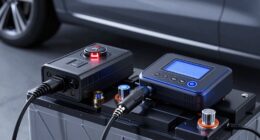

Your tire inflator’s duty cycle tells you how long you can safely operate it within a set period to prevent overheating. Maintaining pressure accuracy is key to proper tire inflation and safety; regular calibration and checks help keep readings reliable. Environmental factors like heat or dust can affect performance, so follow manufacturer guidelines closely. Proper maintenance, understanding your inflator’s limits, and staying attentive to calibration details help guarantee safe, efficient use—continue to explore for more useful tips.

Get the little things that make your day delivered free with Prime
- Fast, free delivery on millions of items
- Prime Video, Amazon Music and more included
- Member-only deals all year
Key Takeaways
- The duty cycle indicates how long the inflator can operate safely within a specific period to prevent overheating.
- Maintaining pressure accuracy requires regular calibration and verification with reliable gauges.
- Environmental factors like heat, humidity, and dust can impact inflator performance and measurement precision.
- Staying within the recommended duty cycle prolongs equipment life and ensures consistent inflation.
- Troubleshooting involves checking calibration, adhering to safety protocols, and servicing when necessary.
Understanding your tire inflator’s duty cycle and pressure accuracy is essential for safe and efficient inflation. When you’re working with air compressors or portable inflators, knowing how long they can operate continuously without overheating or losing precision helps prevent damage and ensures your tires are inflated correctly. The duty cycle indicates the amount of time your inflator can run within a specific period, typically expressed as a percentage. For instance, a 50% duty cycle means you can operate the device for 5 minutes out of every 10-minute cycle without risking overheating. Staying within this limit keeps your equipment safe and functioning at its best, preventing premature wear or failures.
Understanding your inflator’s duty cycle and pressure accuracy ensures safe, efficient tire inflation and prolongs equipment lifespan.
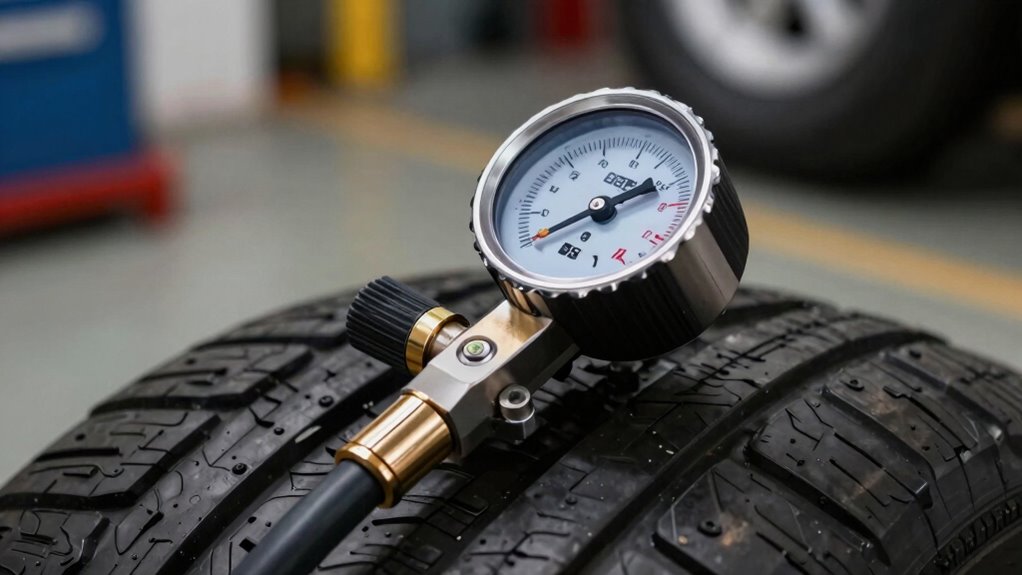
Pressure accuracy is just as critical. If your inflator isn’t calibrated properly, you might overinflate or underinflate your tires, leading to safety hazards or reduced performance. To guarantee precise pressure readings, it’s important to understand the calibration standards that manufacturers follow. These standards ensure your device maintains accuracy over time, but they also require you to periodically verify and recalibrate your inflator, especially if you notice inconsistent readings. Regular calibration helps you meet safety protocols, which are designed to protect both you and your equipment. Safety protocols recommend checking your inflator’s accuracy before each use, particularly if you’ve had it stored for a long period or subjected it to rough conditions.
You should also consider the environment in which you operate your inflator. High temperatures, humidity, or dust can affect both the duty cycle and pressure accuracy. To maintain safety and performance, follow the manufacturer’s guidelines for proper maintenance and calibration. These often include specific procedures for recalibration and recommendations on operating conditions. Using a reliable pressure gauge to verify your inflator’s readings periodically is a smart safety measure, ensuring you’re always working with precise data. Additionally, understanding the duty cycle limitations of your inflator helps you prevent overheating and extend its lifespan. Proper maintenance practices are crucial for ensuring your inflator remains accurate and safe over time. Recognizing the impact of environmental conditions can also help you avoid issues caused by external factors.
Being aware of how external factors influence your inflator’s performance allows you to take proactive steps in environmental adaptation, ensuring consistent and safe operation regardless of conditions. Lastly, understanding these factors means you’re better equipped to troubleshoot issues and recognize when your inflator needs servicing or replacement. It’s worth investing time in learning about your device’s specifications and adhering to calibration standards and safety protocols. Doing so not only extends your equipment’s lifespan but also guarantees a safer, more precise inflation process. When you prioritize proper duty cycle management and pressure calibration, you’re taking crucial steps toward safer, more reliable tire maintenance, reducing risks on the road and ensuring your equipment performs at its best.
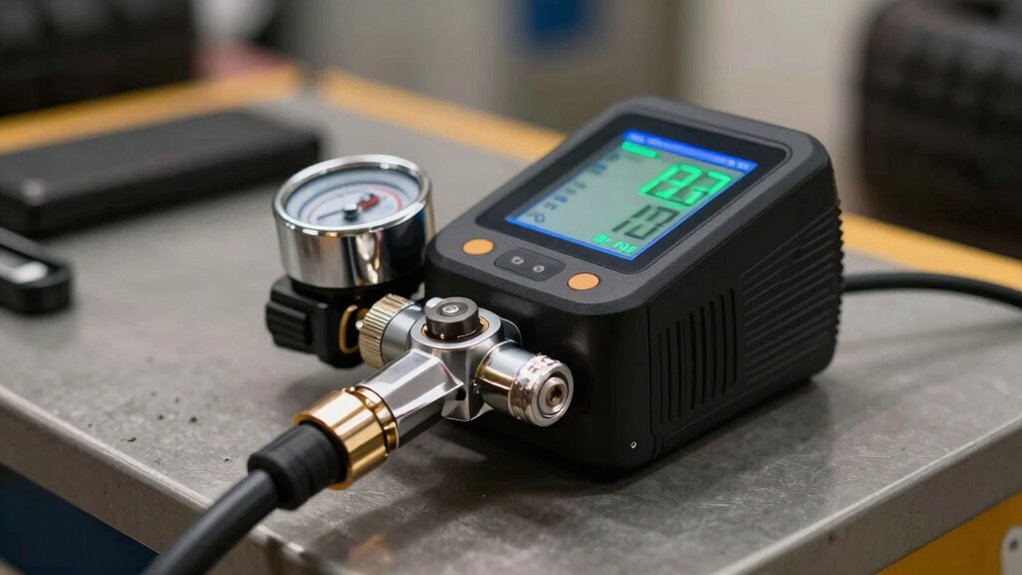
digital tire inflator with calibration
As an affiliate, we earn on qualifying purchases.
As an affiliate, we earn on qualifying purchases.
Frequently Asked Questions
How Does Temperature Affect Tire Inflator Pressure Readings?
Temperature fluctuations directly impact your tire inflator pressure readings because, as the temperature rises, air expands, causing pressure to increase. Conversely, cooler temperatures lead to air contracting, resulting in lower pressure readings. This pressure variation can give you inaccurate results if you don’t account for ambient temperature changes. Always check and adjust your tire pressure in consistent conditions or after allowing your inflator to stabilize to guarantee accurate readings.
Can Duty Cycle Impact Inflator Lifespan?
Yes, duty cycle can impact inflator durability. If you use your inflator beyond its recommended duty cycle, it overheats, which accelerates wear and shortens its lifespan. Frequent usage increases the risk, especially if you don’t allow the device to cool down between uses. To extend your inflator’s lifespan, stick to the specified duty cycle and avoid overworking it during high-usage periods.
Are Digital Inflators More Accurate Than Analog?
Digital inflators are generally more accurate than analog ones because they provide precise pressure readings instantly, reducing guesswork. With digital versus analog, you get clear, easy-to-read displays that help you inflate tires accurately each time. Analog models rely on gauges that can be harder to read and less precise. So, if accuracy matters most, selecting a digital inflator guarantees better inflation control and consistent tire pressure maintenance.
How Often Should I Calibrate My Pressure Gauge?
You should calibrate your pressure gauge at least once a year—it’s as essential as breathing for accuracy. Regular calibration ensures your gauge’s longevity and keeps your tire pressures spot-on. If you notice inconsistent readings or use it frequently, consider calibrating every six months. Proper calibration prevents inaccuracies that could lead to unsafe driving, saving you money and stress. Stay proactive to maintain precision and extend your gauge’s life.
What Safety Precautions Are Recommended During Tire Inflation?
During tire inflation, you should always wear eye protection and gloves to prevent injuries from sudden air releases or debris. Make certain your vehicle is on a stable surface and the tire is cool to avoid overheating. Keep a safe distance from the tire when inflating, as rapid air release can cause injury. Being cautious helps prevent tire safety issues and reduces inflation hazards, keeping you safe throughout the process.
portable air compressor with high duty cycle
As an affiliate, we earn on qualifying purchases.
As an affiliate, we earn on qualifying purchases.
Conclusion
Just like Icarus aimed for the sun, you shouldn’t push your inflator beyond its duty cycle or rely on shaky pressure readings. Knowing your inflator’s limits keeps you grounded and safe, ensuring your tires are always ready for the road ahead. Remember, a well-maintained inflator and accurate pressure are your trusty wings—without them, even the boldest journeys can falter. Stay vigilant, and steer clear of pitfalls that could ground your ride.
digital pressure gauge for tires
As an affiliate, we earn on qualifying purchases.
As an affiliate, we earn on qualifying purchases.
automotive inflator with safety features
As an affiliate, we earn on qualifying purchases.
As an affiliate, we earn on qualifying purchases.
NFL season / tailgating Picks
team gear
As an affiliate, we earn on qualifying purchases.