To choose window coverings for heat control, consider your climate and sun exposure. Select insulating materials like cellular shades or heavy drapes in colder months, and use reflective coatings or window films in summer to block heat. Match your coverings to your room’s layout and purpose for ideal energy efficiency. Layering treatments or selecting innovative, automated options can enhance insulation. Stay tuned to discover how combining these strategies helps you achieve better temperature regulation year-round.
Key Takeaways
- Select thermal fabrics like suede or velvet for insulation and heat retention.
- Use reflective coatings or films to bounce heat away during hot months and retain warmth in winter.
- Consider layered window treatments, such as blackout curtains over sheer drapes, for enhanced thermal control.
- Measure windows accurately and choose coverings that fit well to prevent drafts and heat loss.
- Match window coverings to climate and room use, opting for insulating, reflective, or moisture-resistant materials as needed.

LazBlinds Cordless Cellular Shades, Blackout Privacy Honeycomb Shades for Home, Thermal Insulation Noise Reduction Blinds for Windows, 34'' W x 64'' H, White
How to Choose a Proper Size: For INSIDE mount: Choose the size SAME or CLOSEST to your window…
As an affiliate, we earn on qualifying purchases.
As an affiliate, we earn on qualifying purchases.
How Your Climate and Sun Exposure Affect Window Heat Control

Your climate and sun exposure play a crucial role in how effectively your window coverings control heat. If you live in a hot, sunny area, thermal curtains can help insulate your home by trapping air and reducing heat transfer. They’re especially useful during summer months, keeping indoor temperatures cooler. Reflective films are another option; they reflect sunlight away from your windows, minimizing heat gain. On the other hand, if you’re in a colder climate, these coverings can also help retain warmth inside. Understanding your local weather patterns and sun exposure helps you select the right window treatments. Properly chosen coverings can make a significant difference in maintaining a comfortable indoor environment and reducing energy costs. Additionally, considering the support networks available for managing home improvements can provide helpful guidance and resources. Being aware of climate-specific needs ensures you make the most effective choice for your home’s heat control. For example, selecting appropriate window treatments based on your climate can optimize energy efficiency and comfort. Moreover, staying informed about product innovations can help you choose the most effective solutions for heat management. Recognizing seasonal variations in sunlight can also influence the best window covering choices throughout the year.

rabbitgoo Window Privacy Film One Way Window Tint for Home, Removable Reflective Heat Sun Blocking Anti UV Glass Door Covering, Mirror Tinting Film House Office, 17.5 in X 6.5 Feet, Silver
Heat Control, Energy Saving: This heat control window film reflects 80% of infrared rays, reducing heat transmission through…
As an affiliate, we earn on qualifying purchases.
As an affiliate, we earn on qualifying purchases.
Choosing the Best Window Coverings for Heat Efficiency
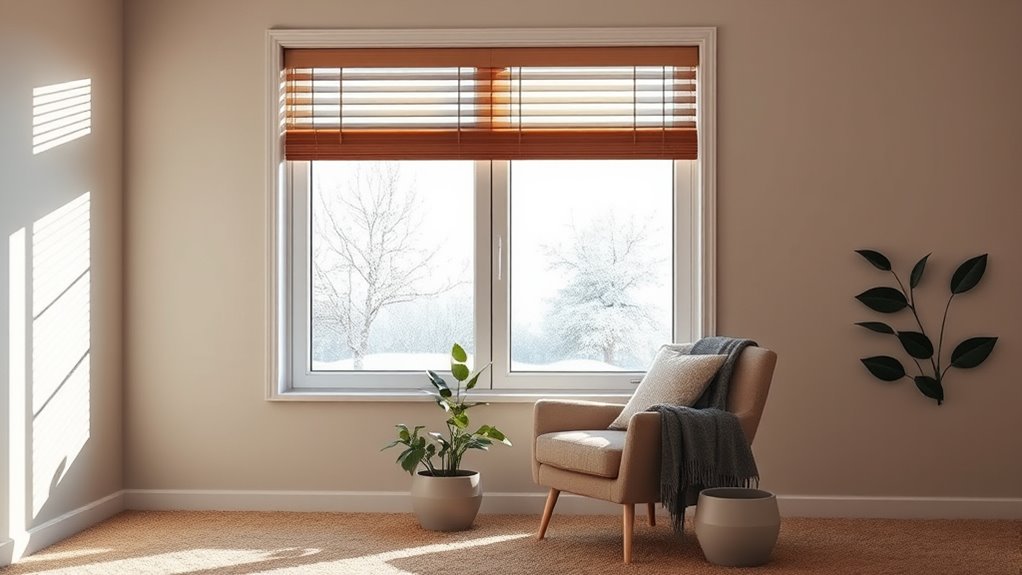
Selecting the most heat-efficient window coverings involves understanding how different options can block or insulate against heat transfer. Your choice of window treatment depends on your window style and how much insulation you need. For example, cellular shades trap air and provide excellent insulation, making them ideal for heat control. Drapes and heavy curtains also offer good thermal resistance, especially when layered with blinds or other coverings. Horizontal or vertical blinds can be effective if kept closed during peak heat times, but their insulating value is lower than other options. Consider reflective or light-colored treatments that bounce heat away. Your goal is to select a window treatment that maximizes insulation and minimizes heat gain, tailored to your window style and your climate’s demands. Free Floating can influence how well your window coverings perform in heat control by affecting airflow and insulation. Additionally, incorporating thermal properties into your window coverings can further enhance their ability to regulate indoor temperatures effectively, especially when combined with proper installation techniques. Choosing coverings with insulating materials can significantly improve heat retention during colder months and prevent heat entry during hotter seasons. Moreover, evaluating airflow management strategies can optimize the overall effectiveness of your window treatments in heat regulation.

TOWN & COUNTRY LUXE Talia Double Layer Indoor Curtains, Sheer and Room Darkening Blackout, Grommet Top, Energy Efficient, 2-Pack Set, 52"x84", Winter White
Catarina drapes offer both the function of a sateen woven blackout curtain paired with the fashion of a…
As an affiliate, we earn on qualifying purchases.
As an affiliate, we earn on qualifying purchases.
What Types of Insulating Window Coverings Work Best?
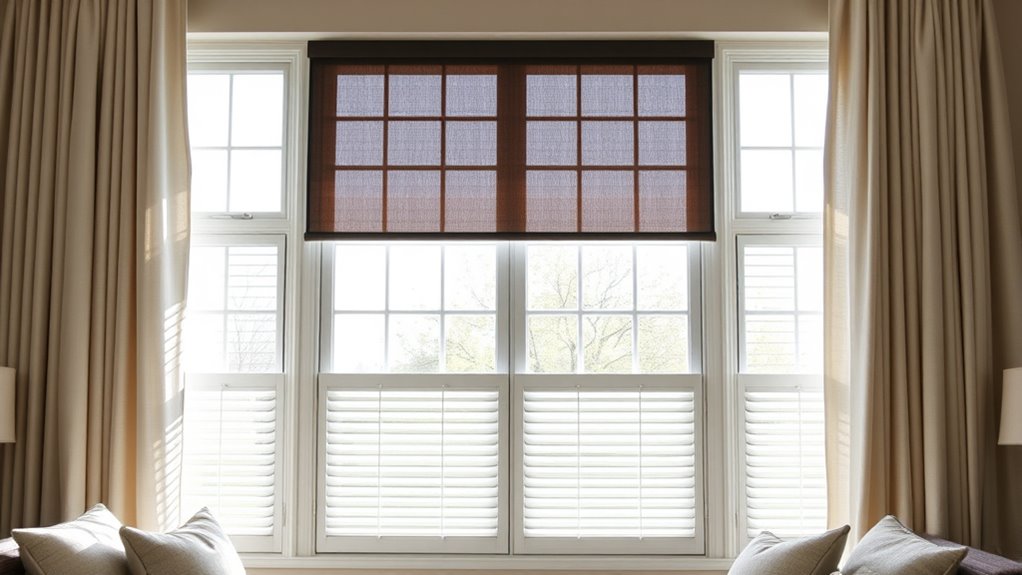
When choosing insulating window coverings, consider how well different materials trap heat and block drafts. You’ll also want to think about their ability to control light and how much they cost and require maintenance. Finding the right balance helps keep your home cozy without breaking the bank. Additionally, selecting coverings that help reduce indoor air pollutants can contribute to a healthier indoor environment. Incorporating energy-efficient materials into your window treatments can further enhance heat retention and lower heating costs. Moreover, opting for coverings with thermal insulation properties can significantly improve overall heat retention in your home, especially when combined with proper installation techniques for maximum effectiveness. Using properly installed insulating curtains can also prevent heat loss through gaps and cracks around windows.
Insulation Materials Effectiveness
Insulation materials considerably impact how effectively window coverings keep heat in during winter and block out cold air. The best options act as thermal barriers, reducing heat transfer and maintaining interior warmth. Look for coverings with high material R value, which measures insulating effectiveness; higher R values mean better heat retention. For example, cellular shades and layered curtains typically provide superior insulation because they trap air and create a barrier against the cold. Thick, padded fabrics also improve thermal resistance, making them ideal for colder months. Additionally, thermal barrier effectiveness is influenced by the material’s ability to resist heat flow, which is essential for optimal insulation. Materials with good heat resistance can significantly enhance a window covering’s insulating properties. By choosing window coverings made from materials with good thermal barriers and high R values, you can greatly improve your home’s heat retention and energy efficiency during winter. Moreover, understanding the environmental adaptation of certain fabrics can help in selecting coverings that perform better in specific climates. Selecting materials with enhanced thermal properties can further optimize insulation performance across varying environmental conditions. Furthermore, selecting coverings with moisture resistance can prevent condensation issues and maintain insulation efficiency in damp environments.
Light Control Capabilities
Effective window coverings not only improve insulation but also control the amount of natural light that enters your space. When choosing coverings, consider how well they manage solar glare, which can cause discomfort and reduce visibility. Blinds, shades, and curtains with adjustable slats or layers give you precise control over light levels, allowing you to brighten rooms or block harsh sunlight. If privacy is a concern, look for coverings that offer privacy control without sacrificing natural light, such as cellular shades or layered window treatments. These options let you filter or completely block light when needed. By selecting window coverings with strong light control capabilities, you’ll enjoy a comfortable, well-lit environment that minimizes glare and maximizes privacy.
Cost and Maintenance
Choosing window coverings that balance cost and maintenance can save you both money and effort over time. Insulating options like cellular shades and heavy curtains often have various pricing options, making them accessible for different budgets. These coverings are generally durable and require minimal cleaning routines, which helps keep maintenance simple. Blinds may be cheaper upfront but can need frequent dusting or cleaning, adding to ongoing effort. Cellular shades, on the other hand, are easy to wipe down and maintain, offering a good mix of insulation and low upkeep. Additionally, thermal efficiency is an important factor to consider when selecting window coverings for heat control. Incorporating sustainable textile practices into the design of window treatments can further enhance their eco-friendly benefits. Properly chosen window coverings can also contribute to energy savings, reducing your heating and cooling expenses over time. The insulating properties of different materials can vary, so it’s beneficial to compare options to find the most effective solution. Properly selected window coverings not only improve heat retention but also add to the overall aesthetic of your space, making them a worthwhile investment. This way, you get effective heat control without sacrificing convenience.

KESPEN Window Film One Way Daytime Privacy Heat Control Anti UV Non-Adhesive Reflective House Window Tint for Home and Office, Black-Silver, 35.4 Inch X 8.2 Feet
ONLY DAYTIME PRIVACY PROTECTION: This one way window film provides superb privacy during daytime, the mirror reflection of…
As an affiliate, we earn on qualifying purchases.
As an affiliate, we earn on qualifying purchases.
Which Materials Help Keep Your Home Cooler or Warmer?
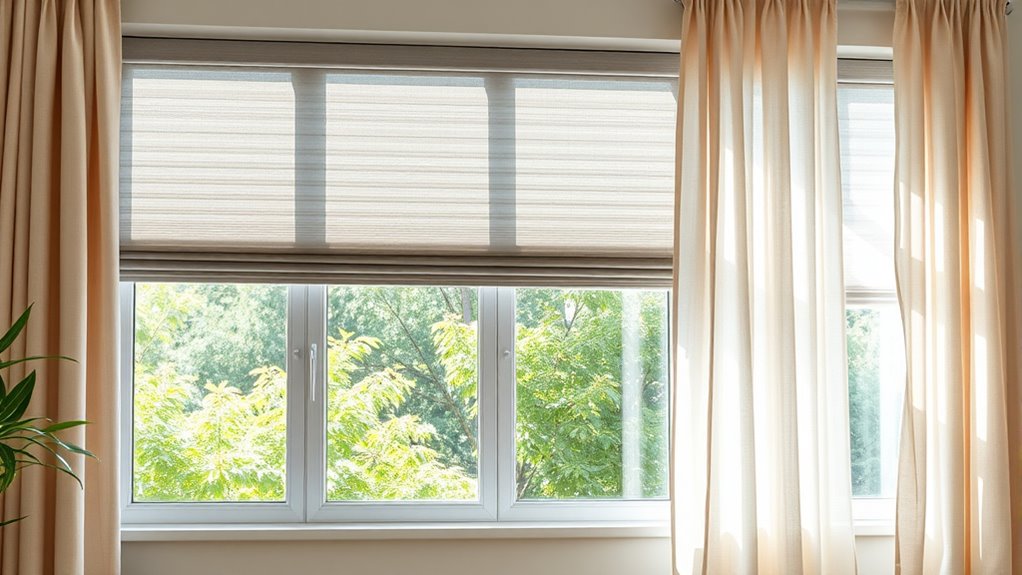
Have you ever wondered which materials can help keep your home cooler in summer and warmer in winter? Thermal fabrics are a great choice—they trap air to provide insulation, reducing heat transfer. Look for window coverings made from heavy, tightly woven fabrics like suede or velvet for extra warmth. Conversely, lightweight materials such as linen or sheer fabrics allow sunlight to pass through, helping to warm rooms naturally. Reflective coatings are also effective; they bounce heat away during hot months and reflect indoor heat back inside during colder months. Combining thermal fabrics with reflective coatings gives you versatile options to control temperature year-round. Selecting the right materials can make your home more energy-efficient and comfortable without sacrificing style.
How to Match Window Coverings to Room Use and Layout

Your window coverings should complement the placement and size of your windows to maximize light control and privacy. Consider how each room’s function and your privacy needs influence your choice, whether for a cozy bedroom or a busy kitchen. Also, match your window treatments to your furniture and decor style to create a cohesive look throughout the space.
Window Placement and Size
How you position and size your window coverings can dramatically influence the functionality and aesthetic of a room. Correct window size guarantees your coverings fit well, providing effective heat control and a clean look. Measure your window frames accurately to select coverings that match their dimensions, avoiding gaps that let in drafts or heat loss. Consider window placement when choosing coverings; for example, larger windows may benefit from coverings that extend beyond the frame for better insulation. Also, the height of your window coverings can affect light and heat management—floor-to-ceiling drapes can add warmth and elegance, while shorter shades might suit smaller windows. Properly matching window size and positioning helps optimize heat retention and enhances the room’s overall appearance.
Room Function and Privacy
Choosing window coverings that align with your room’s purpose and layout guarantees both functionality and style. If your space requires privacy, opt for options like blackout blinds or layered treatments that offer excellent window privacy while controlling light. For rooms where noise reduction is important, consider heavy drapes or insulated shades to improve room acoustics and minimize sound transfer. Open areas, like living rooms, may benefit from lightweight curtains that let in natural light while maintaining some privacy. In bedrooms, prioritize privacy and light control with options like roller shades or blackout curtains. Matching window coverings to your room’s function ensures a comfortable environment, enhances privacy, and optimizes acoustics, making your space more enjoyable and suited to its purpose.
Furniture and Decor Style
Matching window coverings to your room’s furniture and decor style creates a cohesive and inviting space. Your choices should complement your furniture styles and reinforce your decor themes. For modern rooms, opt for sleek roller shades or minimalistic blinds that blend seamlessly. If your decor is vintage or rustic, consider fabric curtains with textures or patterns that highlight warmth. For eclectic styles, mix patterns and colors that add personality without clashing. Keep in mind how your window treatments influence the overall vibe, whether it’s cozy, elegant, or bold. The right match enhances both aesthetics and functionality, ensuring your room feels harmonious. Focus on integrating window coverings that echo your decor themes and furniture styles for a polished look.
Comparing Costs, Durability, and Maintenance of Window Coverings
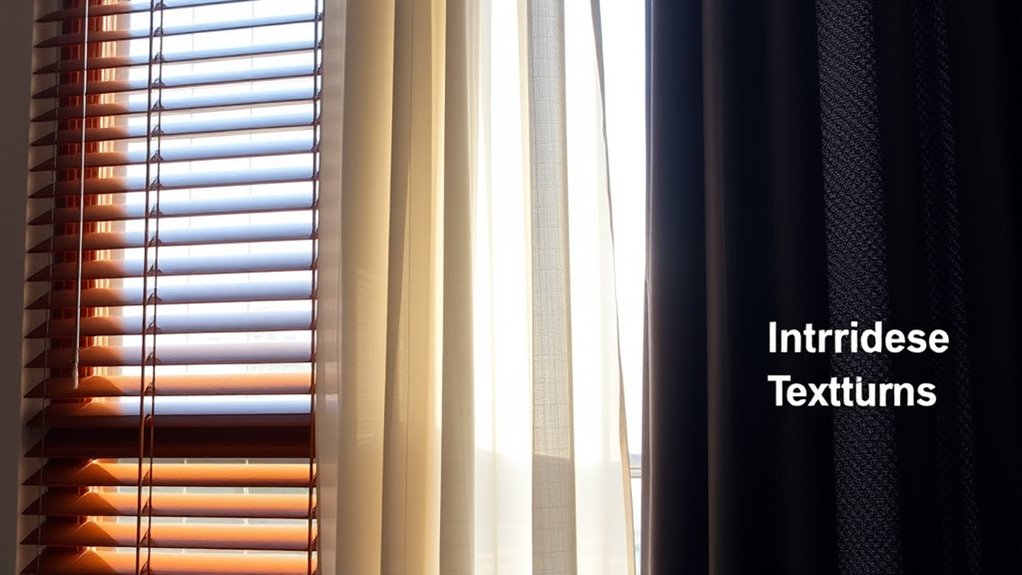
When evaluating different window coverings, it’s essential to take into account not just the initial cost but also their durability and maintenance requirements. Materials with high solar reflectance can effectively reduce heat gain, saving energy and lowering cooling costs over time. Look for coverings that offer UV protection, which helps prevent fabric fading and damage from sun exposure, extending their lifespan. Durable options like aluminum blinds or woven shades tend to withstand daily use better than lightweight fabrics. Maintenance varies; some coverings require regular cleaning, while others are low-maintenance, like vinyl or polyester blinds. Consider how often you’ll need to clean or repair them and whether their resilience justifies the upfront expense. Balancing costs with long-term benefits ensures you choose window coverings that perform well and last.
How to Install and Operate Window Coverings for Maximum Energy Savings

To maximize energy savings, you need to install your window coverings correctly and choose the right operating methods for each season. Proper installation guarantees they work effectively, while seasonal adjustments help control indoor temperatures. Regular maintenance keeps your coverings operating efficiently and extends their lifespan.
Proper Installation Techniques
Proper installation is crucial for window coverings to provide maximum energy savings. To guarantee an effective setup, start by selecting the right window frame measurements and using quality installation tools. Proper positioning prevents drafts and heat transfer, boosting efficiency. Focus on securing the coverings tightly to avoid gaps that can let heat escape or enter.
- Measure your window frame carefully before drilling or mounting
- Use a level to ensure straight, even installation
- Seal edges with weatherstripping for added insulation
- Double-check that the covering opens and closes smoothly
Operating During Seasons
Installing window coverings correctly sets the stage for effective operation throughout the year. During different seasons, adjust your coverings to maximize energy savings. In summer, consider using solar screens or window tinting to block heat while still allowing light. These options reflect sunlight and reduce indoor temperatures. In winter, open window coverings during the day to let in natural warmth and close them at night to retain heat. For seasonal changes, choose window tinting that can be easily applied or removed as needed. Solar screens are also effective for summer heat control, and their installation can be customized for different windows. Proper operation of these coverings ensures you benefit from energy efficiency year-round, keeping your home cooler in summer and warmer in winter.
Maintenance for Efficiency
Are you making the most of your window coverings to maximize energy savings? Proper maintenance ensures they stay effective and last longer. Establish a regular cleaning schedule to remove dust and dirt, which can reduce insulation quality. Check the material durability of your coverings; some fabrics or materials withstand cleaning better and resist wear. Proper operation also plays a role: close blinds or curtains during peak sunlight hours to prevent heat loss or gain. Avoid harsh chemicals that could damage the fabric or material. Periodic inspections help identify and fix issues like broken cords or misaligned slats. By maintaining your window coverings diligently, you optimize their insulation properties and extend their lifespan, ultimately saving you energy and money.
Should You Choose Custom or Ready-Made Window Coverings?
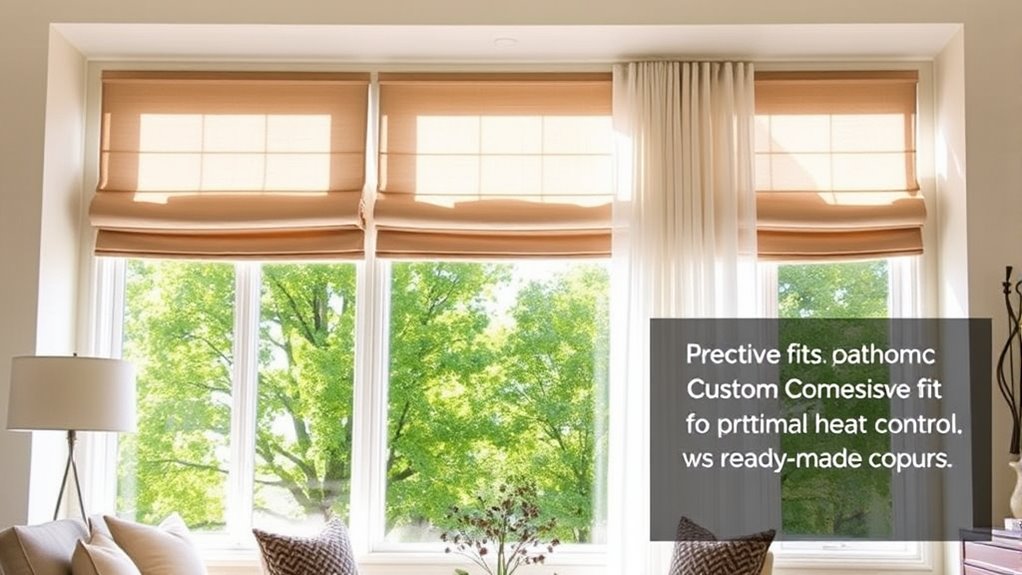
Deciding between custom and ready-made window coverings depends on your specific needs, budget, and style preferences. Custom options offer tailored fits, unique design considerations, and a broader range of window treatment options, making them ideal if you want a perfect match for your decor or specific window sizes. Ready-made coverings are more affordable and readily available, offering quick solutions for standard window dimensions. If you prioritize a seamless look and precise control over design details, custom treatments are worth the investment. However, if your main goal is cost-effective heat control and simplicity, ready-made coverings can meet your needs. Ultimately, weighing your budget against your desired aesthetic and functionality will help you choose the best window treatment options for your home.
Using Layered Treatments for Superior Insulation
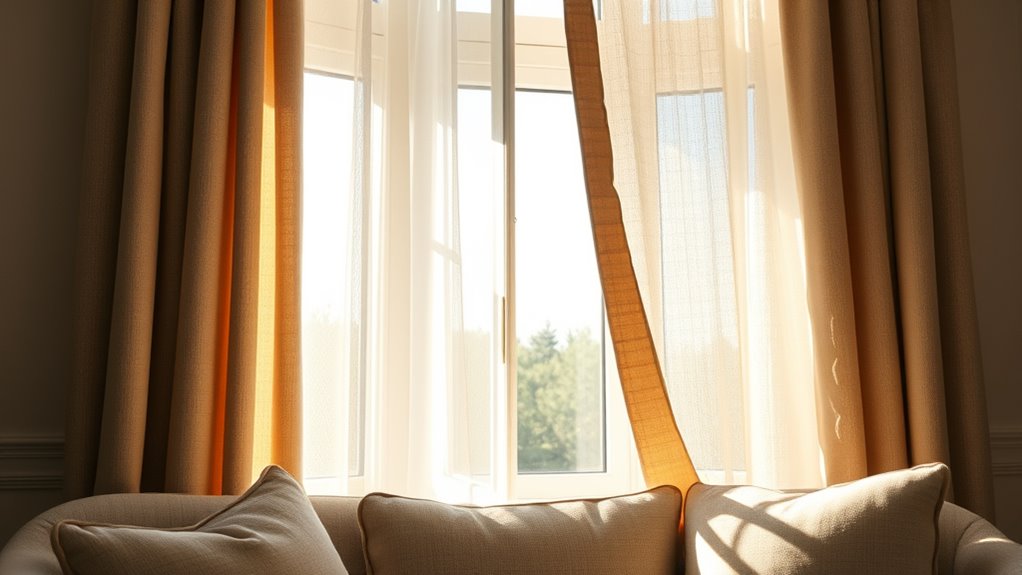
Layered window treatments can considerably enhance your home’s insulation by combining different materials and styles to trap air and reduce heat transfer. This approach, known as thermal layering, effectively boosts insulation strategies by creating multiple barriers against heat loss. By pairing curtains with blinds or shades, you can maximize energy efficiency. The key is selecting materials that complement each other to improve heat retention without sacrificing style.
- Use heavy, insulating fabrics like wool or velvet for curtains
- Incorporate cellular or honeycomb shades for added air pockets
- Layer blackout curtains over sheer drapes for temperature control
- Combine reflective blinds with insulating curtains for superior heat reduction
These insulation strategies help keep your home warmer in winter and cooler in summer, saving energy and increasing comfort.
Latest Trends and Innovations in Heat-Reducing Window Coverings

Innovations in window covering technology are transforming how homeowners improve energy efficiency. New materials and designs now focus on maximizing solar efficiency, helping you keep heat out during summer and retain warmth in winter. Solar-reflective coatings and smart fabrics can substantially boost your energy savings by reducing heat transfer. Roller shades with advanced insulating layers and energy-efficient blinds are gaining popularity, offering both style and function. Additionally, motorized and automated coverings allow for better control of heat flow, adapting to your daily routines. These latest trends make it easier to lower energy bills while maintaining comfort. As technology advances, choosing window coverings that incorporate these innovations ensures you get the most out of your investment in heat control and energy efficiency.
Frequently Asked Questions
How Do I Measure Windows Accurately for Custom Coverings?
To measure your windows accurately for custom coverings, start by using precise measuring techniques and reliable measurement tools like a tape measure. Measure the width and height of each window at multiple points—top, middle, and bottom—to account for any irregularities. Record the smallest measurements for width and the largest for height. Double-check your measurements before ordering to guarantee a perfect fit that optimizes heat control.
What Are the Environmental Impacts of Different Window Covering Materials?
Think of window coverings as guardians of the environment. When you choose sustainable materials or recyclable coverings, you reduce waste and lower your carbon footprint. Natural fibers like bamboo or organic cotton symbolize harmony with nature, while recyclable plastics show a commitment to reuse. By selecting eco-friendly options, you protect the planet’s beauty and future. Your choices become a powerful act of caring for the environment and creating a more sustainable world.
Can Window Coverings Improve Indoor Air Quality?
Yes, your window treatment can improve indoor air quality by reducing dust, allergens, and pollutants that settle on surfaces. Choosing materials like tightly woven fabrics or natural fibers helps trap airborne particles, while easy-to-clean options prevent buildup. Regularly dusting or vacuuming your window coverings also keeps the air cleaner. So, selecting the right window treatment not only controls light and heat but also promotes healthier indoor air quality.
How Often Should I Replace or Update My Window Coverings?
You should replace or update your window coverings every few years to guarantee they remain effective and cost-efficient. Regular seasonal maintenance helps you identify wear and tear, making it easier to plan cost-effective upgrades. If your coverings are outdated or damaged, it’s time for an update to improve heat control and energy efficiency. Staying proactive with replacements ensures your home stays comfortable and reduces energy costs over time.
Are There Smart Window Coverings That Adjust Automatically for Heat Control?
You’ll love how smart window coverings feel like magic—automatic adjustment is a game-changer! These coverings use smart technology to sense temperature changes and respond instantly, helping you save energy and stay comfy. You don’t need to lift a finger; they adjust to keep your home cool in summer and warm in winter. It’s like having a personal climate control system right on your windows, making life easier and more comfortable.
Conclusion
By choosing the right window coverings, you can turn your home into an unstoppable fortress against heat—saving energy, slashing bills, and making summer feel like winter! Don’t settle for mediocre curtains that let the sun’s fiery rays win; arm yourself with the coolest, smartest, most insulating treatments out there. With the perfect window coverings, you’ll transform your space into a cozy oasis or a breezy retreat—no matter how fierce the heat gets!