
Your home stays messy because emotional attachments, habits, and stress influence your clutter habits. You might hold onto belongings because they symbolize memories or keep you feeling safe, making it hard to let go. Routine behaviors, like leaving clothes or dishes, reinforce disorganization, and anxiety can overwhelm decision-making. Understanding these psychological barriers helps you break free from clutter cycles. By exploring these connections further, you’ll discover how to rewire your mindset for lasting order.
Key Takeaways
- Emotional attachments to possessions often cause difficulty in letting go, leading to recurring clutter.
- Habitual behaviors and environmental cues reinforce disorganization, making messiness an automatic response.
- Stress and anxiety impair decision-making, causing mental overload that hinders effective decluttering efforts.
- Unresolved emotional issues or perfectionist tendencies can trigger avoidance, contributing to ongoing mess.
- Lack of consistent routines and mindset shifts prevents long-term maintenance of a clutter-free home.

The Sentimental Person's Guide to Decluttering
As an affiliate, we earn on qualifying purchases.
As an affiliate, we earn on qualifying purchases.
Why Do I Keep Collecting Clutter? The Psychological Roots

Many people find themselves surrounded by clutter despite their desire for a tidy space, and understanding why can reveal deeper psychological roots. Often, emotional baggage influences this pattern, as holding onto items symbolizes unresolved feelings or memories. Perfectionism tendencies also contribute, making you hesitant to let go of things because you fear losing control or not meeting high standards. This mindset can lead to over-collecting, as you believe more possessions might somehow bring order or happiness. Clinging to clutter becomes a way to avoid confronting underlying issues or feelings of inadequacy. Recognizing these patterns is the first step toward change. When you understand that your clutter may serve emotional or perfectionist needs, you can begin addressing the root causes rather than just the mess. Additionally, natural tendencies like a desire for control or comfort can reinforce these habits, making it important to develop healthier coping strategies.

The Home Organization Sidekick Journal by Habit Nest. A Step-by-Step Guide to Declutter, and Organize your Home. Coaches you through Decluttering, Room by Room.
Declutter & organize your home at your own pace in 8 comprehensive phases.
As an affiliate, we earn on qualifying purchases.
As an affiliate, we earn on qualifying purchases.
How Emotions and Attachments Keep Your Home Messy

Your emotions and attachments play a powerful role in keeping your home messy, often making it difficult to let go of clutter. You might hold onto items because of emotional attachment or sentimental value, fearing that discarding them means losing memories or part of yourself. These items become more than objects; they symbolize moments, relationships, or milestones. Letting go can feel like erasing a part of your history, which creates resistance. Even if the clutter is overwhelming, your emotional connection makes it hard to part with these belongings. Recognizing that these attachments are emotional rather than practical is the first step. Understanding this helps you address the root cause of clutter, rather than just the surface mess, making decluttering less emotionally formidable. Additionally, incorporating proportions in your emotional attachment strategies can help you prioritize what is truly meaningful.

Healing Solutions Stress Relief Blend Essential Oil – 100% Pure Therapeutic Grade – 60ml – Aromatherapy Oils
Premium Stress Relief Oil: Experience supreme quality pure and natural essential oils for stress ease with our stress…
As an affiliate, we earn on qualifying purchases.
As an affiliate, we earn on qualifying purchases.
Habits and Routines That Make Disorganization a Cycle
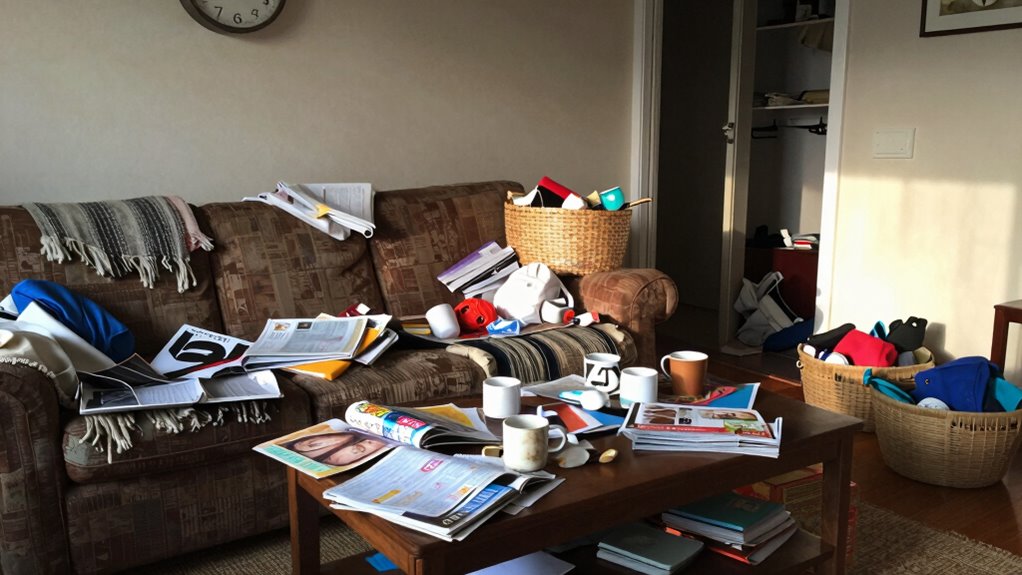
Emotional attachments often make it difficult to part with clutter, but habits and routines can trap you in a cycle of disorganization. Habit formation plays a key role; when you repeatedly leave clothes on the chair or dishes in the sink, these actions become automatic. Environmental cues, like a cluttered countertop or overflowing laundry basket, trigger these habits without your conscious awareness. Over time, these cues reinforce the cycle, making messiness feel inevitable. To break free, you need to reset your routines and deliberately change your environment. Small adjustments—such as placing laundry baskets in strategic spots or establishing a daily tidying habit—can disrupt the cycle. Recognizing how habits form around cues allows you to reprogram your behavior and create a more organized home. Incorporating home environment optimization strategies, like adjusting lighting or furniture placement, can further support your efforts to maintain order.
The Perfectionist's Guide to Decluttering: A Practical, Short Guide to Overcoming "Should" Thinking and Organizing Your Home
As an affiliate, we earn on qualifying purchases.
As an affiliate, we earn on qualifying purchases.
Common Mindset Barriers That Block Decluttering Success

A common barrier to decluttering success is the mindset that change is too difficult or time-consuming. Many believe they need drastic transformations, which can feel overwhelming and lead to procrastination. To move forward, you need mindset shifts that reframe decluttering as manageable and worthwhile. Emotional triggers, like guilt or fear of letting go, often hold you back, making it harder to part with possessions. Recognizing these triggers is vital to overcoming resistance. Instead of viewing decluttering as a massive task, break it into small, achievable steps. Embracing a positive outlook and understanding that change is gradual helps you build momentum. By addressing these mental barriers, you create a mindset conducive to lasting decluttering success. Additionally, understanding the Gold IRA markets can serve as a metaphor for diversification and strategic planning, encouraging you to approach decluttering with a more structured and informed mindset.
How Stress and Anxiety Affect Your Ability to Organize

Stress and anxiety can considerably impair your ability to organize effectively, often causing mental overload that makes decision-making feel overwhelming. When you’re overwhelmed, it’s harder to see what needs to be done, and small organizing tasks may seem insurmountable. Practicing mindfulness techniques can help ground you in the present, reducing feelings of chaos and allowing clearer thinking. Developing emotional regulation skills also plays a crucial role, helping you manage anxious feelings instead of letting them dictate your actions. When you’re calmer, you can assess your belongings more objectively and prioritize what truly matters. Incorporating mindfulness practices and emotional regulation into your routine creates a mental space that supports more effective organization and helps break the cycle of clutter and stress. Additionally, understanding the importance of creative storytelling for branding can inspire you to view your space as a reflection of your personal narrative, motivating you to maintain organization.
Letting Go: Overcoming Fear of Waste and Loss

Letting go of possessions can feel intimidating, especially when fear of waste and emotional attachments linger. You might worry that discarding items means wasting resources or losing memories. These fears can make it hard to part with things, even when they clutter your space. Recognizing that emotional attachments often amplify the fear of waste helps you understand why letting go is challenging. Instead of viewing decluttering as wasteful, see it as an opportunity to honor what truly matters by creating a more organized environment. Remind yourself that keeping everything isn’t preserving memories—it can diminish their value. Overcoming this fear involves shifting your mindset from holding on to what’s unnecessary to embracing the freedom that comes with a simplified, clutter-free home.
Psychology-Backed Strategies to Rewire Your Mindset for a Tidy Home

Have you ever wondered why some people effortlessly maintain a tidy home while others struggle to stay organized? It often comes down to mindset shifts that address emotional triggers. To rewire your thinking, start by recognizing patterns of perfectionism or guilt that sabotage your efforts. Replace negative beliefs with empowering ones, like “I can manage my space step by step.” Practice mindfulness to become aware of emotional triggers—like stress or boredom—that lead to clutter. Set small, achievable goals to build confidence and reinforce positive habits. Visualize your ideal tidy space daily, which helps reprogram your subconscious. Developing adaptive content formats can also make your decluttering journey more engaging and sustainable. These psychology-backed strategies help you develop a resilient mindset, making tidiness feel more attainable and less overwhelming. Ultimately, your mindset transforms how you approach decluttering.
How to Overcome Mental Blocks and Maintain a Clutter-Free Space

Overcoming mental blocks is essential for maintaining a clutter-free space, but it requires addressing the underlying beliefs that hold you back. Mindset shifts are vital; you need to challenge thoughts like “I’ll never keep this clean” or “I don’t have time.” Instead, focus on cultivating emotional resilience—your ability to bounce back from setbacks and stay committed. Recognize that clutter often stems from emotional attachments or avoidance, and changing these patterns takes effort. Break the process into manageable steps, celebrate small wins, and stay patient. By rewiring your thoughts and building resilience, you’ll create a mental environment that supports long-term decluttering. Understanding behavioral patterns related to emotional attachments can help you address the root causes of clutter more effectively. Overcoming these blocks empowers you to maintain a tidy space with confidence and consistency.
Simple Techniques to Sustain Your Decluttered Home for Good

Once you’ve cleared mental hurdles and committed to maintaining a clutter-free space, the next step is implementing simple, consistent habits that keep your home tidy. Adopting a minimalist mindset helps you prioritize what truly matters, reducing unnecessary possessions. To sustain your decluttered home, consider these techniques:
- Use effective storage solutions to organize essentials and hide clutter, making your space look tidy instantly.
- Establish a daily 5-minute tidy-up routine to prevent messes from piling up.
- Regularly reassess your belongings, letting go of items that no longer serve a purpose, reinforcing your minimalist mindset.
These habits create a sustainable system, making tidiness second nature and ensuring your home remains clutter-free for good.
Frequently Asked Questions
How Does Childhood Environment Influence Adult Clutter Habits?
Your childhood environment shapes your clutter habits through childhood memories and parenting styles. If you grew up in a cluttered space with lax rules, you might see mess as normal and struggle with tidiness. Conversely, strict parenting and organized routines foster good habits. These early experiences influence how you handle clutter today, making it essential to recognize and address these influences for better organization and a clutter-free home.
Can Personality Traits Predict Clutter Accumulation?
Yes, your personality traits can predict clutter accumulation. If you’re a spontaneous or disorganized person, you likely fall into certain personality clusters that serve as clutter predictors. These traits influence your habits, making it harder to keep your space tidy. Research shows that understanding your personality cluster helps you recognize why clutter builds up and offers tailored strategies to manage it effectively, turning insights into lasting decluttering habits.
What Role Does Decision Fatigue Play in Decluttering?
Decision fatigue makes decluttering harder because it causes decision overload and choice paralysis. When you face too many options or tough choices, your ability to decide diminishes, leading you to avoid decluttering altogether. You might feel overwhelmed or unsure about what to keep, which results in clutter piling up. To combat this, simplify decisions by setting limits or routines, so you don’t drain your mental energy on small choices.
How Do Social Influences Impact Our Clutter Management?
Did you know that 70% of people feel influenced by social media when managing clutter? Social influences, like peer pressure and online trends, directly shape your clutter habits. You might keep items to fit in or showcase a certain lifestyle. Peer pressure can push you to hold onto things you don’t need, while social media often promotes idealized images, making it harder to maintain a clutter-free space.
Are There Specific Mental Health Conditions Linked to Clutter Accumulation?
Yes, certain mental health conditions like hoarding disorder and obsessive-compulsive tendencies are linked to clutter accumulation. You might find it difficult to discard possessions due to fears of losing important items or feeling intense distress. These conditions can cause you to keep more than necessary, making your home feel cluttered. Recognizing these links helps you seek appropriate support, such as therapy, to better manage your environment and mental health.
Conclusion
Understanding the psychology behind your clutter can transform your space. Did you know that 80% of people feel relief after decluttering? By addressing emotional attachments, habits, and mindset barriers, you can break the cycle of mess and create lasting organization. Remember, small consistent steps make a big difference. With patience and the right strategies, you’ll enjoy a tidy home that reflects a clear, calm mind—making clutter a thing of the past.