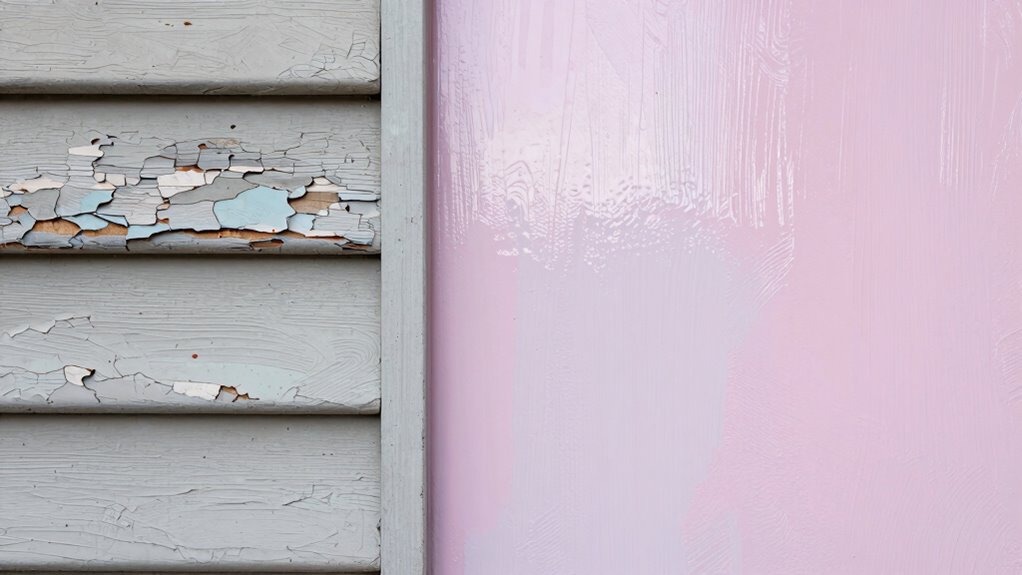

Exterior paints are formulated to withstand harsh weather, resisting fading, peeling, and chalking longer than interior paints. They contain higher-quality resins, UV blockers, and water-resistant additives to protect your home from rain, sun, and temperature swings. Interior paints focus on providing a vibrant, smooth finish with low VOCs and easier cleaning, but don’t need the same durability. Knowing these differences helps you choose the right paint—stick around to learn even more about making the perfect choice.

Get the little things that make your day delivered free with Prime
- Fast, free delivery on millions of items
- Prime Video, Amazon Music and more included
- Member-only deals all year
Key Takeaways
- Exterior paints are formulated for weather resistance, while interior paints prioritize low VOCs and indoor safety.
- Exterior paints contain higher-quality resins and UV blockers for durability against outdoor elements.
- Surface preparation for exterior surfaces involves cleaning, scraping, and priming, unlike simpler interior prep.
- Exterior paints often require multiple coats for protection; interior paints typically need fewer coats.
- Environmental factors like humidity and sunlight significantly influence outdoor paint performance and longevity.

When it comes to painting your home, understanding the key differences between exterior and interior paints is vital to achieving a durable and attractive finish. The first thing you need to contemplate is color durability. Exterior paints are formulated to withstand harsh weather conditions, such as rain, sunlight, wind, and temperature fluctuations. This means they’re designed to resist fading, chalking, and peeling over time. Interior paints, on the other hand, don’t need to handle such extreme elements, so their color durability isn’t as high. They focus more on providing a consistent, vibrant finish that lasts through daily wear and tear, like cleaning or minor scratches.
Exterior paints resist weather damage, while interior paints prioritize vibrant, long-lasting finishes for daily indoor wear.
Surface preparation also plays a significant role in how well the paint adheres and lasts. For exterior surfaces, thorough cleaning, scraping, and sometimes sanding are necessary to remove dirt, old paint, or loose material. This guarantees the new coat bonds properly and can endure outdoor conditions. You might also need to prime surfaces exposed to moisture or direct sunlight to prevent issues like peeling or mold growth. Interior surfaces generally require less extensive prep—clean walls, repair any holes or cracks, and sometimes lightly sand to smooth out uneven areas. Proper surface prep is vital for both types of painting projects, but the outdoor environment demands more meticulous attention to detail. Additionally, environmental factors such as humidity and temperature swings can influence the drying process and adhesion of exterior paints, making proper preparation even more crucial. Environmental factors like humidity can significantly affect how paint adheres and cures, especially outdoors. Understanding how climate conditions impact paint durability can help you choose the right product for your specific location.
The composition of the paints themselves also differs. Exterior paints typically incorporate higher-quality resins and UV blockers to shield against sunlight damage, along with additives that improve water resistance. Interior paints, meanwhile, focus on low VOCs (volatile organic compounds) and odor reduction, making them safer for indoor air quality. They also tend to have a softer, more matte finish that’s easier to clean without damaging the surface. Additionally, the materials used in exterior paints are often more resistant to environmental stressors, ensuring longer-lasting protection. This difference in formulation helps exterior paints endure the harsh outdoor conditions they are exposed to daily. Proper formulation and materials are essential for each type of paint to perform optimally in its environment. Recognizing these formulation differences can also assist in troubleshooting issues like cracking or peeling over time.
In terms of application, exterior paints often require multiple coats to guarantee even coverage and durability, especially on textured or uneven surfaces. Indoor paints can usually be applied in fewer coats, thanks to their more controlled environment and the smoother surfaces typically involved. Additionally, the drying times may vary, with exterior paints sometimes taking longer due to weather conditions and outdoor exposure. Knowing these differences helps you select the right paint for each job, ensuring your home looks great and stays protected. Whether it’s the weather-resistant qualities of exterior paint or the clean, vibrant finish of interior paint, understanding their unique features will save you time, money, and potential frustration.
exterior weather-resistant paint
As an affiliate, we earn on qualifying purchases.
As an affiliate, we earn on qualifying purchases.
Frequently Asked Questions
How Long Does Exterior Paint Typically Last Outside?
Exterior paint typically lasts 5 to 10 years outside, depending on factors like surface preparation and climate. Proper surface preparation guarantees better adhesion and extends paint longevity. Regular maintenance, like cleaning and touch-ups, also helps your exterior paint stay vibrant longer. Harsh weather, sun exposure, and moisture can shorten its lifespan, so choosing high-quality paint and preparing surfaces well are key to maximizing durability and protecting your home’s exterior.
Can Interior Paint Be Used Outdoors Safely?
Coincidentally, you can use interior paint outdoors, but it’s not ideal. You should prioritize proper paint preparation and color matching to guarantee durability. Interior paints lack the weather-resistant properties needed for outdoor conditions, leading to quicker fading and peeling. If you must, choose a high-quality, exterior-grade paint for outdoor use. Otherwise, your best bet is to use paints specifically designed for outdoor environments to guarantee longevity and protection.
What Environmental Factors Affect Exterior Paint Durability?
Environmental factors like weather resistance and surface preparation directly impact exterior paint durability. You need to guarantee your surface is properly cleaned and primed, which improves adhesion and longevity. Harsh weather conditions—rain, sun, wind, and temperature fluctuations—can cause paint to peel, crack, or fade over time. Protect your investment by choosing a paint formulated for outdoor use and preparing surfaces thoroughly to withstand these environmental challenges.
Are There Eco-Friendly Options for Exterior and Interior Paints?
Yes, you can find eco-friendly options for both exterior and interior paints. Look for paints made with eco-friendly ingredients, such as low-VOC or zero-VOC formulas, which reduce harmful emissions. Sustainable paint options often incorporate natural or recycled materials, making them better for the environment. These paints help protect indoor air quality and minimize ecological impact, so you’re choosing a healthier, more sustainable way to update your space.
How Do I Choose the Right Finish for My Project?
You should choose a finish based on your project’s needs, considering color coordination and texture options. For walls that need durability and easy cleaning, opt for satin or semi-gloss finishes, which also enhance color vibrancy. If you want a softer look, matte or eggshell finishes work well but may show imperfections more. Think about how the texture complements your space and the level of sheen you prefer to achieve your desired aesthetic.
As an affiliate, we earn on qualifying purchases.
Conclusion
Think of exterior and interior paint as two sides of the same coin—each crafted for its own environment but essential to the whole. Choosing the right type is like selecting the perfect outfit for the weather; it protects, enhances, and endures. When you pick wisely, your space becomes a vibrant canvas that stands the test of time, weather, and wear. So, gear up with the right paint, and let your home’s true colors shine through—inside and out.
As an affiliate, we earn on qualifying purchases.
As an affiliate, we earn on qualifying purchases.
Halloween Picks
halloween
As an affiliate, we earn on qualifying purchases.