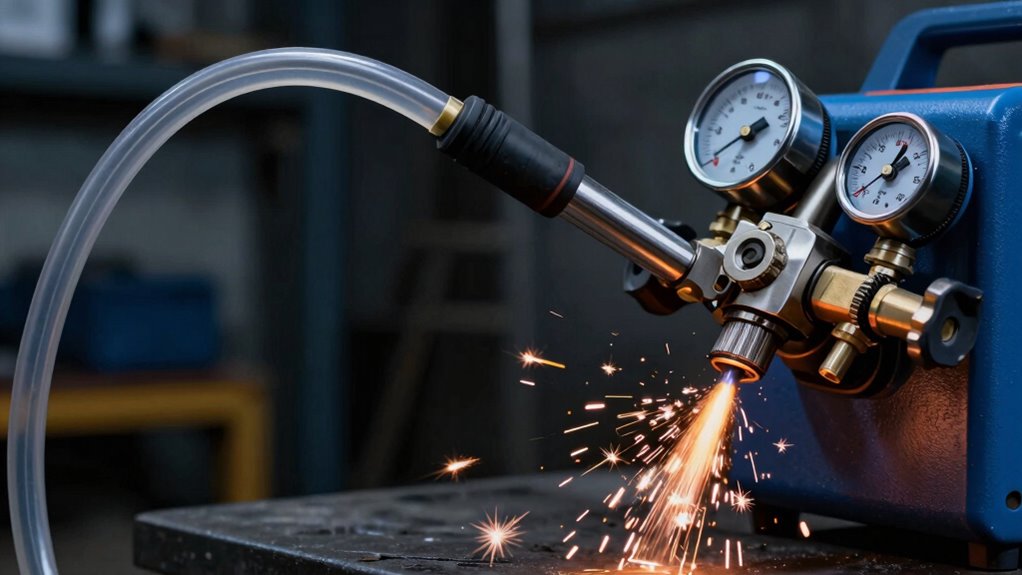

To guarantee your plasma cutter works effectively, you need to maintain proper air pressure, flow, and filtration. Typically, you should keep pressure between 60-100 PSI and regulate the flow rate for a stable arc and quality cuts. Using clean, filtered air prevents equipment wear and reduces scrap. Regularly inspecting and replacing filters helps maintain ideal airflow. Staying within these standards boosts precision and prolongs your machine’s lifespan—keep going to discover more essential tips for perfect cuts.

Get the little things that make your day delivered free with Prime
- Fast, free delivery on millions of items
- Prime Video, Amazon Music and more included
- Member-only deals all year
Key Takeaways
- Proper air quality, free of moisture and contaminants, is essential for optimal plasma cutting performance.
- Maintain steady, regulated air pressure typically between 60-100 PSI for accurate cuts.
- Adequate airflow (CFM) ensures stable arc performance and prevents equipment cooling issues.
- Regularly inspect and replace filters to prevent clogs and ensure clean, consistent air supply.
- Correct air pressure and flow minimize material warping, reduce scrap, and extend cutter lifespan.

To achieve clean and efficient cuts with a plasma cutter, understanding its air requirements is essential. The quality of the compressed air you supply directly impacts your cutting precision and the overall quality of your work. If the air isn’t clean and properly conditioned, you’ll notice rough edges, uneven cuts, and increased wear on your equipment. Proper air filtration becomes a vital part of maintaining the right air quality, removing moisture, oil, and other contaminants that can compromise your cut quality. Without effective filtration, these impurities can cause inconsistent arc performance and damage your torch components over time. Maintaining air quality through proper filtration and conditioning is critical for optimal performance. Achieving the ideal air pressure and flow is equally important. Too much pressure can lead to disturbances in the plasma arc, reducing cutting precision and the risk of material warping. Conversely, too little pressure results in weak arcs, incomplete cuts, and increased scrap. You need a steady, regulated air supply that matches the specifications recommended by your plasma cutter’s manufacturer. Typically, this involves an air pressure range of around 60 to 100 PSI, but always check your machine’s manual to confirm best settings. Flow rate, measured in cubic feet per minute (CFM), also plays an essential role; insufficient airflow can cause the plasma arc to become unstable, while excessive airflow may cool the torch unnecessarily, affecting cutting performance. Proper air filtration also helps extend the lifespan of your plasma cutter components, reducing maintenance costs over time. Regularly inspecting and replacing filters is essential to prevent clogging and ensure the airflow remains steady and clean. Additionally, understanding the air pressure and flow requirements specified by your cutter’s manufacturer can help prevent equipment damage and optimize cutting efficiency. Correct air pressure regulation is vital to prevent fluctuations that can impact cutting quality. Ensuring consistent air supply is key to achieving optimal cut results and prolonging the life of your equipment.
As an affiliate, we earn on qualifying purchases.
Frequently Asked Questions
Can I Use a Standard Compressor for Plasma Cutting?
Yes, you can use a standard compressor for plasma cutting, but you need to ensure air quality and compressor capacity. Make sure your compressor provides clean, dry, and oil-free air to prevent nozzle damage and ensure smooth cuts. Also, check that it has enough capacity, typically 4-6 CFM at the required pressure, to maintain consistent airflow. Using the right compressor enhances performance and prolongs your plasma cutter’s lifespan.
How Does Humidity Affect Plasma Cutter Air Quality?
Humidity impacts your plasma cutter’s air quality by introducing moisture into the compressed air, which can cause inconsistent cuts and damage the equipment. To maintain excellent air quality control, you should use moisture traps and dryers to remove excess humidity. Keeping the air dry helps guarantee precise cuts and prolongs your plasma cutter’s lifespan, so always monitor and manage humidity levels effectively to avoid costly repairs and performance issues.
What Is the Ideal Air Pressure for Different Materials?
You should set the air pressure to around 60 psi for mild steel, but it varies with material compatibility. Thinner metals need lower pressure, about 40-50 psi, to prevent warping, while thicker materials require up to 80 psi for clean cuts. On average, 70 psi works well for most metals. Adjusting air pressure settings guarantees maximum cut quality and prolongs your cutter’s lifespan, especially when working with diverse materials.
How Often Should I Replace Air Filters in the Compressor?
You should replace your compressor’s air filters every 3 to 6 months, depending on usage and air quality. Regular air filter maintenance guarantees your compressor runs efficiently and helps extend its lifespan. If you notice reduced airflow or increased moisture, it’s a sign to replace the filters sooner. Proper filter upkeep prevents contaminants from entering the system, ultimately saving you money and avoiding costly repairs down the line.
Can I Use a Portable Air Compressor for Plasma Cutting?
Yes, you can use a portable air compressor for plasma cutting if it provides the necessary compressed air and has proper filtration systems. Make sure the compressor delivers a steady, clean flow of air, free of moisture and debris, which can be managed with effective filtration systems. Check the compressor’s specifications to match the plasma cutter’s airflow and pressure requirements, preventing interruptions or damage during cutting.
As an affiliate, we earn on qualifying purchases.
Conclusion
Think of your plasma cutter’s air needs as the breath of a skilled artist—it must be steady and pure to create flawless designs. When you meet the right air requirements, you’re fueling your machine like a well-tuned engine, ensuring smooth cuts and long-lasting performance. Keep the air flowing correctly, and you’ll craft with precision and confidence, turning your projects into works of art. Just like a breath fuels life, proper air keeps your plasma cutter alive and thriving.
compressed air dryer for plasma cutting
As an affiliate, we earn on qualifying purchases.
As an affiliate, we earn on qualifying purchases.
plasma cutter air filtration system
As an affiliate, we earn on qualifying purchases.
As an affiliate, we earn on qualifying purchases.
Columbus Day / Indigenous Peoples' Day Picks
long weekend sales
As an affiliate, we earn on qualifying purchases.