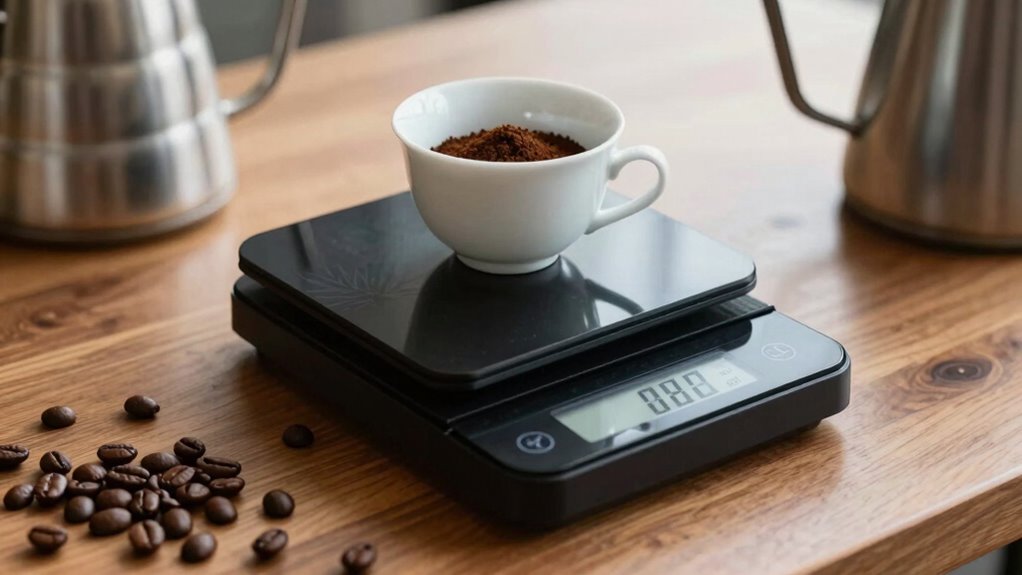

A coffee scale is essential for achieving brewing precision, helping you measure coffee grounds accurately. Look for features like sensitivity to 0.1 grams, a tare function for excluding container weight, and a built-in timer for tracking brew times. Materials should be durable, with a capacity around 2,000 grams for general use, but a smaller 500-gram capacity is best for single servings. These features make a significant difference, and there’s more to discover about enhancing your coffee experience.
Key Takeaways
- A coffee scale should measure sensitivity down to 0.1 grams for precise brewing ratios and consistent flavor extraction.
- Essential features include a tare function to exclude container weight and a built-in timer for tracking brew times accurately.
- Look for durable materials like stainless steel and a weight capacity of around 2,000 grams for optimal use across various brewing styles.
- Scales should maintain precision across their range, with clear displays and backlighting for easy reading during brewing.
- Regular maintenance, including proper cleaning and timely battery replacement, ensures longevity and consistent performance in measurements.

Maestri House Mini Coffee Scale with Timer, USB-C Rechargeable Espresso Scale, 2kg/0.1g Accurate Scale for Espresso and Pour-Over Coffee, Portable Digital Kitchen Scale with Auto Timer (Black&Silver)
【Ultra Small, Yet Professional】The Espresso Scale is small enough to fit in your palm. It measures 4.13*4.13*0.78 inches…
As an affiliate, we earn on qualifying purchases.
As an affiliate, we earn on qualifying purchases.
How a Coffee Scale Elevates Your Brewing Precision
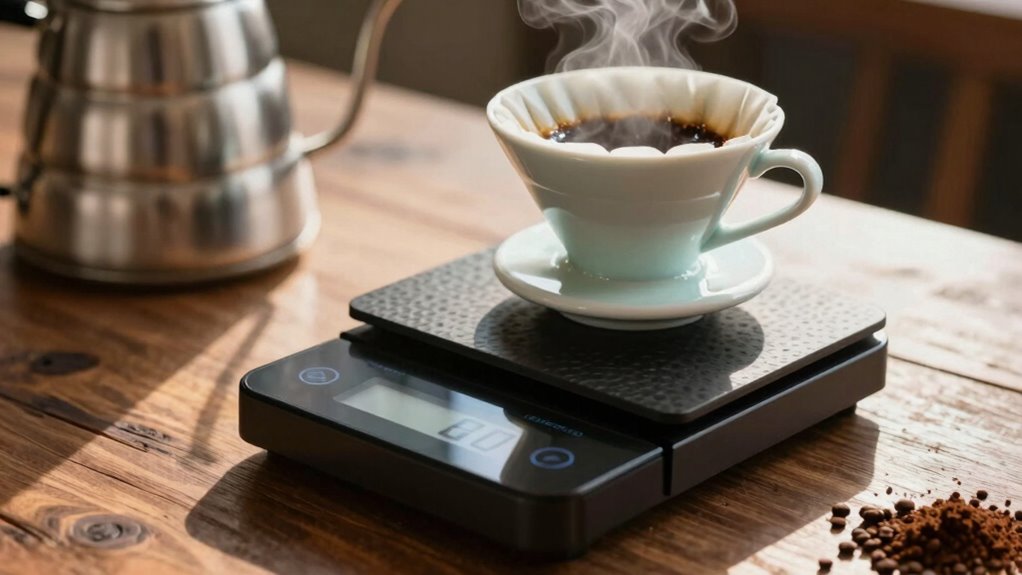
When you’re aiming for the perfect cup of coffee, a coffee scale can make all the difference. It allows you to measure your coffee grounds accurately, ensuring you hit that sweet spot between brew temperature and grind size. By weighing your coffee, you can consistently replicate the ideal ratio, which directly impacts flavor and strength. If you’ve ever brewed a cup that was too weak or too bitter, you know how vital precision is. With a scale, you can adjust your grind size and brew temperature to suit your preferences, creating a balanced cup every time. Plus, measuring by weight rather than volume eliminates guesswork, making your brewing process more straightforward and enjoyable.

NKOVE Digital Coffee Scale with Timer 3kg/0.1g High Precision Espresso Scale Tare Function for Pour Over Maker Brew
☕0.1g High Precision Measurement: Experience the ultimate accuracy with a high-precision sensor that delivers results with 0.1g accuracy….
As an affiliate, we earn on qualifying purchases.
As an affiliate, we earn on qualifying purchases.
Essential Features for Choosing the Right Coffee Scale
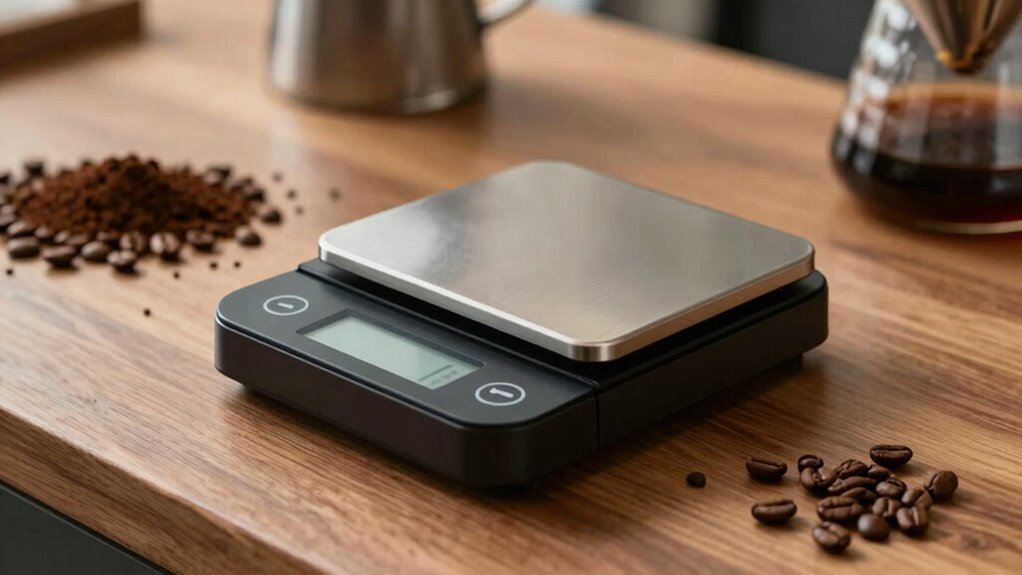
Selecting the right coffee scale can greatly enhance your brewing experience, as it directly impacts the precision and consistency of your coffee preparation. First, consider the scale’s sensitivity; a scale that can measure down to 0.1 grams is ideal for various brew styles. You’ll want to choose a scale made of durable materials, like stainless steel or high-quality plastic, to guarantee longevity and easy cleaning. Look for features like a tare function, which allows you to weigh ingredients without including the container’s weight. Also, check for a timer function if you prefer to track brew times accurately. With the right scale, you’ll elevate your coffee-making routine and achieve perfectly balanced cups every time.

Stainless Steel Digital Kitchen Scale w. Bowl – for Food Coffee Lab – LCD Display gram Ounces lb:oz lb ml – 12 LBS/5.5 KG Capacity – Battery Included – Silver by The Display Guys
ACCURATE SENSOR – Measures up to 12LB (5.5KG) in precise 1g/0.1oz increments to deliver consistent & reliable performance…
As an affiliate, we earn on qualifying purchases.
As an affiliate, we earn on qualifying purchases.
Coffee Scale Measurement: Grams vs. Ounces

When measuring coffee, you might wonder whether to use grams or ounces. Each unit has its merits, but precision is key for brewing the perfect cup. Let’s explore the differences and how to convert between the two.
Grams Versus Ounces
While both grams and ounces are commonly used to measure coffee, understanding the differences between them can enhance your brewing experience. Grams measurement is more precise, making it the preferred choice for many coffee enthusiasts. One gram equals about 0.035 ounces, so if you’re aiming for accuracy, grams are your best bet. On the other hand, ounces measurement is often seen in recipes and can be more intuitive for those accustomed to imperial units. If you’re using a scale, you might find that measuring in grams allows for better consistency and control over your brew. Ultimately, it’s about what works best for you, but knowing these distinctions can help elevate your coffee game.
Importance Of Precision
Understanding the importance of precision in coffee measurement can greatly impact your brewing results. Whether you prefer light roasts or dark blends, different coffee bean types require specific ratios for ideal flavor extraction. By measuring in grams rather than ounces, you gain more accuracy, ensuring that your brewing methods yield the best possible cup. Precision helps you maintain consistency, allowing you to replicate successful brews and fine-tune your process. When experimenting with various brewing methods, such as pour-over or French press, even slight variations in your measurements can lead to drastically different outcomes. So, investing in a reliable coffee scale will not only enhance your coffee experience but also elevate your skills as a home barista. Accurate measurement is a fundamental principle in achieving optimal brewing results.
Conversion Methods Explained
If you want to brew the perfect cup of coffee, knowing how to convert measurements between grams and ounces is essential. Grams are the preferred measurement in many coffee recipes, but ounces are common in others. Understanding conversion techniques can help you adapt your brewing method to fit any measurement system. To convert grams to ounces, simply divide the number of grams by 28.35. Conversely, to convert ounces to grams, multiply the ounces by 28.35. This knowledge allows you to be flexible and precise in your coffee preparation, ensuring you get the flavor profile you desire every time. Mastering these conversions means you can confidently tackle recipes or adjust your coffee scale to fit your needs.

Greater Goods Coffee Scale with Timer – 0.1g Precision Digital Coffee & Espresso Scale for Pour-Over, Coffee Bean Weighing, Barista Brewing, Waterproof Cover, 3kg Capacity (Onyx Black)
𝗕𝗮𝗿𝗶𝘀𝘁𝗮-𝗟𝗲𝘃𝗲𝗹 𝗣𝗿𝗲𝗰𝗶𝘀𝗶𝗼𝗻: Featuring a 0.1 g sensor with rapid refresh rates, this coffee weight scale responds instantly to…
As an affiliate, we earn on qualifying purchases.
As an affiliate, we earn on qualifying purchases.
The Importance of Tare Function in Coffee Brewing
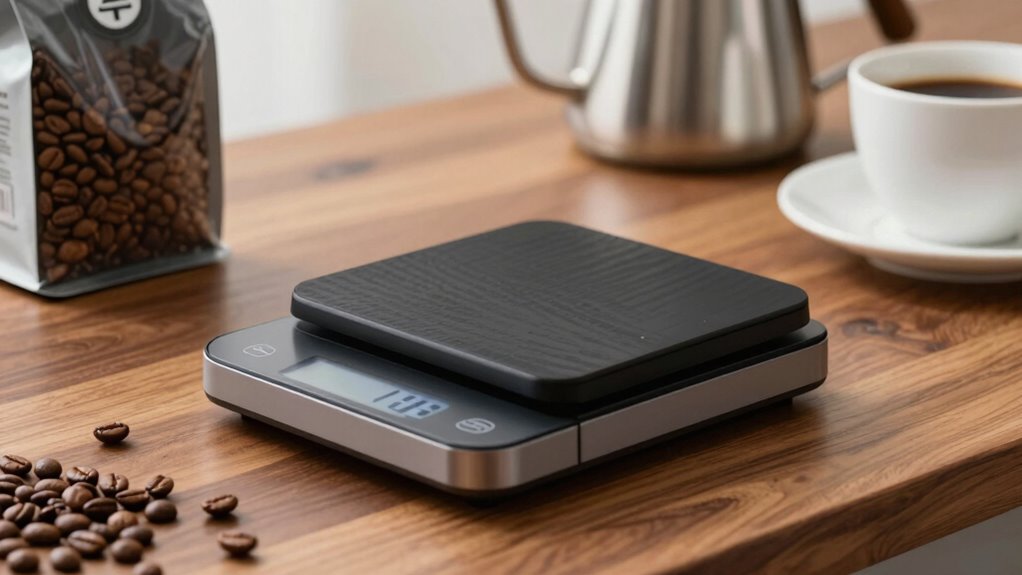
When you’re brewing coffee, the tare function on your scale can make a significant difference in achieving the perfect cup. By using tare calibration, you can eliminate the weight of your container, allowing you to focus solely on the coffee grounds. This guarantees brewing consistency, which is key to replicating that delightful flavor every time.
| Feature | Importance |
|---|---|
| Tare Function | Removes container weight |
| Precision | Enhances brewing accuracy |
| Consistency | Guarantees repeatable results |
How Accuracy Affects Your Coffee’s Flavor Profile
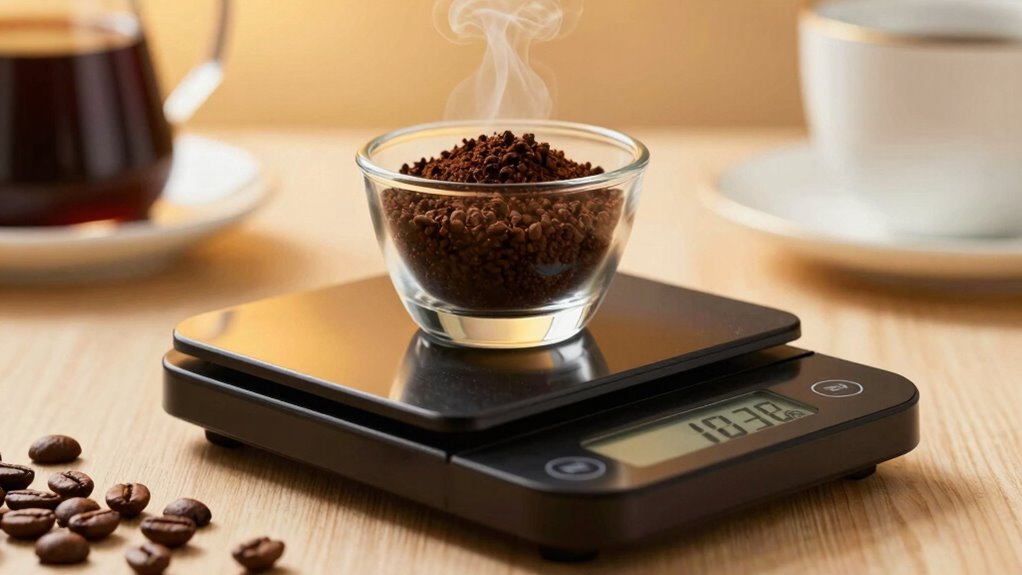
When you measure your coffee accurately, you’re setting the stage for the perfect brewing ratio, which directly influences flavor. Consistency in your measurements leads to reliable flavor extraction, ensuring each cup tastes just right. Plus, the precision in your brewing can enhance the aroma, making your coffee experience even more enjoyable.
Precision In Brewing Ratio
Achieving the perfect coffee brew hinges on precision in your brewing ratio. When you measure your coffee and water accurately, you reveal flavors that can transform your experience. Inconsistent measurements can lead to undesirable results, while precision enhances your brewing techniques. Utilizing a coffee scale ensures accurate measurements, making it easier to follow your preferred ratios consistently.
Consider these key points:
- Brew Strength: The right ratio amplifies the coffee’s natural notes.
- Flavor Balance: Accurate measurements maintain a harmonious taste, avoiding bitterness or sourness.
- Consistency: Following measurement standards guarantees you replicate great brews every time.
Consistency In Flavor Extraction
Precision in your brewing ratio not only affects the strength of your coffee but also plays a significant role in flavor extraction. When you aim for flavor consistency, you guarantee that each cup delivers the same delightful taste, enhancing your overall experience. Achieving brewing uniformity requires accurate measurements, which can be easily managed with a reliable coffee scale. Additionally, understanding the role of contrast ratio can help in optimizing your brewing environment to better reveal subtle flavor nuances.
Impact On Aroma Quality
While you might focus on the brewing ratio, the accuracy of your measurements also directly influences the aroma quality of your coffee. Precision in weighing your coffee grounds is essential for extracting the right aroma compounds that shape your flavor profile. Here’s how it impacts your brew:
- Balanced Extraction: Proper measurements guarantee you extract the full range of flavors.
- Consistency: Accurate scales help replicate your favorite brews every time.
- Enhanced Complexity: The right ratios allow distinct aroma compounds to shine through.
When you nail the measurements, you reveal a broader spectrum of flavors and aromas, elevating your coffee experience. So, investing in a reliable scale isn’t just about weight—it’s about crafting the perfect cup!
How to Pick the Right Weight Capacity for Your Coffee Scale
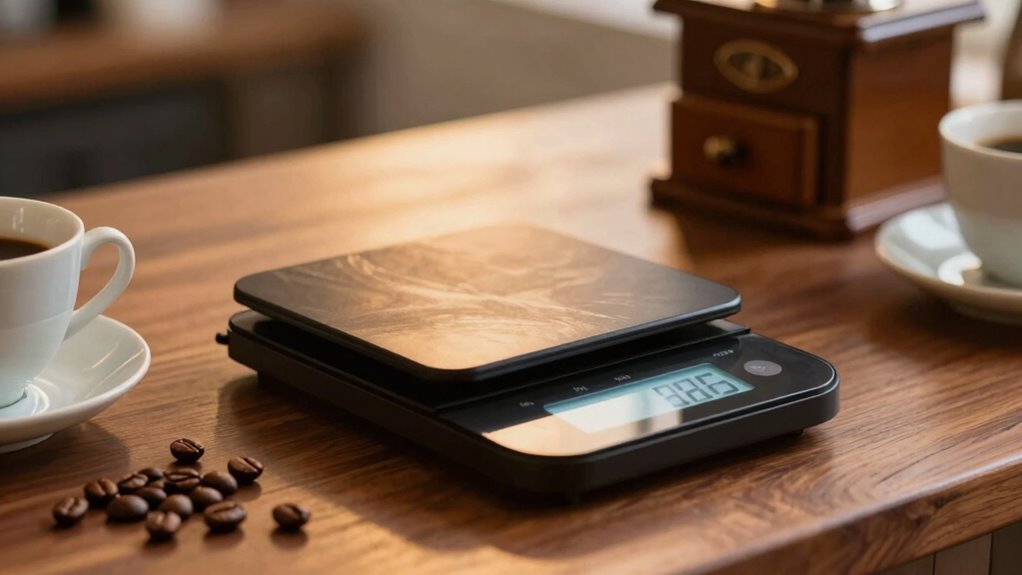
When choosing a coffee scale, how do you determine the right weight capacity for your brewing needs? First, consider how much coffee you typically brew. If you often make multiple cups, a scale with a higher weight capacity—ideally around 2,000 grams—will serve you better. For single servings or pour-over techniques, a smaller capacity, like 500 grams, might suffice.
Next, think about scale accuracy. Higher weight capacities can sometimes compromise precision, so look for a scale that maintains accuracy across its full range. Ideally, you want a scale that can measure small increments, ensuring consistent results with every brew. By aligning weight capacity with your brewing habits, you’ll enhance your coffee experience.
Benefits of a Built-In Timer for Brewing
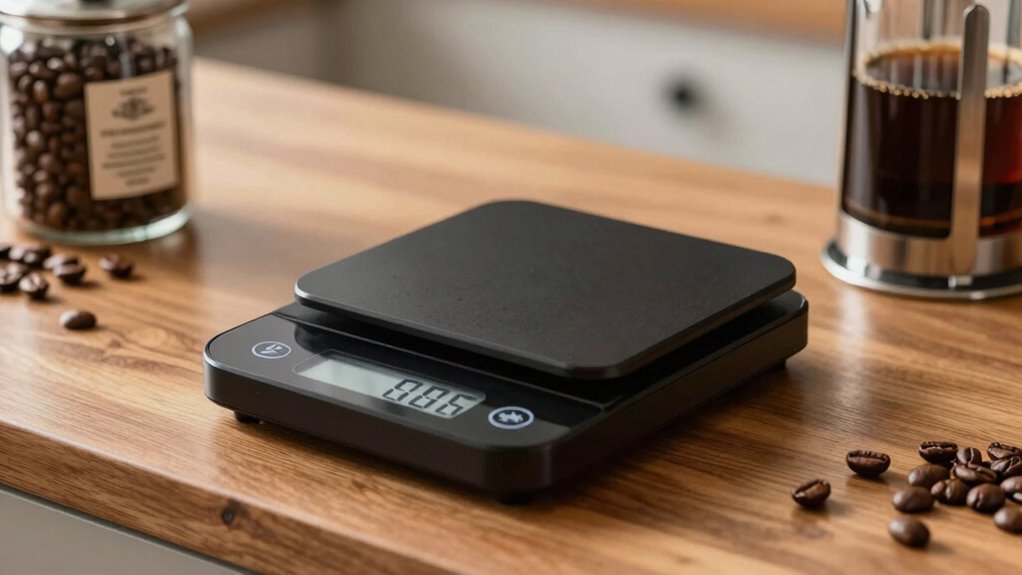
Having a built-in timer on your coffee scale can greatly elevate your brewing process. It offers several built-in advantages that enhance your overall experience and guarantee perfect coffee every time. Here’s how:
- Precision Timing: You can easily track extraction time for ideal flavor.
- Brewing Convenience: No need for a separate timer; everything’s in one place.
- Consistency: Achieve the same great results with each brew by maintaining consistent timing.
With a built-in timer, you can focus on the art of brewing without worrying about keeping track of time. This feature simplifies your routine, allowing you to enjoy the process and the final cup. Investing in a coffee scale with a timer can truly transform your brewing experience.
Consider Portability When Choosing Your Coffee Scale
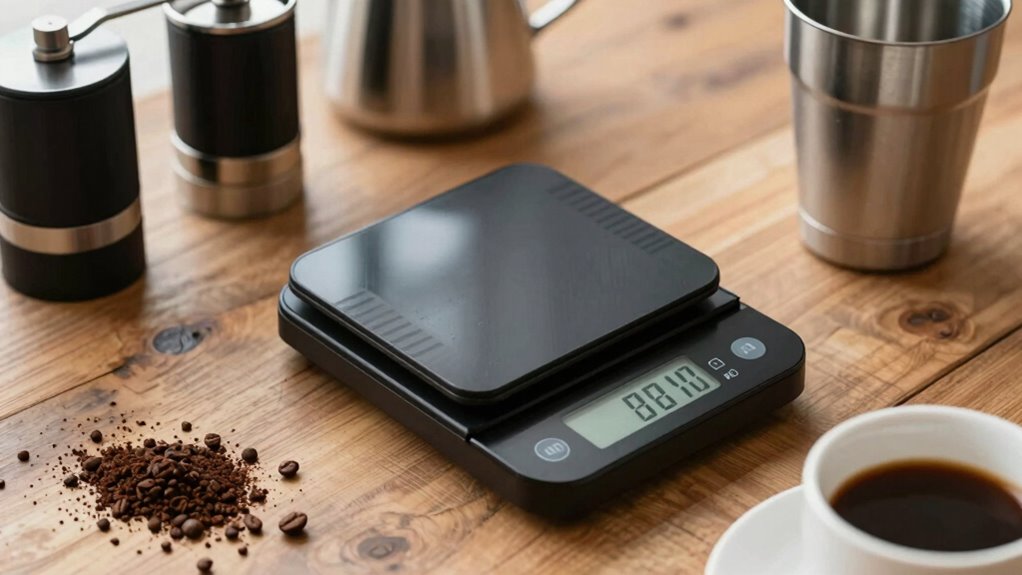
Considering portability is vital when choosing your coffee scale, especially if you enjoy brewing on the go. You’ll want to look for travel-friendly options that fit easily into your bag without adding extra weight. A compact design is essential, as it allows you to measure your coffee anywhere—be it at a campsite or a friend’s kitchen. Scales that are lightweight and slim will make your travels hassle-free, and many even come with protective cases to keep them safe. Don’t forget to check the battery life, too; a long-lasting battery guarantees you won’t be caught without power during your brewing adventures. Additionally, ensuring your coffee scale has proper weatherproof tool storage can help protect it from moisture and damage during outdoor use. By prioritizing portability, you can enjoy your perfect cup of coffee no matter where life takes you.
Digital or Analog: Which Coffee Scale Display Is Right for You?
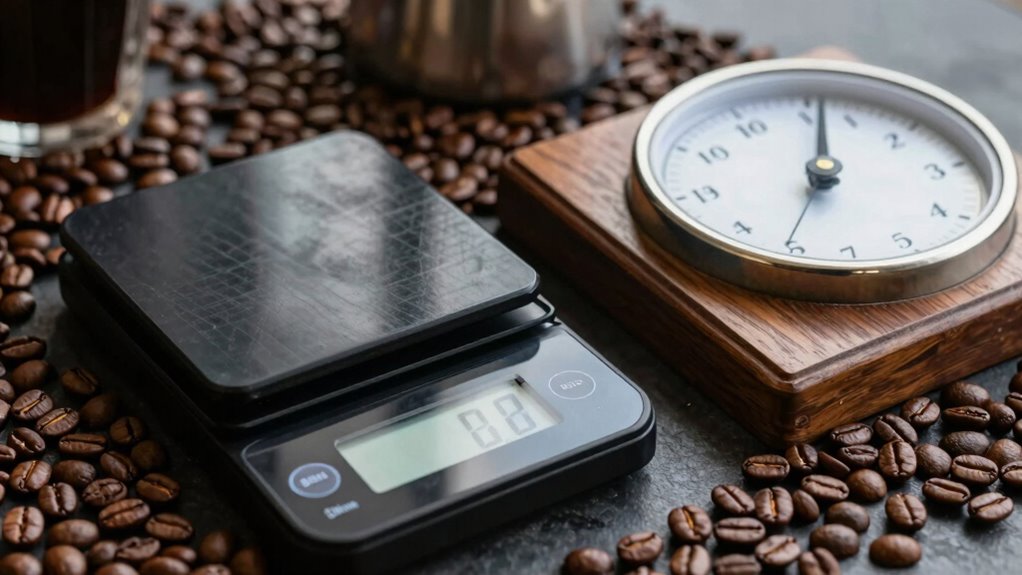
When choosing between a digital or analog coffee scale, consider how easy it is for you to read the display. Digital scales typically offer greater precision and accuracy, making them ideal for precise measurements. On the other hand, some people prefer the simplicity and charm of an analog scale.
Ease Of Reading
Whether you prefer the sleek look of a digital scale or the classic charm of an analog model, ease of reading is essential for your coffee brewing experience. You want a scale that makes it simple to read measurements quickly and accurately.
Consider these readability features:
- Display Size: Larger digits make it easier to spot the numbers at a glance.
- Backlighting: A backlit display can enhance readability in low-light conditions.
- Units of Measurement: Having multiple options (grams, ounces) adds to the scale’s ease of use.
Choose a scale that fits your style while ensuring you can read it without strain. After all, the right display can make your brewing process much more enjoyable!
Precision And Accuracy
Precision is essential for brewing the perfect cup of coffee, and choosing the right scale can make all the difference. You need to evaluate if a digital or analog display fits your needs better. Digital scales often provide higher accuracy and easier calibration techniques, while analog scales can be more visually appealing. Additionally, consider the brewing method, as certain techniques may require more precise measurements to optimize flavor. Here’s a quick comparison:
| Feature | Digital Scales |
|---|---|
| Accuracy | High |
| Calibration | Easy with standards |
| Ease of Use | Simple |
| Display | Numeric, clear |
Digital scales usually meet stricter measurement standards, ensuring you get consistent results. So, think about what matters most to you, and pick accordingly!
Maintaining Your Coffee Scale for Long-Term Use
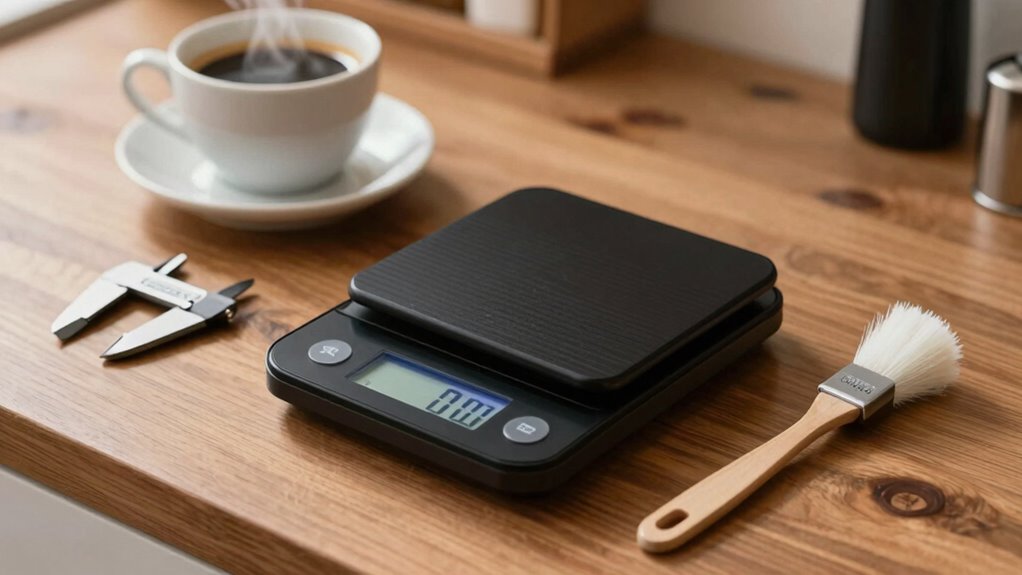
To guarantee your coffee scale lasts for years, regular maintenance is key. By implementing a few simple practices, you can keep your scale in top shape. Here are some essential tips:
- Use proper cleaning techniques: Wipe down the surface with a soft cloth after each use to prevent coffee residue buildup.
- Check battery maintenance: Replace batteries promptly to avoid corrosion and ascertain accurate readings.
- Store it properly: Keep your scale in a dry, cool place, away from direct sunlight and moisture.
Following these steps will not only enhance your scale’s lifespan but also ascertain precise measurements every time you brew. A little care goes a long way in making your coffee moments enjoyable!
Frequently Asked Questions
Can I Use My Coffee Scale for Other Kitchen Measurements?
Yes, you can definitely use your coffee scale for other kitchen measurements! Its multi-purpose usage makes it perfect for weighing ingredients like flour, sugar, or even fruits and vegetables. With its kitchen versatility, you can guarantee precise measurements for baking or cooking, improving your dishes’ quality. Just make certain to calibrate it properly and keep it clean between uses, and you’ll find your coffee scale invaluable for all your culinary adventures!
How Often Should I Calibrate My Coffee Scale?
You should calibrate your coffee scale every few months to guarantee accuracy, especially if you notice discrepancies in measurements. Regular calibration frequency helps maintain scale precision, which is essential for consistent brewing. If you use your scale frequently or move it around, consider calibrating it more often. Proper scale maintenance not only extends its lifespan but also enhances your coffee experience by delivering reliable and precise measurements every time you brew.
Are There Specific Brands Recommended for Coffee Scales?
Yes, certain brands stand out for digital scales. For precise measurements, consider the Hario V60 or the Acaia Pearl; both offer excellent accuracy and durability. If you’re on a budget, the AWS scale is a reliable choice. When making brand comparisons, think about features like capacity, readability, and connectivity. Each brand has unique offerings, so it’s worth exploring reviews to find the perfect match for your coffee brewing needs.
What Is the Typical Lifespan of a Coffee Scale?
A coffee scale is like your trusty friend in the kitchen, always there to help you brew that perfect cup. Typically, a well-maintained scale lasts around 3 to 5 years, depending on its durability and your usage frequency. If you’re brewing daily, you might notice wear sooner, but with care, it can last longer. Just like friendships, the key is to treat it right and appreciate the little moments it helps you create.
Can Humidity Affect My Coffee Scale’s Accuracy?
Yes, humidity can affect your coffee scale’s accuracy. If the environment’s too humid, moisture can interfere with the scale’s internal components, leading to accuracy concerns in measurements. You’ll want to keep your scale in a dry area to guarantee consistent performance. Regular calibration can help mitigate some of these issues, but being mindful of humidity levels will definitely improve your brewing precision. So, always check your surroundings before weighing those beans!
Conclusion
Incorporating a coffee scale into your brewing routine is like adding a secret ingredient that transforms your daily cup into a masterpiece. With precision and thoughtful features, you can elevate your coffee experience to new heights. Whether you choose a digital or analog scale, understanding its essential functions helps you brew with confidence. By investing in a quality scale, you’re not just measuring coffee; you’re crafting the perfect brew that brings joy to every sip.