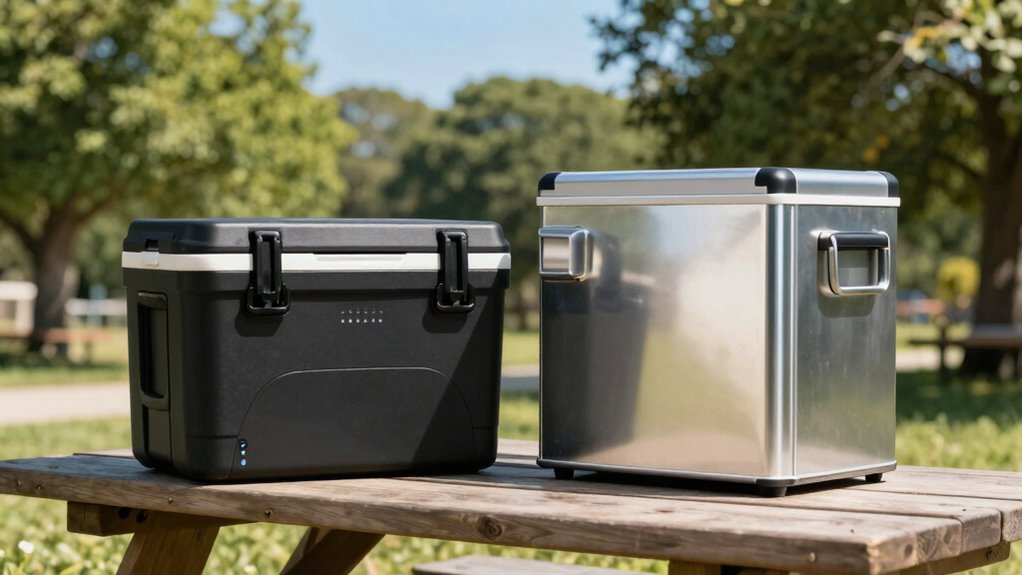

If you’re choosing between electric coolers and compressor fridges for trips, consider your needs and trip length. Electric coolers are lightweight, portable, and great for short trips or budget options, but may not keep food as cold in extreme conditions. Compressor fridges are more durable, energy-efficient, and maintain consistent temperatures, making them ideal for longer adventures. To find out which suits your trip better, keep exploring the key differences and details ahead.

Get the little things that make your day delivered free with Prime
- Fast, free delivery on millions of items
- Prime Video, Amazon Music and more included
- Member-only deals all year
Key Takeaways
- Electric coolers are lightweight and portable, ideal for short trips and tight spaces, while compressor fridges are larger and better for extended use.
- Electric coolers run on 12V/24V power, consuming less energy over time; compressor fridges are more energy-efficient but require higher power sources.
- Compressor fridges offer precise temperature control and reliable cooling, suitable for unpredictable outdoor conditions.
- Electric coolers are simpler and less durable, making them suitable for casual trips; compressor fridges are more rugged for harsh environments.
- Budget and trip duration determine the best choice: electric coolers for quick trips, compressor fridges for long, off-grid adventures.
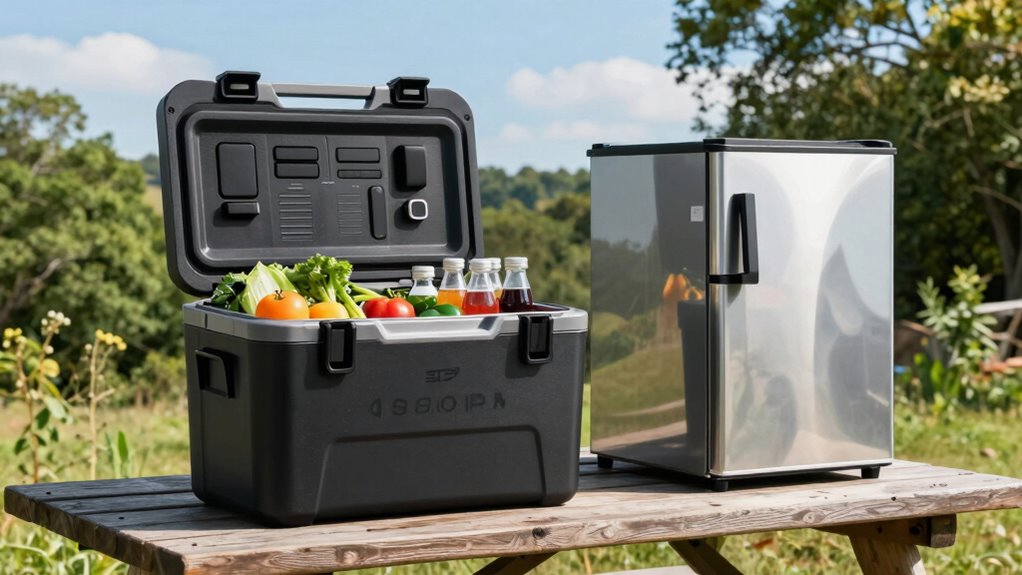
When planning your trip, choosing the right portable cooling option can make a big difference in keeping your food and beverages fresh. Two popular choices are electric coolers and compressor fridges, each with their own advantages depending on your needs. If you’re looking for something lightweight and easy to use, electric coolers might be your best bet. They typically run off 12V or 24V power sources, making them compatible with most vehicles. Their design emphasizes portability, so you can easily carry them around or pack them into tight spaces. Electric coolers often prioritize energy efficiency, which means they consume less power over extended periods, helping you conserve your vehicle’s battery life or portable power sources. This is especially important if you’re camping off-grid or relying on limited power supplies, where every watt counts.
On the other hand, compressor fridges are more like traditional home refrigerators but built for portability. They tend to be larger and heavier, which could be a concern if you’re trying to keep your setup lightweight. However, they excel in maintaining consistent temperatures, even when the outside environment fluctuates. This makes them ideal for longer trips where keeping food fresh is critical. Compressor fridges also often come with advanced features like digital temperature controls, which help you fine-tune the cooling process precisely. While these fridges usually require a more robust power source—sometimes needing 110V AC or a high-capacity portable power station—they tend to be more energy-efficient in the long run. Their compressor technology is designed to use less energy while delivering more consistent cooling, which can save you money and extend your power supply during extended trips. Additionally, understanding the power consumption of each option can help you better plan your energy needs and avoid unexpected battery drain. It’s also wise to consider the durability and build quality of each type, especially if your trip involves rough terrain or harsh conditions. Moreover, selecting a cooling device with reliable performance can ensure your food stays fresh throughout your adventure, regardless of external factors.
In addition, evaluating the cost of each option can help determine which fits your budget while still meeting your cooling needs. The decision between electric coolers and compressor fridges largely depends on your trip duration, available power sources, and packing space. If you’re going on a short trip and want something lightweight with simple operation, electric coolers are convenient and efficient. If you plan to spend weeks off-grid, a compressor fridge might be worth the extra effort, thanks to its superior energy efficiency and reliable cooling performance. Keep in mind that your choice will impact your portable power needs as well—more energy-efficient models reduce drain on your batteries and extend your trip without needing frequent recharging. Ultimately, understanding how each option balances portability, energy efficiency, and power consumption helps you pick the best cooling solution for your adventure.
portable electric cooler for camping
As an affiliate, we earn on qualifying purchases.
As an affiliate, we earn on qualifying purchases.
Frequently Asked Questions
How Do Electric Coolers Perform in Extremely Hot Climates?
Electric coolers generally struggle in extremely hot climates because they have limited heat resistance, making it harder to maintain cold temperatures. You might find they consume more power trying to keep things cool, which drains your battery quickly. If you’re in a hot environment, consider a compressor fridge instead, as it handles high temperatures better and offers consistent cooling without excessive power use.
Are Electric Coolers More Energy-Efficient Than Compressor Fridges?
Electric coolers generally consume less energy than compressor fridges, making them more power-efficient for short trips or light use. They rely on simpler thermoelectric technology, which uses less electricity but may not cool as effectively in extreme heat. If you’re looking for lower energy consumption and better power efficiency during your trips, electric coolers are a wise choice. However, for more consistent cooling, compressor fridges might be necessary despite higher energy use.
Can Electric Coolers Be Used for Long-Term Storage?
Sure, you can use electric coolers for long-term storage—if you enjoy frequent power outages and constant battery life anxiety. Their portability features make them ideal for short trips, but long-term use demands a reliable power source and patience. Remember, these coolers aren’t designed as deep freezers, so your perishables might not survive the marathon. If you’re serious about storage, a compressor fridge might be a more dependable choice.
What Maintenance Is Required for Compressor Fridges During Trips?
During trips, you should regularly check your compressor fridge’s battery life and power consumption. Keep the vents clean to prevent overheating, and verify the compressor is running smoothly. Avoid overloading, which can strain the system. Also, monitor the power source to prevent draining your battery. If you notice unusual noises or temperature fluctuations, address them promptly to maintain efficiency and prolong the fridge’s lifespan during your adventure.
How Noisy Are Electric Coolers Compared to Compressor Fridges?
Electric coolers are generally quieter than compressor fridges, producing minimal noise during operation, making them ideal for quiet environments. Compressor fridges tend to be louder because of their motor, which can create noticeable noise levels, especially if poorly maintained. Keep in mind that compressor fridges often consume more power, which may increase noise from the power supply or fan. Your choice depends on balancing noise levels and power consumption for your trip needs.
As an affiliate, we earn on qualifying purchases.
Conclusion
Choosing between an electric cooler and a compressor fridge is like picking the right vessel for your adventure’s journey. An electric cooler is lightweight and easy to carry, perfect for those spontaneous trips, while a compressor fridge offers powerful cooling for longer stays. Think of it as selecting a trusty steed—light and swift or strong and steady. Whichever you choose, make sure it fits your trip’s rhythm, so your food stays fresh and your adventures stay unforgettable.
As an affiliate, we earn on qualifying purchases.
As an affiliate, we earn on qualifying purchases.
NFL season / tailgating Picks
team gear
As an affiliate, we earn on qualifying purchases.