Your tent heats up quickly in the morning because its materials absorb and trap sunlight, acting like tiny greenhouses. Thin fabrics allow heat to transfer easily, causing rapid temperature rises. Without reflective covers or proper insulation, the internal heat builds up fast. Location also matters—setting up in shaded areas helps. To cool down your tent better, you’ll want to explore effective strategies that can keep you more comfortable throughout the morning.

Get the little things that make your day delivered free with Prime
- Fast, free delivery on millions of items
- Prime Video, Amazon Music and more included
- Member-only deals all year
Key Takeaways
- Tent fabrics absorb sunlight and act like greenhouses, trapping heat inside.
- Thin or non-reflective materials allow heat transfer, causing rapid temperature rise.
- Lack of insulation accelerates heat buildup during warm mornings.
- Direct sunlight exposure and placement in unshaded areas increase internal temperatures.
- Absence of reflective covers and insulation measures reduces heat reflection and retention.
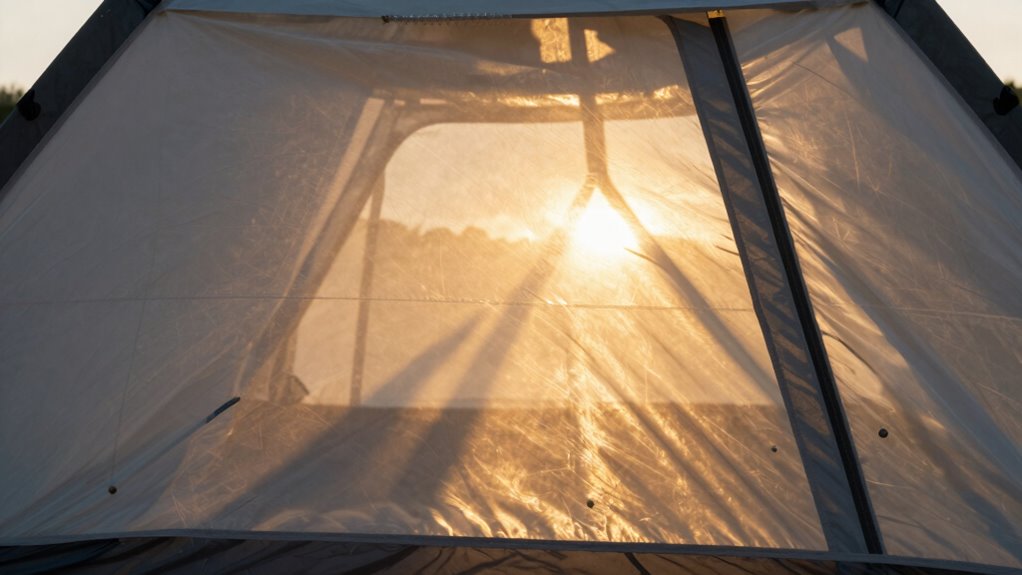
When the sun rises, your tent quickly heats up because the fabric absorbs and traps heat from the sunlight. This natural process happens because most tents are made from materials that aren’t designed to reflect heat outward. Instead, they act like tiny greenhouses, capturing warmth from the sun’s rays and holding onto it. If you’ve ever woken up feeling like you’re in a sauna, it’s because your tent’s insulation traps that heat inside. Without proper measures, your tent can become uncomfortably hot, especially during warm mornings.
One way to combat this is by using reflective covers. These covers are designed specifically to reflect sunlight away from your tent, reducing heat buildup. When you cover your tent with a reflective cover before sunrise, you create a barrier that bounces much of the sun’s energy back into the sky instead of letting it penetrate your tent’s fabric. This simple trick can dramatically lower the internal temperature and help you stay cooler in the mornings. Reflective covers are lightweight, easy to pack, and highly effective, making them a popular choice for campers who want to avoid waking up in a sweat.
Use reflective covers before sunrise to keep your tent cooler and more comfortable.
Another key factor influencing how fast your tent heats up is its insulation. Tent insulation, or the lack of it, directly impacts how much heat your tent retains. Many tents are built with thin fabric that offers minimal insulation, so the heat absorbed during the day easily gets trapped inside once the sun rises. To improve this, you might consider upgrading to tents with better insulation or adding insulation accessories like reflective mats or thermal liners. These additions help slow down heat transfer, keeping the interior cooler during the morning hours. Additionally, understanding the role of material properties in heat absorption can help you choose the best tent for hot conditions. Proper tent placement can also significantly influence how quickly your tent heats up. Moreover, selecting tents made from heat-resistant materials can further enhance your comfort in warm climates. Incorporating ventilation options into your tent setup can also promote airflow and reduce heat buildup.
It’s also worth noting that the placement of your tent plays a role. Setting up in a shaded area or under trees can significantly reduce initial heat absorption. However, if that’s not possible, combining good tent insulation with reflective covers is your best bet. By doing so, you create a layered defense against the morning sun’s relentless heat. You’ll find that your tent stays more comfortable, and you wake up feeling a lot fresher, ready to enjoy your outdoor adventures without the stifling heat. A well-placed tent not only helps with heat management but also offers additional protection from weather.
In essence, the rapid warming of your tent is a natural result of how sunlight interacts with its materials. But with strategic use of reflective covers and proper insulation, you can keep the morning heat at bay. These simple measures turn your camping experience into a more pleasant one, helping you wake up refreshed and ready to start your day.
Frequently Asked Questions
How Does Tent Material Affect Heat Retention Overnight?
Your tent material impacts heat retention overnight because it influences tent insulation and breathability. Thicker or insulated fabrics trap more heat, keeping your tent warmer. Conversely, breathable materials allow moisture to escape, preventing condensation and excessive heat buildup. So, choosing a tent with good insulation and breathable fabric helps regulate temperature, ensuring you stay comfortable without overheating or feeling damp, especially during chilly mornings.
Can Reflective Tent Covers Reduce Morning Heat Buildup?
Ironically, reflective tent covers can actually help reduce morning heat buildup. They work by reflecting heat away through heat reflection, keeping your tent cooler as the sun rises. You might think covering your tent would trap more heat, but these covers deflect sunlight, preventing it from heating your tent’s interior. So, if you want a cooler morning wake-up, using reflective covers is a smart move to combat the heat.
Does Tent Ventilation Impact Temperature Rise in the Morning?
Yes, tent ventilation considerably impacts temperature rise in the morning. When you improve tent airflow, it allows the morning breeze to circulate inside, helping to cool down the tent faster. Proper ventilation prevents heat from trapping and accumulating, keeping the interior cooler. So, by opening vents or windows, you enable fresh air to flow in, reducing the temperature increase and making your morning experience much more comfortable.
Are Certain Tent Shapes Better for Staying Cool?
Yes, certain tent shapes are better for staying cool. A dome tent, with its curved design, promotes better airflow and reduces heat buildup. Its shape allows hot air to rise and escape easily, keeping the interior cooler. Conversely, boxy or tunnel tents may trap more heat because their airflow design isn’t as efficient. Choosing a tent with a shape that encourages ventilation can make a significant difference in staying comfortable during hot mornings.
How Does Campsite Location Influence Tent Morning Temperatures?
Your campsite location greatly influences your tent’s morning temperature. If your tent faces direct sun exposure, it’ll heat up quickly as the sun rises. Conversely, choosing a site near nearby shade, like trees or structures, keeps your tent cooler and reduces morning heat buildup. Positioning your tent in a shaded area or orienting it to avoid direct sunlight can make mornings much more comfortable and cooler.
Conclusion
So, now you know why your tent heats up so quickly in the morning. The combination of sunlight, materials, and your campsite’s surroundings all play a role in turning your cozy shelter into a hot box overnight. To beat the heat, choose shaded spots and consider reflective gear. Remember, it’s better to be safe than sorry—don’t let the early morning sun catch you off guard, or you might find yourself sweating more than you bargained for.
NFL season / tailgating Picks
team gear
As an affiliate, we earn on qualifying purchases.