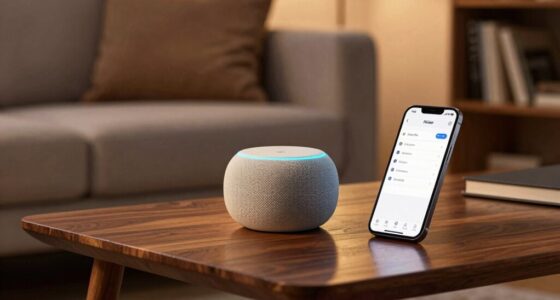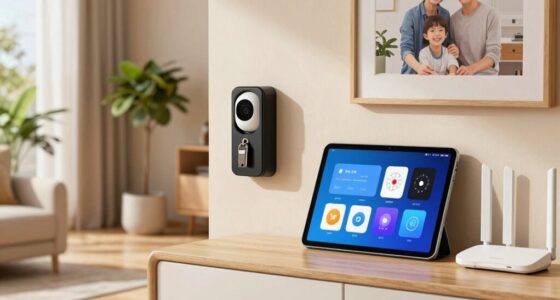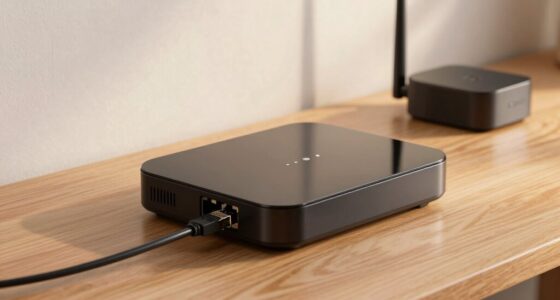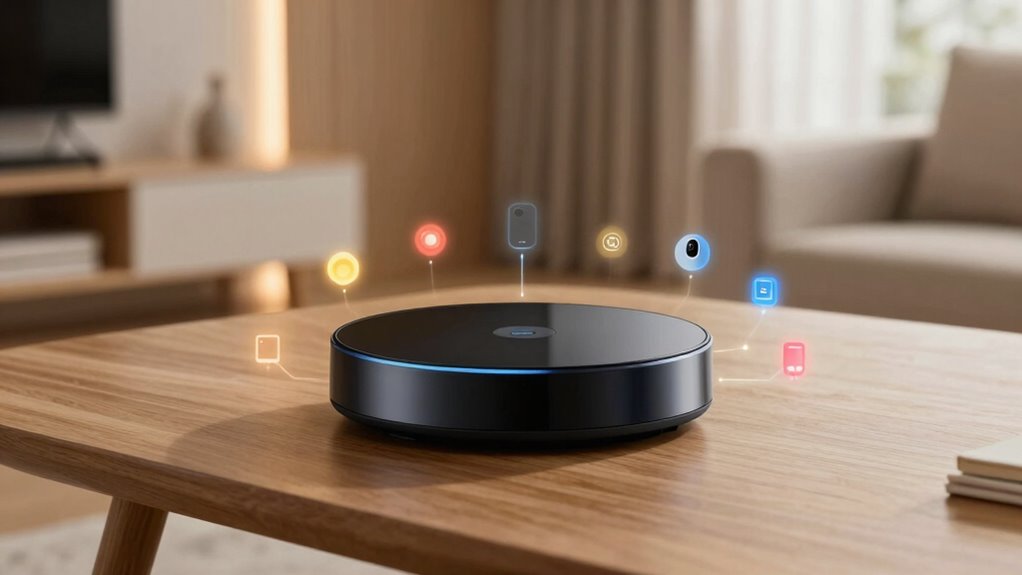

Smart home hubs act as your central control for all connected devices, making management simple with a single interface. They support voice commands and connect devices across various protocols like Wi-Fi, Zigbee, and Z-Wave. Upcoming standards like Matter and Thread will improve compatibility, ensuring your system stays future-proof. If you want to understand how these technologies can make your smart home more efficient and seamless, keep exploring to get all the details.

Get the little things that make your day delivered free with Prime
- Fast, free delivery on millions of items
- Prime Video, Amazon Music and more included
- Member-only deals all year
Key Takeaways
- Smart home hubs act as centralized controllers, simplifying device management and enhancing ecosystem integration.
- Matter and Thread are emerging standards that improve device interoperability and future-proof smart home systems.
- Hubs connect devices across different protocols like Wi-Fi, Zigbee, and Z-Wave, ensuring reliable communication.
- Voice control via assistants like Alexa, Google Assistant, and Siri adds convenience for managing connected devices.
- Using a smart hub with Matter and Thread promotes device compatibility, scalability, and seamless automation.
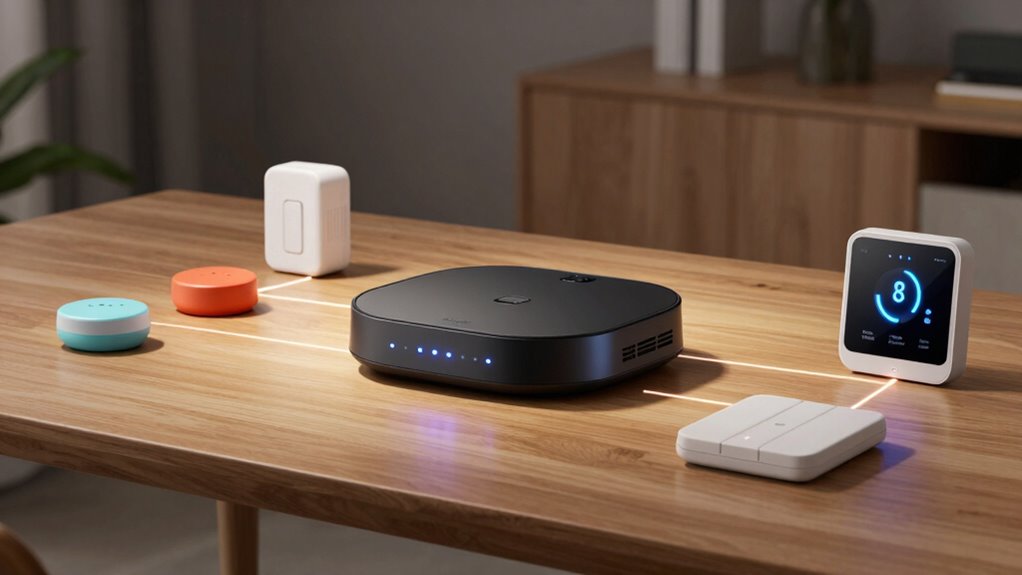
If you’re new to smart home technology, understanding what a smart home hub is can seem overwhelming at first. Fundamentally, a smart home hub acts as the central command center for your connected devices, allowing you to control everything from one place. Instead of juggling multiple apps or devices, a hub simplifies your smart home experience by providing seamless device integration. With a hub, you can connect smart lights, thermostats, security cameras, and more, all through a single interface. This makes managing your home more intuitive and efficient, especially as your smart ecosystem grows.
A smart home hub centralizes device control, simplifying management and enhancing your connected home experience.
One of the biggest advantages of a smart home hub is its ability to enable voice control. When integrated properly, your hub allows you to give voice commands to control various devices. For example, you can ask your hub to turn off the lights, adjust the thermostat, or lock the doors. Voice control adds convenience, especially when your hands are full or you’re across the room. Plus, with compatible voice assistants like Amazon Alexa, Google Assistant, or Apple Siri, you get a natural, hands-free way to interact with your smart home. The hub translates your voice commands into actions that trigger your connected devices, making your home more responsive to your needs.
Device integration is at the core of what a smart home hub does. It connects devices that might otherwise operate on different platforms or protocols. For instance, some devices use Wi-Fi, others Zigbee or Z-Wave. A good hub can bridge these protocols, allowing all your devices to work together smoothly. This compatibility is vital because it prevents you from having to buy new devices just to guarantee they work with your system. Instead, the hub acts as a translator, enabling diverse devices to communicate reliably. This integration also means you can set up automation routines—like turning on the porch light when the front door opens or adjusting the temperature when you leave home—without needing separate control apps for each device. Additionally, many hubs now support emerging standards like Matter, Thread, and future-proof your smart home setup, which are designed to enhance interoperability across different brands and platforms. Moreover, interoperability is increasingly important as the smart home ecosystem expands, ensuring all devices can work together regardless of manufacturer.
smart home hub with Zigbee and Z-Wave
As an affiliate, we earn on qualifying purchases.
As an affiliate, we earn on qualifying purchases.
Frequently Asked Questions
How Do I Choose the Right Smart Home Hub for My Needs?
To choose the right smart home hub, consider your integration options—make sure it works with your existing devices and preferred platforms. Check the user interface; you want something intuitive and easy to navigate. Think about your home size and the number of devices you plan to connect. Also, consider future compatibility with standards like Matter and Thread, ensuring your setup stays flexible and secure as technology evolves.
Are Smart Home Hubs Compatible With All Smart Devices?
Think of a smart home hub as a universal translator. While it aims to speak many device languages, it doesn’t master every dialect. Device integration depends on compatibility standards, and not all gadgets understand the same language. Before buying, check if your devices follow common standards like Zigbee, Z-Wave, or Thread. This way, your hub becomes a symphony of connected devices, rather than a discordant jumble.
What Is the Cost Difference Between Various Smart Home Hubs?
The cost difference between various smart home hubs varies widely, often depending on features and brand. Some hubs start as low as $50, offering basic compatibility, while premium models can cost over $300 with advanced features. When considering pricing options, think about your budget and what smart devices you want to connect. Budget considerations help you choose a hub that fits your needs without overspending, ensuring you get value for your money.
How Secure Are Smart Home Hubs Against Hacking?
Sure, your smart home hub’s as secure as a secret note in a spy movie—until someone cracks the code. Luckily, encryption protocols keep hackers at bay, and regular firmware updates patch those pesky vulnerabilities. But if you forget to update, your devices might be as exposed as a open mic at a karaoke bar. So, stay vigilant, update often, and sleep soundly knowing your smart home isn’t an open invitation to hackers.
Can I Expand My Smart Home Setup Easily Over Time?
Yes, you can easily expand your smart home setup over time. Wireless protocols like Zigbee, Z-Wave, and Thread help guarantee device interoperability, making it simple to add new devices without compatibility issues. Just make sure your hub supports these protocols, and you’ll be able to seamlessly integrate new gadgets, enhancing your smart home experience gradually and effortlessly.
compatible smart home hub with Matter support
As an affiliate, we earn on qualifying purchases.
As an affiliate, we earn on qualifying purchases.
Conclusion
As you stand at the crossroads of your smart home journey, envision a seamless web of devices working in harmony, like stars aligning in a clear night sky. With the right hub, Matter, and Thread, you create a symphony of connected living—simple, secure, and effortless. Embrace this digital constellation, and watch as your home transforms into a sanctuary where technology and comfort dance together, illuminating your everyday life with ease and confidence.
As an affiliate, we earn on qualifying purchases.
Thread protocol smart home device hub
As an affiliate, we earn on qualifying purchases.
As an affiliate, we earn on qualifying purchases.
NFL season / tailgating Picks
team gear
As an affiliate, we earn on qualifying purchases.