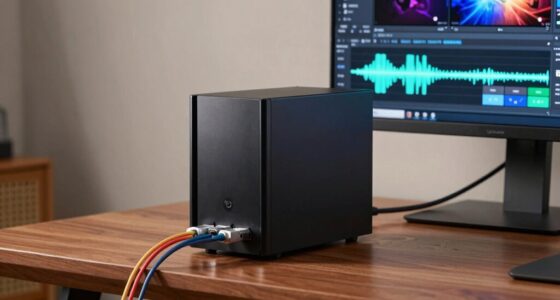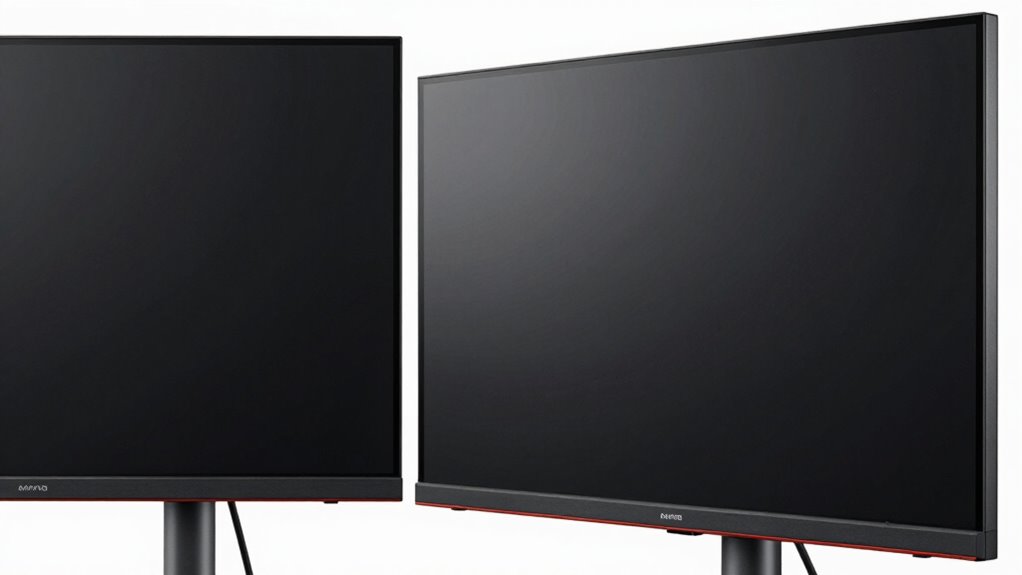

Even if monitors have the same diagonal size, how large they feel depends on more than just inches. Factors like display dimensions, bezel size, and aspect ratio influence your perception of space. Better color accuracy, higher refresh rates, and resolution can also make screens feel more expansive and immersive. Small design differences greatly affect how big a monitor seems. Keep exploring, and you’ll discover how each feature shapes the way you experience your screen.

Get the little things that make your day delivered free with Prime
- Fast, free delivery on millions of items
- Prime Video, Amazon Music and more included
- Member-only deals all year
Key Takeaways
- Display aspect ratio and physical dimensions influence how large a monitor appears beyond its diagonal size.
- Bezel size and overall design affect the visible screen area, altering perceived size.
- Color accuracy and visual fidelity enhance immersion, making screens feel more expansive.
- Higher refresh rates and detail improve motion smoothness and sharpness, impacting perceived size and responsiveness.
- The combination of resolution, design, and display features shapes overall perceived monitor size and immersion.
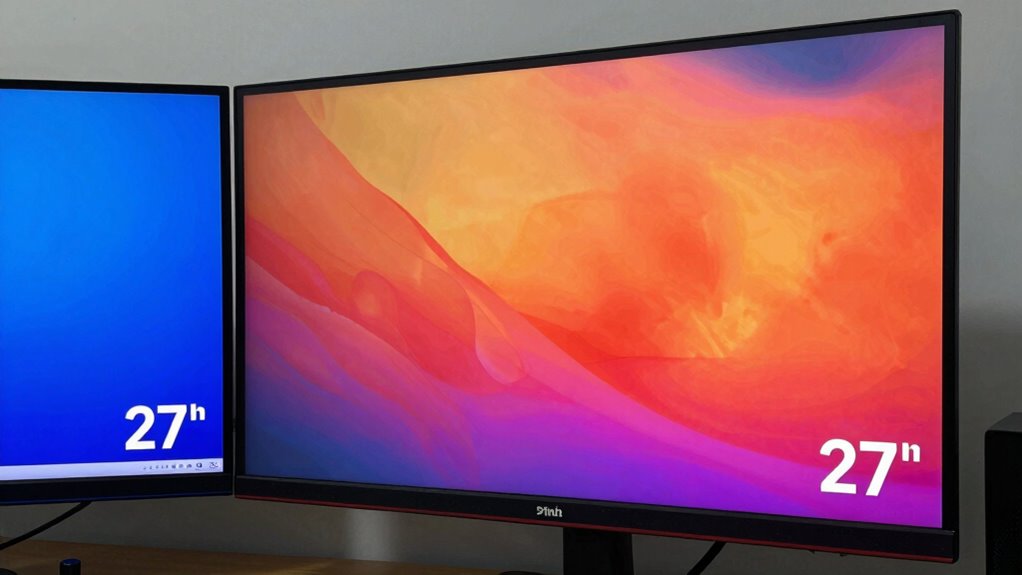
When shopping for monitors, you might notice that two screens labeled as the same size—say, 27 inches—can still feel quite different in their actual viewing experience. This difference arises because monitor size isn’t just about the diagonal measurement; factors like display dimensions, resolution, and physical design play significant roles. Even if two monitors are both 27 inches, one might have a larger screen area due to a smaller bezel or a different aspect ratio, making it feel more immersive or spacious. Conversely, a more compact display with the same size label may seem less expansive.
Two 27-inch monitors can feel very different due to bezels, aspect ratios, and display area.
Beyond physical dimensions, other features influence how a monitor feels and performs. Color accuracy is a key aspect, especially if you work in graphic design, video editing, or gaming where visual fidelity matters. A monitor with high color accuracy faithfully reproduces colors, making images appear vibrant and true to life. When comparing two 27-inch screens, one with superior color accuracy will seem more vivid and engaging, giving you a richer viewing experience even if their sizes match. This affects your perception of size because a display that can produce more accurate, vibrant colors tends to feel more lifelike, pulling you into your work or entertainment more effectively.
Refresh rate is another crucial factor that impacts how a monitor feels, especially during fast-paced activities like gaming or video editing. A higher refresh rate—say 120Hz or 144Hz—provides smoother motion and reduces motion blur, making fast movements appear more fluid. When two 27-inch monitors share the same size label but differ in refresh rate, the one with the higher rate will deliver a more responsive, seamless experience. This can make it seem as though the display is more capable or larger in scope because of how comfortably it handles rapid motion, even if the physical size doesn’t change. Additionally, the resolution of a display influences how detailed and sharp images appear, which can also affect your perception of size and immersion. A higher resolution provides finer detail, making content look crisper and more engaging, even on smaller screens.
In conclusion, the overall experience of a monitor is shaped by how well these features are integrated, rather than just its physical size. A well-calibrated display with a high refresh rate and accurate colors can make a smaller screen feel just as immersive as a larger one, emphasizing the importance of performance features in your selection. The interaction between these features can sometimes be overlooked, but they are essential in creating a truly immersive viewing experience. When considering a monitor, understanding how display quality impacts perception can help you choose a device that maximizes your visual experience. Recognizing the importance of visual performance helps consumers make more informed decisions, as the perceived size and quality of a monitor are heavily influenced by these factors. In essence, the apparent size and overall experience of a monitor depend less on the number of inches and more on how those inches are used and enhanced through features like color accuracy and refresh rate. A larger physical size with poor color reproduction or a low refresh rate can feel less engaging than a slightly smaller display that offers excellent color fidelity and smooth motion. When you’re choosing a monitor, consider these performance aspects alongside size, because they shape how immersive and responsive your screen truly feels. It’s not just about the number of inches; it’s about how well that space is utilized to deliver a vibrant, fluid experience.
27 inch monitor with small bezels
As an affiliate, we earn on qualifying purchases.
As an affiliate, we earn on qualifying purchases.
Frequently Asked Questions
How Does Aspect Ratio Influence Perceived Monitor Size?
Aspect ratio influences how big a monitor feels by shaping its width and height. A wider ratio, like 16:9, makes the screen appear larger horizontally, enhancing your viewing experience especially for gaming or multimedia. While color accuracy and refresh rate impact image quality and smoothness, they don’t alter perceived size. So, choosing the right aspect ratio helps you feel more immersed, regardless of the actual inch measurement.
Do Curved Screens Affect Size Perception Compared to Flat Screens?
Imagine wrapping your view around a gentle curve; a curved screen naturally enhances your visual immersion, making the size feel larger and more encompassing than a flat one of equal inches. This design improves ergonomic comfort by reducing eye strain and neck movement. The curved edges draw you into the display, creating a sense of depth and presence that flat screens often lack, making your experience more engaging and comfortable.
How Does Screen Resolution Impact the Feeling of Monitor Size?
Your perception of monitor size is influenced by resolution, panel technology, and color calibration. Higher resolutions pack more pixels, making screens appear sharper and more detailed, which can make the monitor seem larger even at the same inch size. Advanced panel technology offers better contrast and color accuracy, enhancing the overall viewing experience. Proper color calibration guarantees accurate visuals, subtly affecting how spacious and immersive your monitor feels during use.
Does Viewing Distance Alter How Large a Monitor Feels?
Like a painter stepping closer to their canvas, your viewing distance makes a monitor feel larger or smaller. When you sit closer, even a smaller screen appears expansive; farther away, it shrinks. Your perception is also influenced by color accuracy and refresh rate—vivid colors and smooth motion enhance the size effect. Adjusting your distance can optimize your experience, making the monitor feel just right for your workspace and preferences.
How Do Bezel Size and Screen Borders Affect Perceived Display Size?
Bezel size and screen borders considerably influence how large a monitor feels. Thinner bezels create an immersive experience, making the display appear larger, while thick borders can make it seem smaller. Although bezel size doesn’t affect color accuracy or refresh rate directly, a seamless design enhances your viewing experience. For maximum performance, choose a monitor with high color accuracy and a fast refresh rate, regardless of bezel size, to maximize visual quality and responsiveness.
monitor with high color accuracy
As an affiliate, we earn on qualifying purchases.
As an affiliate, we earn on qualifying purchases.
Conclusion
So, next time you’re choosing a monitor, remember it’s not just about the inches. Think of it like buying a car—two vehicles might have the same engine size, but their size and feel can be worlds apart. I once saw a 27-inch monitor that felt surprisingly compact compared to a 24-inch, thanks to bezels and aspect ratios. Size isn’t just a number; it’s how that space feels in your hands and workspace.
As an affiliate, we earn on qualifying purchases.
high refresh rate gaming monitor
As an affiliate, we earn on qualifying purchases.
As an affiliate, we earn on qualifying purchases.
NFL season / tailgating Picks
team gear
As an affiliate, we earn on qualifying purchases.