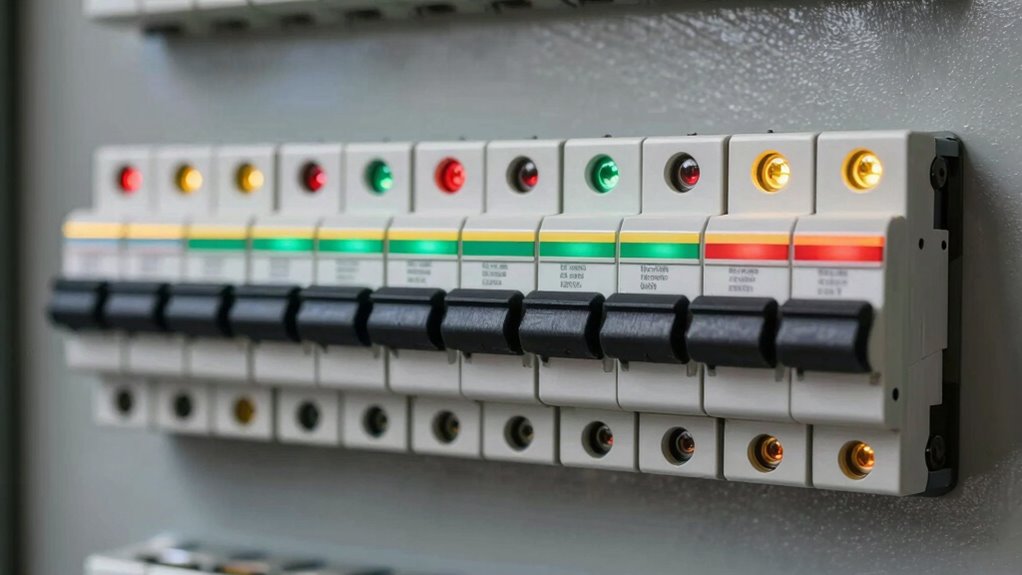
Your circuit breaker panel has switches that control different circuits in your home, each labeled with its purpose, like “Kitchen” or “Living Room.” When a switch is flipped to “ON,” it indicates that circuit is active, while “OFF” disconnects power. If a breaker trips, it moves to a middle or “off” position, indicating a problem. Understanding what each switch signifies guarantees your safety; keep exploring to learn more about how they work.

Get the little things that make your day delivered free — and shop member deals
- Fast, free delivery on millions of items
- Access to Prime Big Deal Days deals on October 6–7
- Prime Video, Amazon Music and more included
Key Takeaways
- “ON” indicates the circuit is active and supplying power; “OFF” disconnects the circuit.
- Tripped switches are in the “OFF” position, requiring inspection before resetting.
- Labels identify the circuit’s function, such as “Kitchen” or “Living Room.”
- Properly rated switches prevent overloads and electrical hazards.
- Resetting a breaker after a trip involves switching it fully to “OFF” then back to “ON.”
residential circuit breaker panel
As an affiliate, we earn on qualifying purchases.
As an affiliate, we earn on qualifying purchases.
What Is a Circuit Breaker and How Does It Protect Your Home?
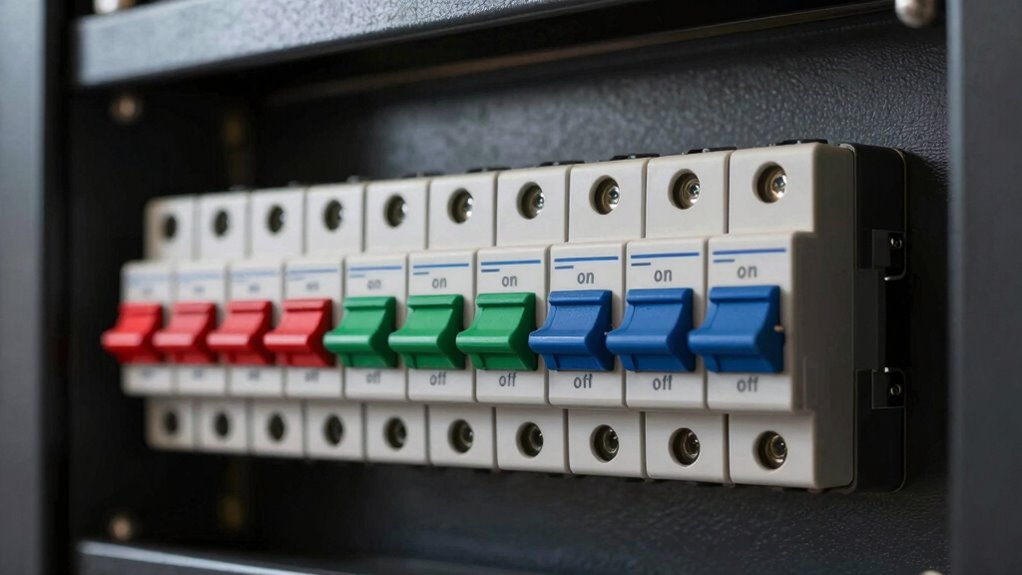
Ever wonder how your home stays safe from electrical overloads? That’s where a circuit breaker comes in. It’s designed to protect you by shutting off power when it detects a problem. For example, if there’s a ground fault—when electricity leaks to the ground instead of your appliances—the breaker trips to prevent shocks or fires. Similarly, an arc fault occurs when an electrical arc sparks due to damaged wiring or loose connections, risking a fire. The circuit breaker senses these issues and automatically interrupts the flow of electricity. This quick response helps prevent damage to your wiring and appliances while keeping you safe. Proper circuit breaker maintenance ensures continued protection and avoids potential fire hazards. Without proper circuit breakers, these faults could lead to dangerous situations, making your home far more vulnerable.
GFCI circuit breaker for wet areas
As an affiliate, we earn on qualifying purchases.
As an affiliate, we earn on qualifying purchases.
Different Types of Circuit Breakers You Should Know
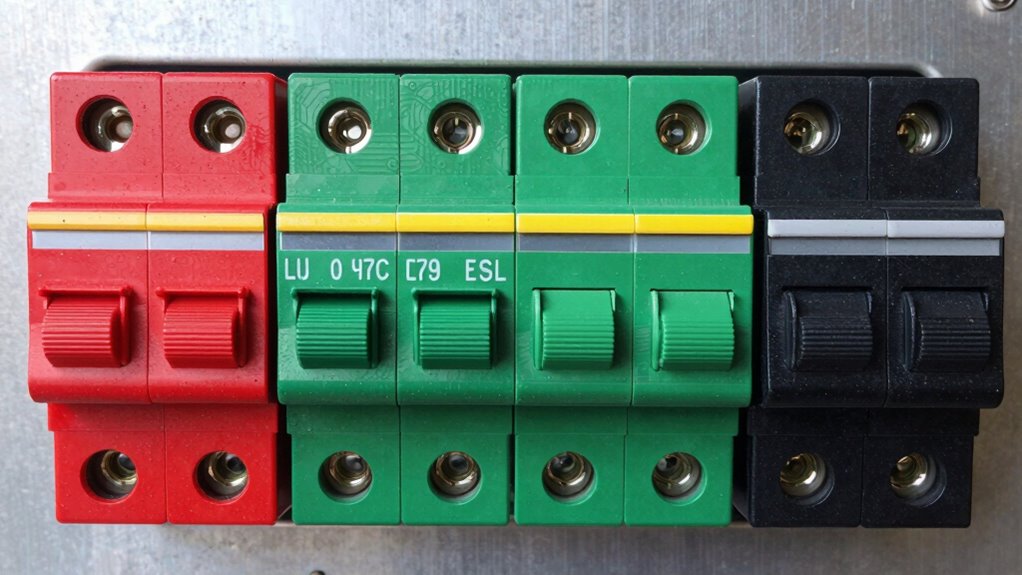
Understanding the different types of circuit breakers is vital for selecting the right protection for your home. You’ll encounter various types and ratings, each suited for specific applications. Standard types include mini circuit breakers (MCBs), used for residential wiring, and larger, more robust types like molded case circuit breakers (MCCBs) found in commercial settings. There are also ground-fault circuit interrupters (GFCIs) for wet areas and arc-fault circuit interrupters (AFCIs) for added safety against electrical fires. Choosing the correct type depends on your electrical load and the environment. Proper installation and ongoing maintenance are essential to guarantee these breakers function effectively and safely. Understanding the different types helps you make informed decisions, guaranteeing your home’s electrical safety and reliability. Regular testing of circuit breaker functionality is crucial to ensure their proper operation over time.
arc fault circuit interrupter AFCI
As an affiliate, we earn on qualifying purchases.
As an affiliate, we earn on qualifying purchases.
How to Read and Interpret Your Circuit Breaker Switches
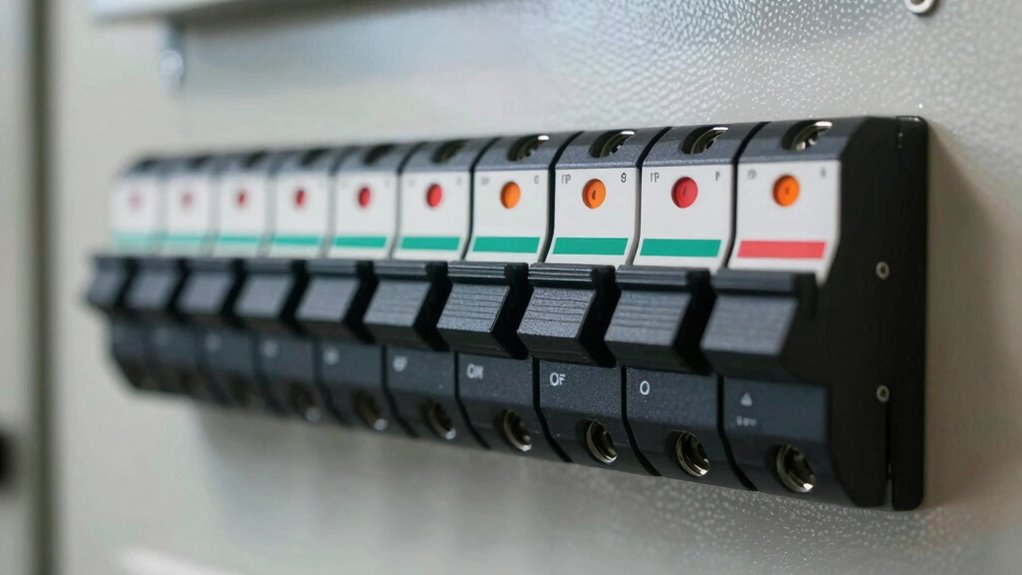
Have you ever looked at your circuit breaker panel and wondered what all those switches mean? Understanding switch positions and breaker labels helps you interpret your panel correctly. First, note that breaker labels identify the circuit each switch controls, such as “Kitchen” or “Living Room.” Second, observe the switch positions: “ON” indicates power flow, while “OFF” means the circuit is cut off. Third, pay attention to any switches that are in the middle or tripped position—these often indicate a problem needing attention. To interpret your switches effectively:
- Read the labels to know what each switch controls.
- Check if the switch is in the “ON” position for normal operation.
- If a switch is off or tripped, reset it carefully after addressing any issue.
As an affiliate, we earn on qualifying purchases.
Decoding Circuit Breaker Labels and Settings for Safety
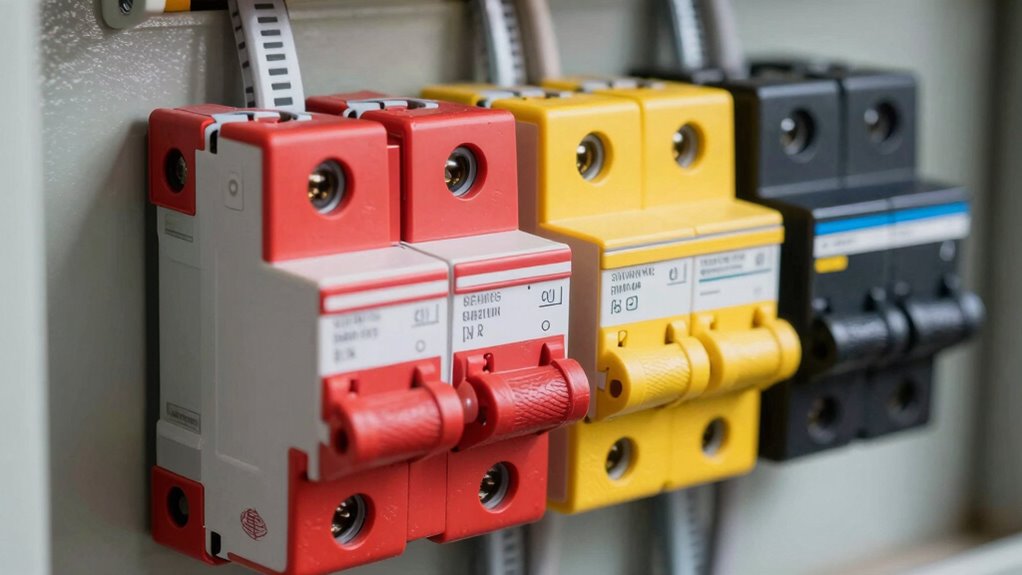
Understanding your circuit breaker labels helps you identify their purpose quickly. You’ll see numbers and symbols that indicate the current rating and protected circuits. Knowing how to interpret these settings makes sure you stay safe and ensures proper system functioning. Additionally, familiarizing yourself with common support breakfast options can provide a comforting start to your day.
Reading the Labels
To guarantee safety when working with circuit breakers, it’s essential to read and interpret their labels carefully. Labels provide vital information about switch functions, label meanings, and proper settings. Misreading labels can lead to improper operation or hazards. Keep these points in mind:
- Always verify the label meanings before flipping a switch.
- Understand the switch functions indicated by the labels to avoid accidental disconnection.
- Check the rated current and voltage to make sure it matches your system’s requirements.
- Recognize how traditional Indonesian decor masks can be used to enhance aesthetic appeal and create harmonious environments in your space.
Understanding Circuit Settings
Decoding circuit breaker labels and settings is crucial for ensuring safe operation. When working with wireless switches or smart circuit breakers, understanding their labels helps you set and reset them correctly. These labels indicate the amperage rating, trip characteristics, and specific functions, guiding you to choose the right breaker for each circuit. Smart circuit breakers often feature digital displays or app interfaces, making it easier to interpret settings and monitor performance remotely. Wireless switches may also have customizable settings tied to the breaker, allowing for more precise control. By accurately understanding these labels, you prevent overloads and electrical hazards, ensuring your system functions safely and efficiently. Proper circuit breaker labeling is essential for troubleshooting and maintenance. Always double-check the labeling and manufacturer instructions before making adjustments or upgrades.
Why Does My Circuit Breaker Trip, and What Can I Do?
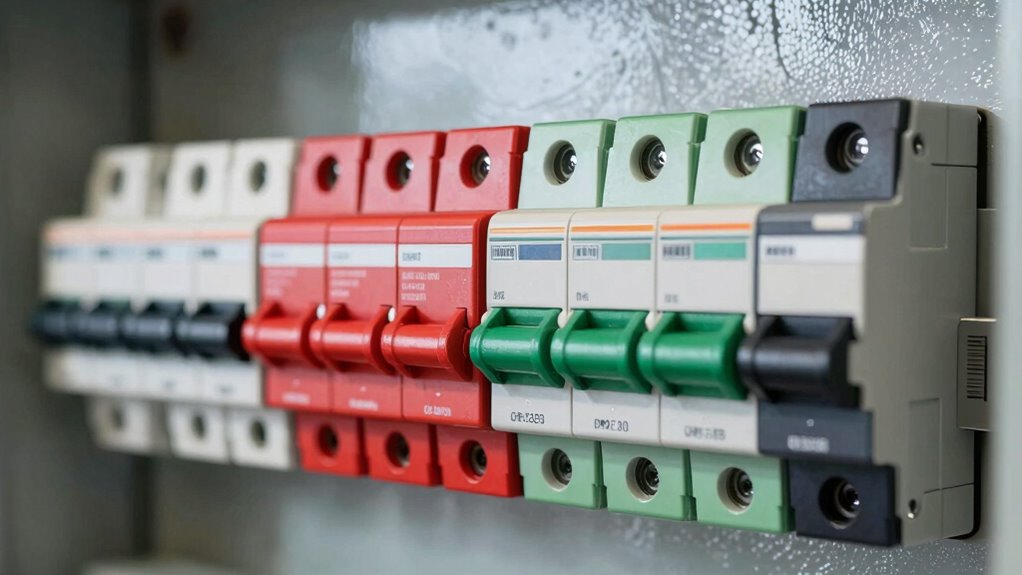
Have you ever wondered why your circuit breaker trips unexpectedly? It usually happens to protect you and your home from electrical issues. Here are common reasons:
- Overload Protection: Too many devices drawing power on one circuit can overload it, causing the breaker to trip.
- Ground Fault: If a wire touches a grounded surface or there’s a leak, a ground fault occurs, triggering the breaker for safety.
- Short Circuit: Damaged wiring or appliances can cause a sudden surge, flipping the switch.
- High-Quality Breakers: Using high-quality circuit breakers can help prevent unnecessary trips and ensure reliable protection.
To address these issues, reduce the load on the circuit or unplug devices. If it trips repeatedly, it’s best to consult a professional to inspect for underlying problems and guarantee your safety.
When to Call a Professional for Electrical Panel Problems
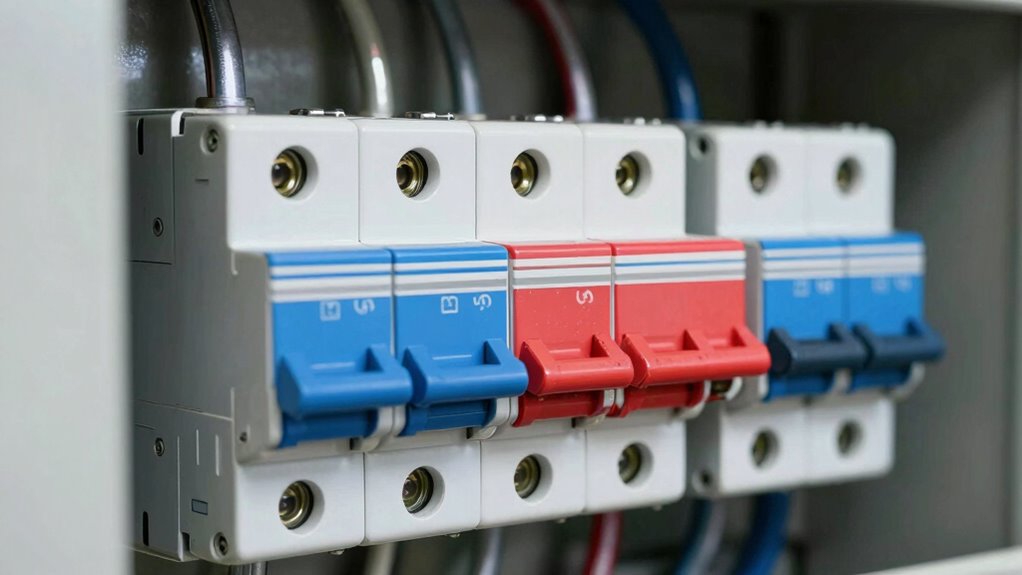
If your circuit breaker keeps tripping or you notice a burning smell, it’s time to get a professional involved. Visible damage to wires or the panel also signals a serious issue that shouldn’t wait. Ignoring these signs could put your safety and home at risk. Additionally, understanding electrical panel terminology can help you communicate effectively with electricians and ensure proper diagnosis.
Persistent Tripping Signs
Persistent tripping of your circuit breaker is a clear warning that something’s wrong with your electrical system. If your breaker trips repeatedly, it’s time to call a professional. Common signs include:
- Frequent overload trips, which happen when too many devices draw power simultaneously.
- Power surges that cause your breaker to trip to protect your wiring.
- Breakers that trip even with minimal load, indicating underlying issues.
These signs suggest your system might be overloaded or experiencing a power surge. Ignoring these warnings can lead to damaged appliances or even electrical fires. If you notice this pattern, don’t delay—contact an electrician to diagnose and fix the problem before it worsens. Early intervention keeps your home safe and prevents costly repairs.
Unusual Burning Smells
Noticing an unusual burning smell near your electrical panel is a serious warning sign that something’s wrong inside your system. It could indicate overheating, faulty wiring, or components that are burning out. You should never ignore this smell; prompt action is essential. Smoke detection within the panel is a clear sign to call a professional immediately. Conducting a wiring inspection helps identify loose connections or damaged wires causing the odor. Remember, Victorian Steampunk Roleplay emphasizes proper etiquette, so always approach such issues with caution and respect for safety protocols.
Visible Electrical Damage
Have you spotted visible signs of damage on your electrical panel? Visible damage, like burn marks or scorched areas, indicates serious issues that require professional attention. Never ignore these warning signs. Here are key points to contemplate:
- Visible damage such as melted insulation or burn marks suggests overheating or electrical faults.
- Burn marks near circuit breakers or inside the panel indicate potential fire hazards.
- Cracks or discoloration on the panel’s surface point to internal damage needing expert assessment.
- Regular inspection and maintenance can help identify electrical hazards early before they become dangerous.
If you notice any of these signs, avoid tampering with the panel. Call a licensed electrician immediately to assess and repair the problem safely. Addressing visible electrical damage promptly can prevent fires, electrical shocks, and further costly repairs.
Frequently Asked Questions
How Often Should I Test My Circuit Breakers for Proper Function?
You should test your circuit breakers at least once a year to guarantee proper function. Regular testing helps catch potential issues before they cause problems. Follow maintenance tips like turning off the power, inspecting for damage, and manually tripping the breaker. If you notice any signs of wear or frequent tripping, test more often or consult a professional. Consistent testing keeps your electrical system safe and reliable.
Can a Circuit Breaker Be Reset Multiple Times Without Replacement?
Sure, you can reset a circuit breaker multiple times, but don’t make it your recycling project. Constantly recycling breakers isn’t a sign of good maintenance; it’s a shortcut that could hide underlying issues. The breaker replacement frequency is key—if it trips often, it’s time to replace it, not just reset. Ignoring this can lead to dangerous situations, so take safety seriously and replace faulty breakers when needed.
What Are the Signs of a Faulty or Aging Circuit Breaker?
You might notice warning signs like frequent trips, burn marks, or a strange smell coming from your breaker, which indicate age-related issues or a faulty circuit breaker. Other signs include difficulty resetting it, inconsistent performance, or if it’s physically damaged. If you see these warning signs, it’s vital to replace or have it inspected by a professional to prevent potential electrical hazards and guarantee your safety.
Are There Specific Circuit Breakers for Outdoor or Wet Environments?
Imagine standing in a rainstorm, wishing your equipment was safeguarded. Yes, there are specific circuit breakers designed for outdoor or wet environments, called weatherproof switches or outdoor breaker types. These are built with sealed enclosures and corrosion-resistant materials to withstand moisture, rain, and harsh weather. Using the right outdoor breaker ensures safety and reliability, so you won’t have to worry about electrical hazards when the weather turns ugly.
How Do I Prevent Circuit Breakers From Tripping Frequently?
To prevent circuit breakers from tripping frequently, you should install surge protection and guarantee overload prevention. Avoid overloading circuits by distributing appliances evenly and not exceeding the breaker’s capacity. Regularly inspect your wiring for damage, and upgrade your breaker if needed. Using surge protectors can shield against power spikes, reducing trips caused by surges. Proper maintenance and awareness of your electrical load help keep your breakers functioning smoothly.
Conclusion
Understanding your circuit breaker is like holding the key to your home’s safety fortress. By knowing what each switch means and how to interpret them, you prevent minor issues from turning into major disasters—like electrical chaos that could rival a lightning storm inside your walls. Stay vigilant, read those labels, and don’t hesitate to call a pro when needed. Remember, your home’s electrical health depends on your knowledge—be the hero your house deserves!
Halloween Picks
halloween
As an affiliate, we earn on qualifying purchases.