When choosing an air compressor, it’s important to understand that PSI and CFM serve different purposes. PSI tells you the pressure of the air, which impacts tools that need force, while CFM indicates how much air flows per minute, affecting tools that require continuous airflow. Both matter, but the most vital factor depends on your specific tasks. If you keep these differences in mind, you’ll select a compressor that matches your needs perfectly—more insights await if you explore further.

Get the little things that make your day delivered free with Prime
- Fast, free delivery on millions of items
- Prime Video, Amazon Music and more included
- Member-only deals all year
Key Takeaways
- PSI measures the pressure, indicating the force of compressed air; CFM measures airflow volume per minute, affecting tool performance.
- Both PSI and CFM must meet or exceed tool requirements for optimal operation.
- Higher PSI isn’t always better; balancing PSI and CFM is key for efficiency.
- Adequate CFM ensures continuous airflow, preventing sputtering or tool stoppage.
- Selecting the right compressor depends on matching its PSI and CFM ratings with your specific tasks.
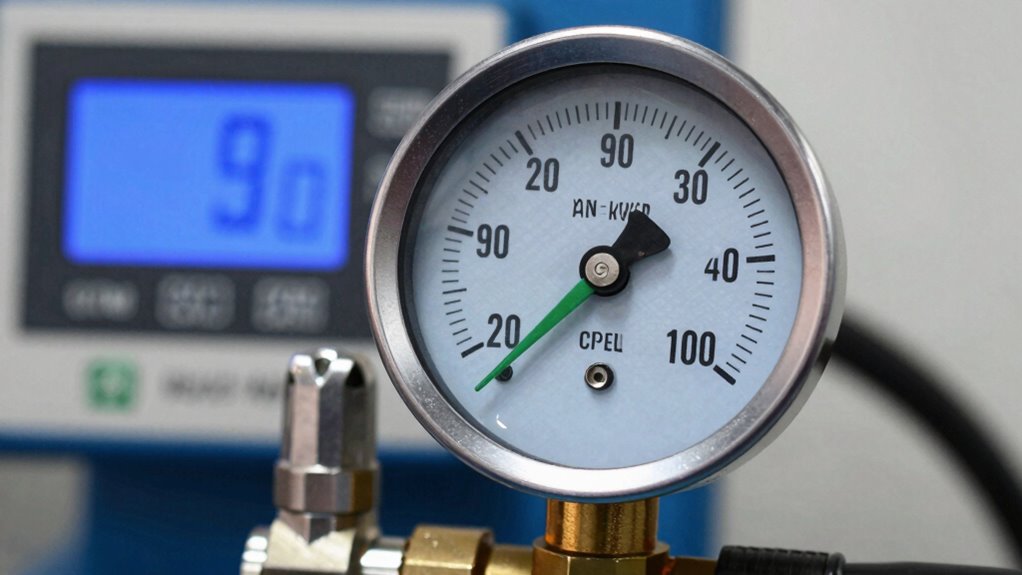
Have you ever wondered what the numbers on an air compressor really mean? It can be confusing, especially when trying to figure out whether PSI or CFM is more important for your needs. Both are critical, but they serve different purposes. PSI, or pounds per square inch, measures the pressure of the compressed air. Think of it as how hard the air pushes against surfaces. CFM, or cubic feet per minute, indicates the volume of air the compressor can deliver per minute. Knowing how these work together helps you choose the right machine for your projects.
Understanding PSI and CFM helps you pick the perfect compressor for your projects.
When considering PSI, remember that higher pressure isn’t always better. It’s essential for tasks requiring force, like spray painting or operating pneumatic tools that need a strong push. However, if your work involves tools that need a continuous flow of air, CFM becomes just as crucial. Without enough CFM, even a high PSI compressor can fall short, causing tools to sputter or stop working. Finding a balance between PSI and CFM ensures your compressor can handle the workload smoothly. Understanding air compressor ratings can help you better assess the overall performance and suitability of a machine for your projects.
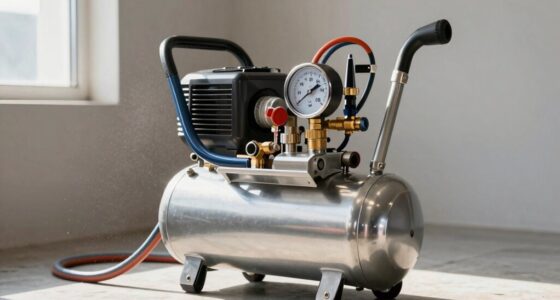
Compressed air storage plays a role here, too. A compressor with a sizable tank can store more compressed air, allowing for a steadier supply during peak demand. This storage capacity helps prevent pressure drops that could affect your work. If you’re using a hose that’s incompatible with your compressor or isn’t rated for the pressure you need, it can lead to leaks, bursts, or even safety hazards. Always check hose compatibility alongside PSI and CFM ratings to guarantee your setup is safe and efficient. Additionally, being aware of safety considerations is vital to prevent accidents during operation. Moreover, understanding how air system components interact can improve your setup’s reliability and safety.
Furthermore, selecting the right air compressor type can influence the balance of PSI and CFM that best suits your tasks, ensuring optimal performance and efficiency. The type of tools you plan to use is a good guide for prioritizing PSI and CFM. For instance, nail guns and impact wrenches often require higher PSI, but they also need enough CFM to operate continuously. On the other hand, smaller airbrushes or inflators might run fine at lower PSI and CFM ratings. Matching your compressor’s capabilities with your tools ensures peak performance and reduces wear and tear. Additionally, considering hose compatibility helps prevent potential safety issues and ensures your tools operate at optimal performance levels.
Ultimately, understanding what the numbers mean helps you make smarter choices. It’s not just about picking the most powerful compressor but selecting one that matches your specific needs. Consider your typical workload, the type of tools you’ll use, and the compatibility of your hoses. By paying attention to both PSI and CFM, along with compressed air storage and hose compatibility, you set yourself up for success, efficiency, and safety in all your pneumatic projects.
air compressor with high CFM for pneumatic tools
As an affiliate, we earn on qualifying purchases.
As an affiliate, we earn on qualifying purchases.
Frequently Asked Questions
How Does Altitude Affect PSI and CFM Performance?
Altitude effects can cause performance variations in your air compressor’s PSI and CFM. As you move higher, air density decreases, which means your compressor might produce lower PSI and CFM than at sea level. You might need to adjust or recalibrate your compressor to maintain ideal performance. Keep an eye on pressure gauges and CFM ratings to guarantee your tools work efficiently, regardless of altitude changes.
Can a Compressor With High PSI Operate at Low CFM?
A compressor with high PSI can operate at low CFM, but it’s like trying to push a river through a small pipe—performance drops. While it might seem powerful, it could strain your compressor’s durability and require more frequent maintenance. To keep it running smoothly, you’ll need to observe and maintain it regularly, especially if you’re pushing it to its limits. Proper care ensures longevity and reliable performance.
What Safety Precautions Are Needed When Adjusting PSI?
When adjusting PSI on your air compressor, always wear safety gear like goggles and gloves. Make sure the pressure regulation valve is properly functioning before making any changes. Slowly turn the regulator knob to avoid sudden pressure surges, and never exceed the recommended PSI for your tools. Checking for leaks and releasing pressure after adjustments adds extra safety. These precautions help prevent accidents and maintain safe operation.
How Do Temperature Changes Impact Compressor CFM?
Warmth’s gentle touch can influence your compressor’s performance, subtly altering its efficiency. As temperature effects rise, the air becomes less dense, leading to a decrease in CFM output. Conversely, cooler conditions enhance compressor efficiency by increasing air density. To maintain consistent performance, you should monitor ambient temperatures and consider moisture management, ensuring your compressor operates smoothly regardless of environmental changes.
Are PSI and CFM Equally Important for Pneumatic Tools?
You need both PSI and CFM for pneumatic tools, but CFM is often more essential for tool performance. If your tool requires high airflow, insufficient CFM can limit its power, regardless of PSI. To keep everything running smoothly, check tool compatibility and follow maintenance routines to prevent pressure drops. Balancing PSI and CFM ensures your compressor meets your tools’ demands, maximizing efficiency and lifespan.
portable air compressor with adjustable PSI
As an affiliate, we earn on qualifying purchases.
As an affiliate, we earn on qualifying purchases.
Conclusion
Just like a skilled conductor balances the orchestra, understanding PSI and CFM guarantees your compressor performs in harmony with your needs. Don’t get caught in the trap of focusing on just one; instead, consider both as essential notes in your tool’s symphony. When you grasp their true roles, you’ll be better equipped to choose the perfect compressor, turning your tasks into a masterpiece. Remember, mastery comes from knowing what truly matters.
air compressor tank capacity for continuous airflow
As an affiliate, we earn on qualifying purchases.
As an affiliate, we earn on qualifying purchases.
best air compressor for spray painting
As an affiliate, we earn on qualifying purchases.
As an affiliate, we earn on qualifying purchases.
Halloween Picks
halloween
As an affiliate, we earn on qualifying purchases.