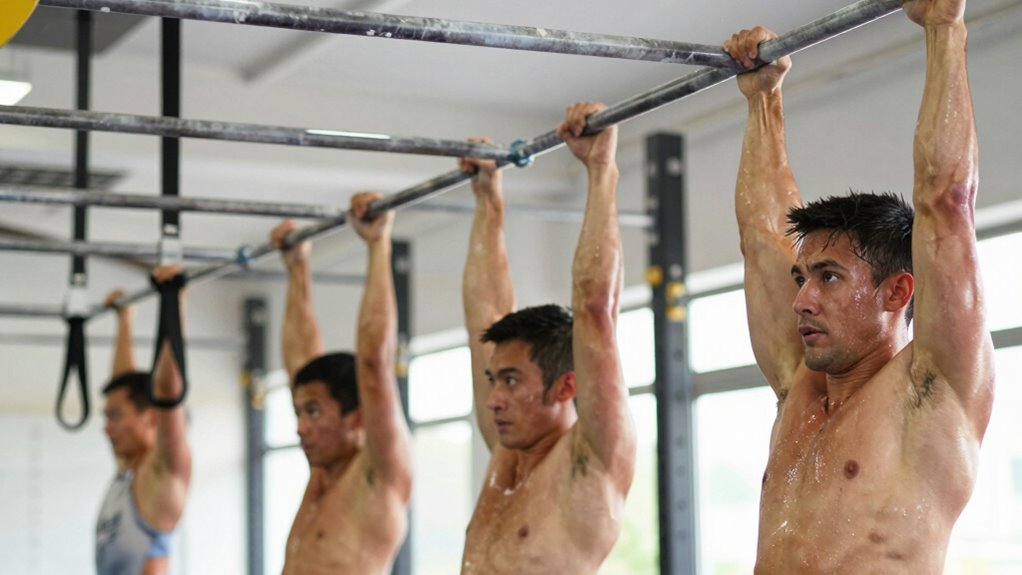

To progress with pull-ups, start by evaluating your ability and set realistic goals. Invest in a sturdy pull-up bar and consider gear like resistance bands to assist you. Strengthen your back and arms with exercises like rows and curls, and develop core stability with planks and hollow holds. Focus on perfecting your pull-up technique and track your progress regularly. There’s plenty more to explore to maximize your pull-up potential and build strength effectively.

Get the little things that make your day delivered free with Prime
- Fast, free delivery on millions of items
- Prime Video, Amazon Music and more included
- Member-only deals all year
Key Takeaways
- Start with assisted pull-ups using resistance bands to gradually build strength and confidence in the movement.
- Incorporate grip-strengthening exercises like Dead Hangs and Farmer’s Carries to enhance overall pull-up performance.
- Focus on core engagement techniques, such as Plank Holds and Hollow Body Holds, to improve stability during pull-ups.
- Implement progressive overload by increasing resistance or volume in complementary exercises like Bent-Over Rows and Lat Pulldowns.
- Set realistic, specific goals for pull-up numbers and celebrate milestones to maintain motivation and track progress effectively.
As an affiliate, we earn on qualifying purchases.
The Importance of Pull-Ups for Strength

Pull-ups are one of the most effective exercises for building upper body strength, especially if you’re looking to enhance your overall fitness. The pull-up benefits go beyond just aesthetics; they engage multiple muscle groups, including your back, shoulders, and arms. By incorporating pull-ups into your routine, you’ll experience significant strength development that translates to improved performance in other exercises and daily activities. Not only do they enhance grip strength, but they also promote core stability, making them a thorough workout. Plus, they can be easily modified to match your current fitness level. So, whether you’re a beginner or more advanced, embracing pull-ups can elevate your strength training and help you achieve your fitness goals. Proper technique ensures you maximize benefits and reduce the risk of injury.
resistance bands for assisted pull-ups
As an affiliate, we earn on qualifying purchases.
As an affiliate, we earn on qualifying purchases.
Assess Your Pull-Up Ability
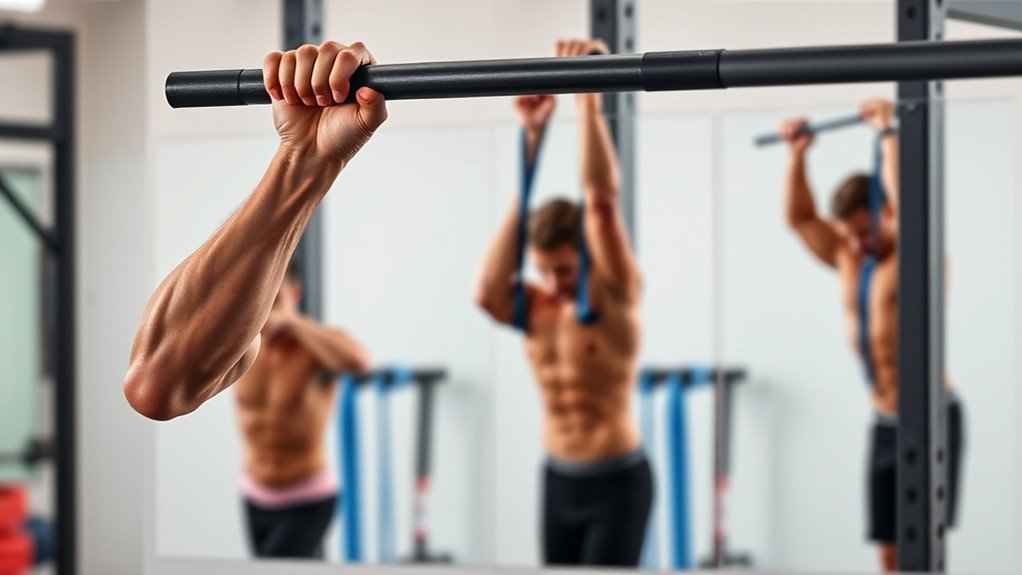
How do you know where to start your pull-up journey? A pull-up assessment is essential for determining your current ability and designing a tailored strength evaluation. Begin by testing how many unassisted pull-ups you can perform. Use the table below to categorize your results and identify your starting point.
| Pull-Up Count | Ability Level | Next Steps |
|---|---|---|
| 0-1 | Beginner | Assisted pull-ups, negatives |
| 2-4 | Intermediate | Eccentric training, banded pull-ups |
| 5-8 | Advanced | Regular pull-up sets |
| 9+ | Expert | Weighted pull-ups, variations |
This assessment helps you focus your training on the right areas, ensuring steady progress towards your pull-up goals.
grip strength training equipment
As an affiliate, we earn on qualifying purchases.
As an affiliate, we earn on qualifying purchases.
Essential Gear for Pull-Up Training
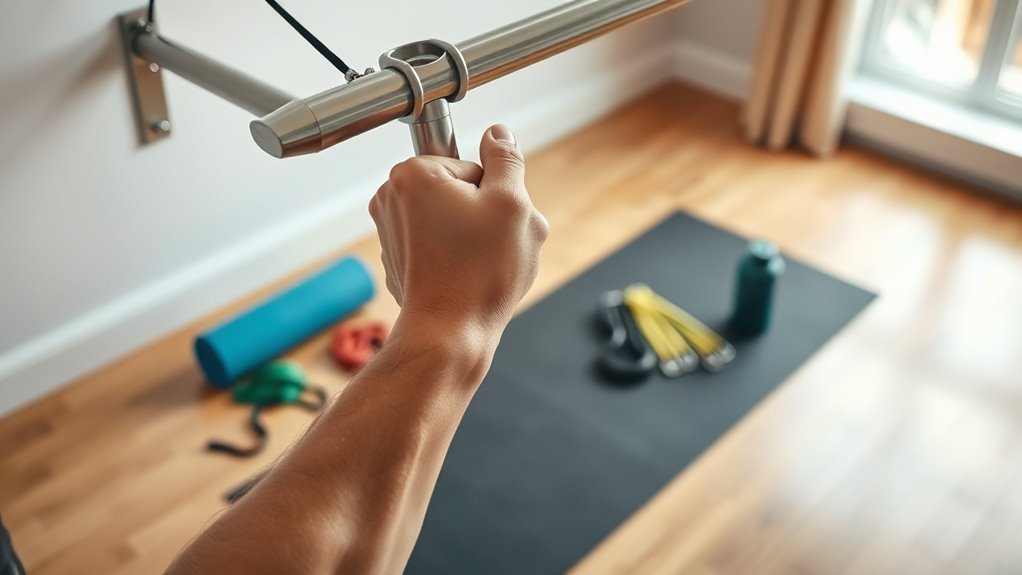
Having assessed your pull-up ability, the next step is to equip yourself with the right tools for effective training. A sturdy pull-up bar is essential; it provides a reliable grip and stability as you work on your form. Look for one that fits your space and can support your weight without wobbling. Additionally, resistance bands can be incredibly helpful. They assist in building strength by allowing you to perform modified pull-ups, gradually reducing the support as you progress. You can loop a band over the bar and place your foot or knee in it for added assistance. By investing in these key pieces of gear, you’ll set yourself up for success in your pull-up training journey.
As an affiliate, we earn on qualifying purchases.
Building a Strong Foundation: Strengthening Your Back and Arms
To effectively master pull-ups, you need a strong foundation in your back and arms. Strengthening these areas will make it easier to lift your body weight. Here are some effective back exercises and arm workouts to incorporate into your routine:
Building a strong back and arms is essential for mastering pull-ups and lifting your body weight effectively.
- Pull-ups: Start with assisted versions if needed, focusing on form.
- Bent-over rows: Use dumbbells or a barbell to target your back muscles.
- Bicep curls: Strengthen your arms and prepare them for the pull-up motion.
- Lat pulldowns: Mimic the pull-up movement and build your lat strength.
- Incorporate progressive overload into your training to continually challenge your muscles and promote strength gains. Understanding proper training programming ensures consistent progress and helps prevent plateaus. Additionally, paying attention to muscle recovery can optimize your strength development and reduce injury risk. Incorporating muscle activation techniques can also enhance your workout effectiveness by ensuring your muscles are properly engaged before heavy lifts. Regularly tracking your training progress can help you stay motivated and adjust your routines as needed.
Using Bands and Machines for Assisted Pull-Ups
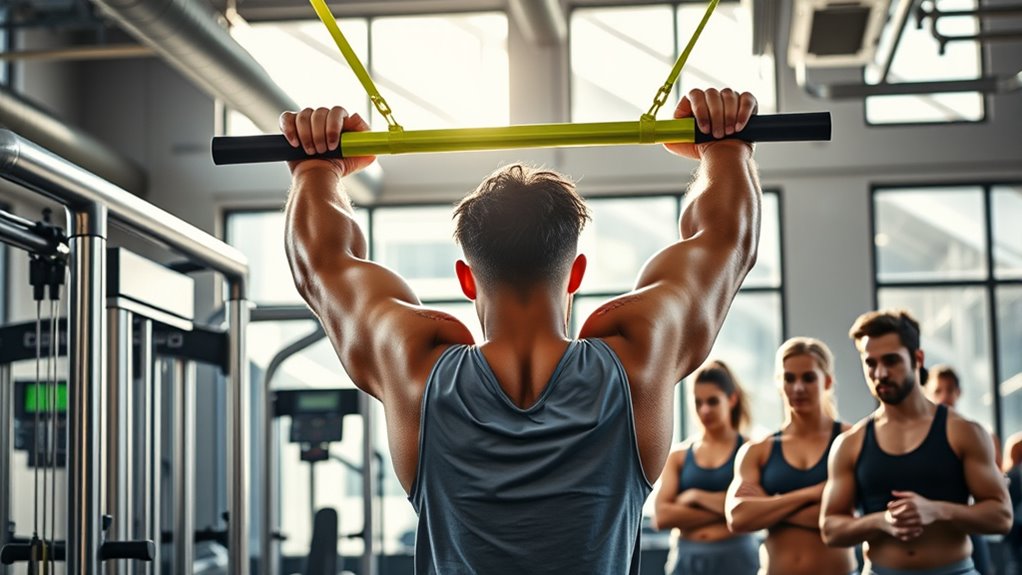
While mastering pull-ups can be challenging, using bands and machines for assistance can greatly ease the process. Band resistance helps you gradually build the strength needed to perform unassisted pull-ups. By attaching a resistance band to the pull-up bar and placing your knee or foot in it, you can reduce the weight you need to lift, allowing you to focus on your form and technique.
Alternatively, machine assistance offers another great option. Many gyms have assisted pull-up machines that let you adjust the weight to provide support as you pull yourself up. These tools not only boost your confidence but also help you develop the necessary strength to progress to unassisted pull-ups effectively.
Mastering Negative Pull-Ups for Better Strength
Negative pull-ups are an effective way to build the strength needed for unassisted pull-ups. By focusing on the eccentric training phase, you can enhance your muscle control and power. Here’s how to master them:
- Start from the top: Use a box or jump to the bar, getting your chin above it.
- Lower slowly: Descend as slowly as possible, aiming for a count of 3 to 5 seconds.
- Engage your muscles: Keep your shoulders down and engage your lats throughout the movement.
- Repeat regularly: Aim for 3 to 5 sets of 3 to 6 reps, increasing as your strength improves.
- Maintain proper form: Proper technique helps prevent injury and maximizes strength gains, especially during the eccentric phase. Proper technique is crucial for effective training.
Incorporating negative pull-ups into your routine will greatly prepare you for your first unassisted pull-up.
Developing Core Strength for Effective Pull-Ups

To perform effective pull-ups, you need a strong core for stability and control. Incorporating targeted exercises will help you build this essential strength, making each rep easier. Plus, mastering core engagement techniques can enhance your overall performance and reduce the risk of injury.
Importance of Core Stability
Core stability plays an essential role in your ability to perform effective pull-ups, as a strong core helps maintain proper body alignment and control throughout the movement. Here are some core stability benefits that enhance your pull-up performance:
- Improved Posture: A stable core supports proper alignment, reducing strain on your back.
- Increased Strength: Engaging your core allows for better transfer of power from your lower body to your upper body.
- Enhanced Control: Core stability helps you control your movements, preventing swinging and keeping your body straight.
- Injury Prevention: Strengthening your core reduces the risk of injuries by stabilizing your spine and supporting your joints.
Incorporating core stability exercises into your routine will greatly improve your pull-up performance.
Exercises for Core Strength
Building on the importance of core stability, incorporating specific exercises into your routine can greatly enhance your strength for effective pull-ups. Start with plank variations, like side planks and forearm planks, to engage your entire core. Hold these positions for 30-60 seconds, focusing on maintaining a straight line from head to heels. Next, add stability exercises such as dead bugs and bird dogs, which challenge your core while improving coordination. These movements help build the foundational strength needed for pull-ups. Finally, don’t forget to integrate leg raises and hanging knee tucks, as they target your lower abs and grip strength. Consistently practicing these exercises will prepare your core for the demands of pull-ups, ensuring better performance. Incorporating core engagement techniques can further optimize your workout and help prevent injury during training.
Core Engagement Techniques
Engaging your core effectively is essential for executing pull-ups with proper form and strength. By focusing on core activation, you’ll improve your stability and overall performance. Here are some techniques to enhance your core engagement:
- Plank Holds: Build endurance and stability by maintaining a plank position for 30 seconds to 1 minute.
- Dead Bugs: This stability drill helps coordinate your limbs while keeping your core tight.
- Hollow Body Holds: Engage your entire core by lying on your back and lifting your legs and shoulders off the ground.
- Russian Twists: Improve rotational strength and control, essential for stabilizing your body during pull-ups.
- Incorporate core engagement techniques regularly into your routine to develop the necessary strength and stability for more effective pull-ups.
Incorporate these drills into your routine, and you’ll find your pull-ups becoming more efficient and powerful.
Best Exercises to Complement Pull-Up Training

To improve your pull-up performance, focus on exercises that strengthen your back muscles and enhance your grip strength. Incorporating movements like rows and dead hangs can make a noticeable difference in your ability to perform pull-ups. Let’s explore some of the best options to boost your training results.
Strengthening Your Back Muscles
While pull-ups are a fantastic way to strengthen your upper body, complementing this exercise with targeted back workouts can greatly enhance your performance. Knowing your back muscle anatomy helps you choose effective exercises for peak strength and back muscle recovery. Here are four exercises to incorporate:
- Bent-Over Rows: Engage your lats and rhomboids for overall back strength.
- Deadlifts: Target your lower back and improve overall stability.
- Lat Pulldowns: Focus on your upper back, mimicking pull-up motion.
- Face Pulls: Strengthen rear deltoids and upper traps to support posture. Incorporating scalable exercise routines can help you gradually increase intensity and prevent overtraining. Understanding back muscle anatomy allows you to tailor your workouts more effectively for optimal results. Recognizing muscle recovery techniques can further enhance your progress and reduce injury risk.
Adding these exercises to your routine not only builds strength but also aids in muscle recovery, ensuring your back stays strong and ready for those pull-ups. Incorporating proper exercise technique and understanding back muscle anatomy can maximize your results and prevent injury.
Enhancing Grip Strength
Since grip strength plays an essential role in your ability to perform pull-ups effectively, incorporating specific exercises to enhance it can greatly boost your performance. Start with basic grip exercises like dead hangs, where you hang from a bar for as long as you can. Progress to more challenging grip variations, such as towel hangs or using fat grips, to build endurance and strength. Farmer’s carries are another excellent way to develop grip strength while engaging other muscle groups. Don’t forget to include wrist curls and reverse curls in your routine to target your forearms directly. By integrating these grip exercises, you’ll notice improved performance in your pull-ups and overall upper body strength.
Tips for Perfecting Your Pull-Up Technique

Perfecting your pull-up technique can make a significant difference in your strength training journey. Focus on these essential tips to refine your approach:
- Choose the Right Pull Up Grip: Experiment with overhand and underhand grips to find what works best for you.
- Maintain Proper Body Alignment: Keep your body straight and engage your core to prevent swinging.
- Control Your Movement: Avoid jerking motions; instead, pull yourself up smoothly and lower yourself slowly.
- Breathe: Inhale as you lower yourself and exhale when pulling up to optimize your energy.
Setting Realistic Goals and Tracking Your Progress

To make real progress with your pull-ups, you need to define clear goals that fit your current abilities. Once you’ve set those goals, tracking your progress will help you stay motivated and adjust your training as needed. Let’s explore how to create achievable targets and effectively monitor your improvements. Incorporating accountability strategies into your routine can further enhance your consistency and success.
Define Your Goals
Setting clear goals is essential for your pull-up journey. Effective goal setting not only helps you stay focused but also boosts your motivation. Here’s how to define your goals:
- Identify your starting point: Assess your current strength and number of pull-ups to set realistic milestones.
- Set specific goals: Rather than aiming to “get stronger,” target completing a certain number of pull-ups within a set timeframe.
- Break it down: Divide your main goal into smaller, manageable objectives, like improving grip strength or mastering negatives.
- Stay flexible: Adjust your goals as needed based on your progress and any challenges you face.
- Understand your current fitness level to tailor your progression plan effectively. Recognizing your baseline helps in creating a progressive overload plan that ensures steady improvement.
- Regularly review your progress to stay motivated and make necessary adjustments as you advance. Incorporating these motivation strategies will make your pull-up journey more enjoyable and achievable, especially when you monitor your improvement, which can provide a clear sense of accomplishment.
Track Your Progress
Once you’ve defined your goals, tracking your progress becomes essential in keeping you accountable and motivated. Start by recording each workout, noting the number of reps and sets you accomplish. This progress tracking helps you see how far you’ve come and where you need to improve. Celebrate your milestone achievements, whether it’s performing your first pull-up or increasing your reps. These small victories boost your confidence and keep you engaged in your training. Consider using apps or journals to visualize your progress over time; seeing your improvements can be incredibly motivating. Remember, consistency is key, and tracking your journey will help you stay focused on reaching your ultimate pull-up goals.
Frequently Asked Questions
How Often Should I Practice Pull-Ups Each Week?
You should practice pull-ups about two to three times a week for peak results. This pull-up frequency allows your muscles to recover while still building strength. Incorporate them into your training schedule alongside other upper body exercises. Make sure to listen to your body; if you feel fatigued, take an extra rest day. Consistency is key, so find a routine that works for you and stick with it for the best progress.
Can Pull-Ups Help With Weight Loss?
Yes, pull-ups can aid in weight loss. They help you build muscle, which in turn increases your resting metabolic rate, allowing you to burn more calories even at rest. To effectively lose weight, you’ll need to maintain a caloric deficit while incorporating strength training like pull-ups. By combining muscle gain with a proper diet, you’ll enhance your body’s ability to shed fat, making pull-ups a valuable addition to your fitness routine.
What Is the Best Diet for Pull-Up Training?
The best diet for pull-up training focuses on high-quality protein sources and proper meal timing. Incorporate lean meats, dairy, legumes, and nuts to support muscle repair and growth. Aim to eat a protein-rich meal about 30 minutes after your workout for ideal recovery. Don’t forget to balance your diet with healthy carbs and fats, fueling your body effectively. Staying hydrated and maintaining a consistent eating schedule will enhance your performance too.
Are There Age Restrictions for Starting Pull-Up Training?
No, there aren’t strict age restrictions for starting pull-up training. It’s important to contemplate youth fitness and individual readiness. Kids as young as 6 can begin with modified exercises, while older teens can focus on full pull-ups. Training adaptability is key; you should adjust the difficulty based on your strength level and experience. Always prioritize safety and proper form to build a strong foundation and avoid injuries.
How Can I Prevent Injuries While Training for Pull-Ups?
To prevent injuries while training for pull-ups, focus on strength balance. Start with proper warm-ups and include exercises that strengthen your shoulders, back, and core. Always use correct form; it’s key to avoiding strain. Gradually increase your training intensity and volume, listening to your body’s signals. Incorporating rest days is essential for recovery. Finally, consider working with a coach to guarantee you’re on the right path to injury-free progress.
Conclusion
Incorporating pull-ups into your fitness routine can transform your strength and endurance. By evaluating your ability and using the right gear, you can effectively progress. For example, consider Sarah, who struggled with her first pull-up but dedicated a few months to band-assisted training and core exercises. Now, she effortlessly performs multiple pull-ups. Remember, it’s all about setting realistic goals and celebrating your progress—each small step gets you closer to mastering this powerful exercise!
NFL season / tailgating Picks
team gear
As an affiliate, we earn on qualifying purchases.