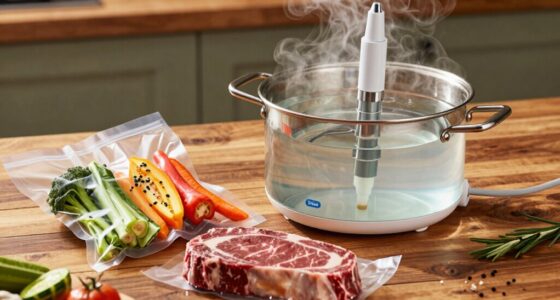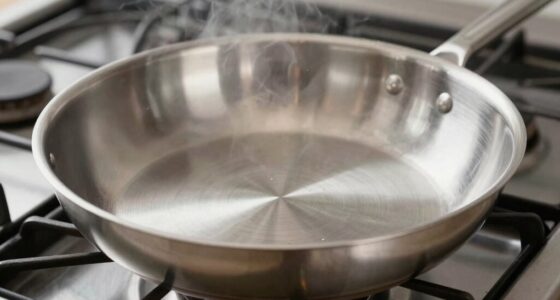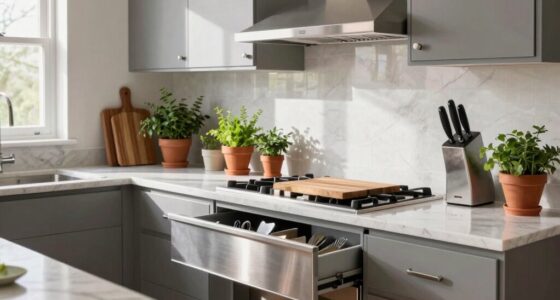
Nobody tells you that heat doesn’t spread evenly in your kitchen. It moves toward hot spots near ovens, stoves, or reflective surfaces, creating unique zones that can impact your cooking. Airflow, materials, and layout all influence how heat concentrates or disperses, often trapping heat in corners or behind appliances. Understanding these factors helps you place your utensils and manage spots more effectively. If you keep exploring, you’ll discover how to master these heat zones for better cooking results.

Get the little things that make your day delivered free with Prime
- Fast, free delivery on millions of items
- Prime Video, Amazon Music and more included
- Member-only deals all year
Key Takeaways
- Heat in kitchens is unevenly distributed, creating distinct temperature zones that affect cooking consistency.
- Materials and appliances influence local heat reflection and absorption, impacting nearby items.
- Proper airflow and ventilation are crucial for balancing heat and preventing hot spots.
- Small adjustments, like repositioning appliances or opening vents, can significantly improve heat management.
- Understanding heat zones enhances cooking precision and overall kitchen efficiency.
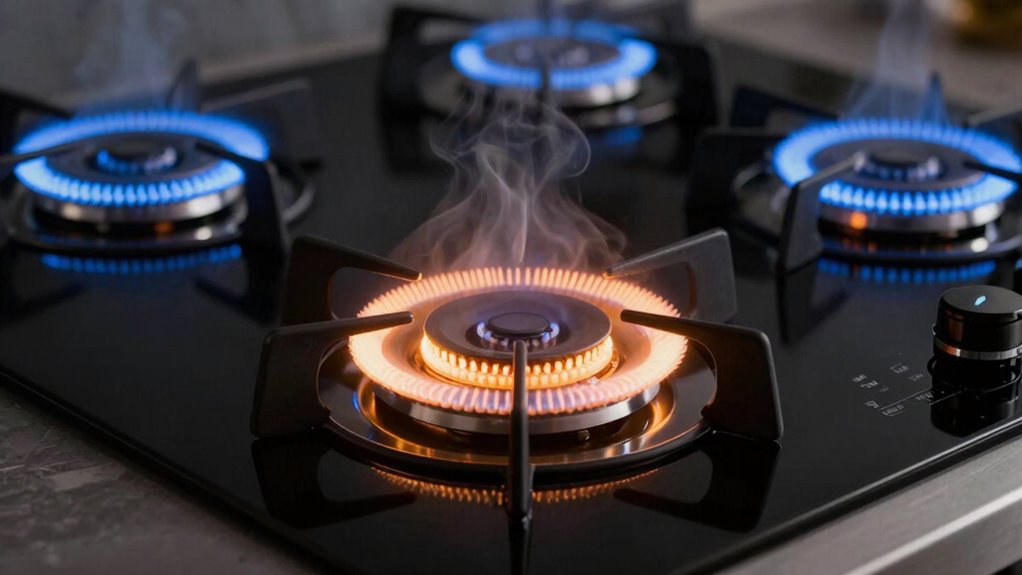
Have you ever wondered why some areas of your kitchen seem hotter than others? It’s not just about the stove or oven; it’s about how heat moves and distributes throughout the space. Understanding kitchen heat zones can transform the way you cook, making your food more consistent and your time more efficient. When you analyze heat distribution, you’ll notice that certain spots tend to be hotter because of the way heat sources emit energy and how the airflow circulates in your kitchen. For instance, areas near the oven or stove naturally have higher cooking temperatures, but even zones farther away can be affected by drafts, insulation, and the layout of cabinets.
Understanding heat flow in your kitchen helps improve cooking consistency and efficiency.
Your cooking temperature isn’t just controlled by your appliances; it’s also influenced by the environment around them. If you place a cutting board or utensils near a hot zone, they might heat up faster than expected, altering your cooking process. This is especially important when preparing delicate dishes that require precise heat control. Many home cooks overlook this, assuming the entire kitchen is evenly heated, but heat doesn’t spread uniformly. Instead, it creates distinct zones, with some spots being warmer and others cooler. Knowing where these zones are can help you plan your cooking better and avoid unexpected surprises in your recipes.
Heat distribution is affected by many factors, including cabinet placement, the materials used in your kitchen, and even the way your appliances are vented. For example, stainless steel appliances tend to reflect heat, creating hot spots nearby, while tile floors can absorb and radiate heat differently than wooden surfaces. Understanding heat transfer can be crucial in identifying how heat moves and accumulates in specific areas. If your kitchen has poor airflow, heat can become trapped in certain areas, intensifying the effect. This is why some kitchens feel warmer in corners or behind appliances, where air circulation is limited. Recognizing these patterns lets you optimize your space, placing heat-sensitive items away from hot zones and making sure your cooking process is more reliable. Additionally, understanding heat transfer can help you implement better solutions to manage temperature variations effectively. Small changes, like opening a window or using a vent fan, can significantly improve air circulation and heat distribution.
Something many people don’t realize is that even small adjustments can improve heat management. Using fans, adjusting appliance placement, or adding insulation can help create a more balanced heat distribution. By understanding your kitchen’s heat zones, you gain control over the environment, leading to more even cooking and less frustration. When you pay attention to how heat moves around your space, you unlock the secrets to a more efficient, comfortable, and precise cooking experience. Ultimately, knowing your kitchen’s heat zones isn’t just about comfort—it’s about mastering your environment to become a better cook.
Products Worth Considering

LEVOIT Vital 100S-P Smart Air Purifier with Washable Pre-Filter

LG C2 Series 65-Inch OLED evo 4K Smart TV (OLED65C2PUA, 2022)

Samsung 42-Inch Class OLED S90F 4K Smart TV (2025)
As an affiliate, we earn on qualifying purchases.
Frequently Asked Questions
How Do I Identify Heat Zones in My Kitchen?
To identify heat zones in your kitchen, start by observing your stove’s heat zone placement and how each area heats differently. Use an infrared thermometer to check temperature calibration across the surface, noting hot spots and cooler zones. You can also run tests with water or oil to see where it sizzles fastest. This helps you understand your stove’s heat zones, so you can cook more precisely and avoid hot spots.
Can Heat Zones Affect Cooking Times?
Think of your stove as a landscape of varying heat, where heat zones influence your cooking temperature. Yes, heat zones can affect cooking times because uneven heat distribution causes some areas to cook faster or slower. You might need to adjust your technique or move food around to guarantee even cooking. Recognizing these zones helps you manage your heat more effectively, making your dishes turn out perfectly every time.
Are Heat Zones Safe for Children?
Heat zones in your kitchen can be safe for children if you’re cautious. You should always supervise your kids around hot surfaces and guarantee they understand the dangers of heat exposure. Use protective barriers or covers on stove knobs, and keep children away from high-temperature zones. By prioritizing child safety and teaching proper awareness, you minimize risks and help prevent accidents related to heat exposure.
How Often Should I Adjust Heat Zones?
Think of your heat zones as delicate musical instruments that need tuning. You should adjust heat zones as often as necessary during cooking, especially when you notice changes in simmering or boiling. Regular heat zone maintenance guarantees consistent cooking safety, preventing overheating or undercooking. Keep an eye on your dishes, and tweak the zones proactively, so your cooking stays harmonious and safe, avoiding surprises in the kitchen symphony.
Do Heat Zones Impact Energy Efficiency?
Heat zones do impact energy efficiency because they influence your kitchen’s energy consumption. By strategically placing appliances and adjusting heat zones, you can minimize unnecessary energy use, avoiding waste and reducing costs. Proper appliance placement guarantees each zone heats efficiently, preventing overuse of energy. When you optimize heat zones, you make your kitchen more energy-efficient, saving money and reducing your environmental footprint over time.
Conclusion
Understanding your kitchen’s heat zones is like mastering a symphony—you hold the baton, guiding each section to create harmony. When you know where the heat peaks and dips, you can cook with confidence, avoiding burnt notes and undercooked surprises. Think of your stove as a map, revealing the secret pathways to perfect dishes. Embrace this knowledge, and your cooking will become a melody of flavor, resonating beautifully every time you step into your kitchen.