
TL;DR

Get the little things that make your day delivered free — and shop member deals
- Fast, free delivery on millions of items
- Access to Prime Big Deal Days deals on October 6–7
- Prime Video, Amazon Music and more included
Self-improving artificial intelligence is increasingly being explored for optimizing data center operations, including power and cooling systems. Industry interest is rising, but detailed implementations remain unconfirmed. This development could significantly impact data center efficiency and sustainability.
Industry analysts and technology observers report a rising interest in self-improving artificial intelligence systems that could significantly alter how data centers manage power, cooling, and operations. Although specific implementations are not yet confirmed, experts suggest that these AI systems could enhance efficiency and sustainability in data center management, making this a key area of focus for future technological development.
Recent industry trends show a spike in search interest and coverage around self-improving AI systems, indicating growing attention to their potential application in data centers. These AI systems are described as capable of autonomously optimizing operational parameters, including power consumption and cooling efficiency, without continuous human intervention. While concrete deployments remain unconfirmed, several industry insiders and research groups suggest that such AI could adapt in real-time to changing workloads and environmental conditions, reducing energy waste and operational costs.
Experts emphasize that the core feature of these AI systems is their ability to ‘self-improve’ through machine learning, continuously refining their algorithms based on operational data. This could lead to more precise control of cooling systems and power distribution, which are critical for data centers that consume vast amounts of energy. The potential for these AI systems to predict failures, optimize resource allocation, and adapt dynamically is seen as a promising development, although detailed technical implementations are still under development or undisclosed.
Industry sources note that the interest in self-improving AI is driven by broader trends toward sustainability, cost reduction, and increased automation in data center operations. Major technology firms and data center operators are reportedly exploring pilot projects or research collaborations, but no large-scale deployments have been publicly confirmed.
Potential Impact on Data Center Efficiency and Sustainability
The adoption of self-improving AI systems in data centers could lead to substantial improvements in energy efficiency, reducing operational costs and environmental impact. As data centers are among the largest consumers of electricity globally, even marginal efficiency gains could translate into significant savings and emissions reductions. This development aligns with broader industry goals of achieving sustainability and lowering carbon footprints, making it a critical area of innovation.
Furthermore, autonomous optimization could enhance reliability and uptime, decreasing the likelihood of failures related to power and cooling systems. This could translate into lower maintenance costs and improved service quality for cloud providers, financial institutions, and other organizations reliant on data infrastructure. The broader adoption of such AI could also accelerate industry standards around automation and energy management, shaping future regulations and best practices.
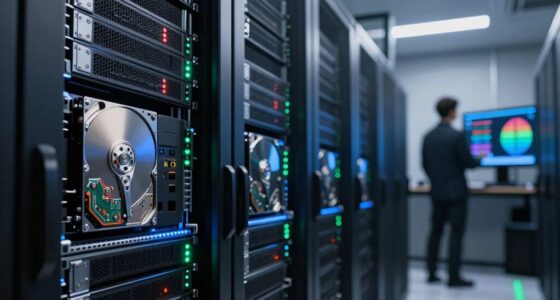
data center cooling system automation
As an affiliate, we earn on qualifying purchases.
As an affiliate, we earn on qualifying purchases.
Rising Industry Interest in Autonomous Data Center Technologies
Over the past few years, data center operators and technology companies have increasingly emphasized automation, AI, and machine learning to improve efficiency. Current solutions often involve rule-based systems or basic predictive analytics, but the concept of self-improving AI represents a potential leap forward. Industry interest has surged recently, driven by the urgent need to reduce energy consumption amid rising operational costs and environmental concerns.
While the idea of fully autonomous, self-improving AI systems remains largely in research or pilot phases, several industry reports and analyst commentaries highlight a growing focus on this area. The trigger for this increased attention appears to be a combination of technological advancements in AI, increased pressure for sustainability, and the desire to cut costs in a highly competitive market. However, specific projects, companies, or implementations have not been publicly confirmed, and the details of how these systems will function at scale remain uncertain.
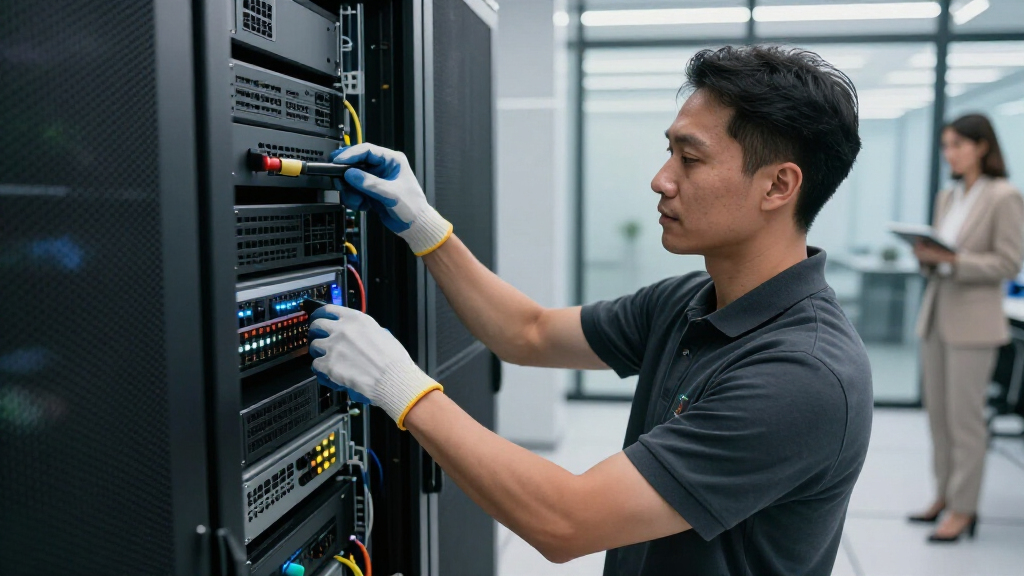
AI-powered data center power management
As an affiliate, we earn on qualifying purchases.
As an affiliate, we earn on qualifying purchases.
Unconfirmed Details and Development Uncertainties
While industry interest and theoretical benefits are clear, specific implementations of self-improving AI in data centers have not been publicly confirmed. It remains uncertain how quickly these systems will be developed, what technical challenges they will face, or whether they will achieve widespread adoption in the near term. Experts caution that much of the current discussion is speculative, based on technological potential rather than proven deployments.
Additionally, questions remain about the safety, reliability, and regulatory implications of fully autonomous AI systems managing critical infrastructure. The timeline for practical, large-scale adoption is still unclear, and further research and testing are needed to validate these concepts.
self-improving AI for data centers
As an affiliate, we earn on qualifying purchases.
As an affiliate, we earn on qualifying purchases.
Next Steps for Industry Adoption and Validation
Industry stakeholders are expected to continue research and pilot projects exploring self-improving AI for data center management. Key milestones include developing reliable prototypes, conducting real-world testing, and establishing safety standards. Observers anticipate that within the next few years, more concrete evidence of practical deployments will emerge, possibly accompanied by industry guidelines or regulatory frameworks.
Major technology firms and data center operators may announce collaborations or pilot programs aimed at demonstrating these AI systems’ capabilities. Monitoring these developments will be essential to understanding how quickly and effectively the technology will integrate into mainstream operations.
energy-efficient data center cooling solutions
As an affiliate, we earn on qualifying purchases.
As an affiliate, we earn on qualifying purchases.
Key Questions
What is self-improving AI in data centers?
Self-improving AI refers to artificial intelligence systems capable of autonomously optimizing operations, such as power and cooling management, through continuous learning and adaptation without human intervention.
Are there any current examples of this technology in use?
As of now, there are no publicly confirmed large-scale deployments of fully self-improving AI systems in data centers. Most discussions remain at the research or pilot stage.
What benefits could this bring to data centers?
Potential benefits include increased energy efficiency, reduced operational costs, improved reliability, and enhanced sustainability by lowering carbon emissions.
What challenges might hinder adoption?
Technical challenges include ensuring safety, reliability, and robustness of autonomous systems. Regulatory and security concerns also pose hurdles before widespread adoption can occur.
When might we see broader adoption of self-improving AI in data centers?
Industry experts suggest that practical, large-scale applications could still be several years away, depending on technological advancements and regulatory developments.
Source: rss
NFL season / tailgating Picks
team gear
As an affiliate, we earn on qualifying purchases.