Creating a guest Wi-Fi network is essential for keeping your main network secure. Log into your router, find the guest network settings, and enable it with a unique SSID and strong password. This isolates guest traffic, protects your data, and prevents unauthorized access. You can also set bandwidth limits and time restrictions to manage usage effectively. Curious about customizing your guest network or troubleshooting common issues? There’s more to discover that can enhance your guests’ experience.

Get the little things that make your day delivered free with Prime
- Fast, free delivery on millions of items
- Prime Video, Amazon Music and more included
- Member-only deals all year
Key Takeaways
- Setting up a guest Wi-Fi network enhances security by isolating guest traffic from your main network, protecting sensitive data from unauthorized access.
- A unique SSID and strong password for the guest network helps maintain privacy and prevents unauthorized users from connecting.
- Limiting bandwidth on the guest network ensures that guests do not hog resources, maintaining optimal performance for the main network.
- Regularly updating router firmware and monitoring guest activity can help identify and mitigate security vulnerabilities.
- Providing a guest Wi-Fi network improves customer satisfaction in businesses by offering convenience and encouraging longer visits.
As an affiliate, we earn on qualifying purchases.
Step-By-Step Guide to Setting Up a Guest Wi-Fi Network
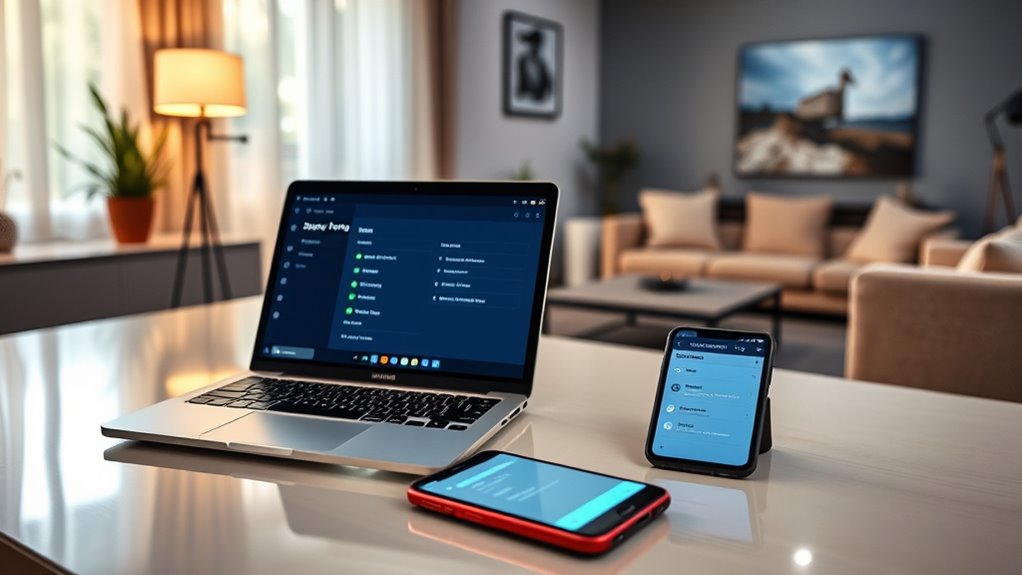
Setting up a guest Wi-Fi network can be done in just a few simple steps, making it easy for you to provide internet access to visitors without compromising your main network’s security. First, log into your router’s settings through your web browser. Look for the “Guest Network” option in the Wi-Fi management section. Enable it, and create a unique SSID and password. Consider limiting the guest network’s bandwidth to guarantee your main network runs smoothly. You’ll appreciate the guest network benefits, like keeping your personal devices safe and isolating guest traffic. Finally, verify the guest network is easily identifiable, so visitors know how to connect. Following these steps, you’ll enhance both convenience and security during guest visits.
As an affiliate, we earn on qualifying purchases.
Why Security Matters for Your Guest Wi-Fi Network
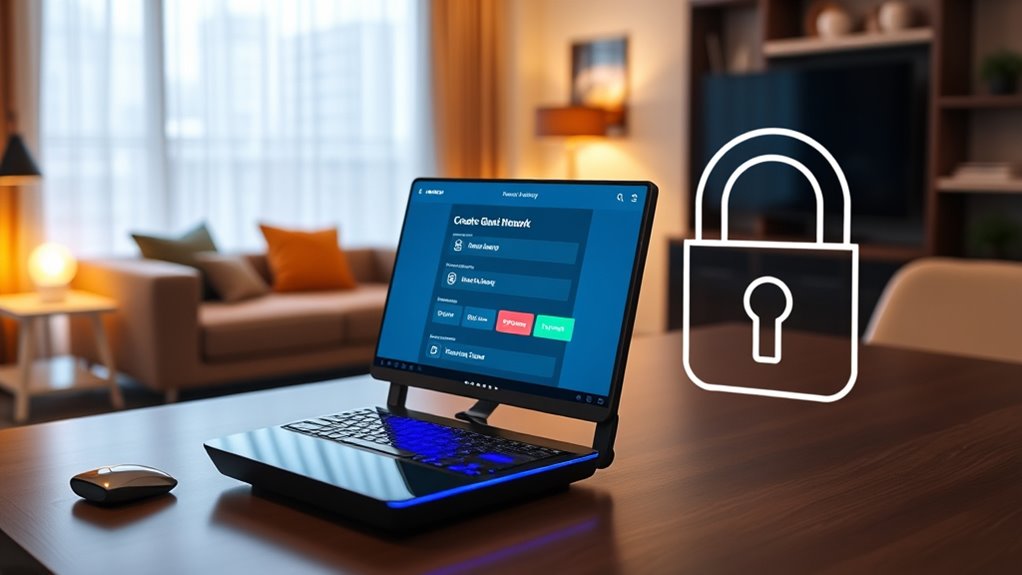
While creating a guest Wi-Fi network offers convenience, it’s essential to prioritize security to protect your main network and devices. Neglecting security can expose you to network vulnerabilities and unauthorized access, putting your personal information at risk. Here are three key reasons why security matters:
- Protects Sensitive Data: A secure guest network prevents intruders from accessing your primary devices and sensitive information.
- Reduces Network Vulnerabilities: By isolating guest traffic, you minimize the chances of malware spreading to your main network.
- Maintains Network Performance: A secure guest network guarantees that unauthorized users can’t hog bandwidth, keeping your connection fast and reliable.
- Enhances Privacy: Implementing security measures helps safeguard your smart home privacy from potential breaches.
Take the time to secure your guest network, and you’ll enjoy peace of mind while hosting visitors.
As an affiliate, we earn on qualifying purchases.
Customize Your Guest Network: Choose a Catchy Name and Strong Password
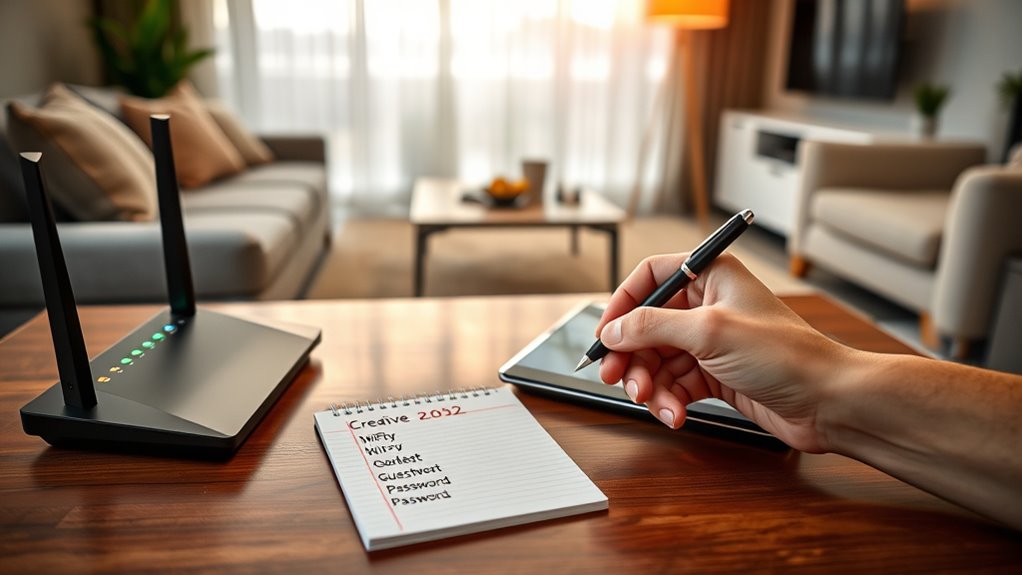
When setting up your guest network, a catchy name can make it memorable for visitors. You’ll also want to guarantee your password is robust to keep your network secure. Let’s explore how to create a unique name and a strong password that protects your connection.
Memorable Network Name
A catchy network name can make a lasting impression on your guests and help them easily identify your Wi-Fi. Choosing the right name balances fun and professionalism, enhancing your guest experience. Here are some ideas to inspire you:
- Quirky Names: Use humor or pop culture references, like “FBI Van #42” or “Pretty Fly for a Wi-Fi.”
- Professional Names: If you prefer a more formal approach, consider names like “Smith Family Wi-Fi” or “Conference Room Connection.”
- Personalized Touch: Combine elements of your personality or interests, like “BookLover’s Wi-Fi” or “TravelBug Network.”
- Security Consideration: Remember that a strong password and proper network segmentation are essential for safeguarding your main network while offering guest access. Additionally, understanding the importance of network segmentation helps prevent unauthorized access to your primary devices and data. Incorporating smart home security devices can further enhance your network’s safety and monitor connected devices.
Whichever style you choose, a memorable network name sets a welcoming tone and makes connecting seamless for your guests.
Robust Password Security
Choosing a catchy name for your guest Wi-Fi is just the beginning; robust password security is equally important to guarantee a safe online experience. To protect your network, opt for a password with high complexity—this means using a mix of uppercase and lowercase letters, numbers, and special characters. A strong password should be at least 12 characters long, making it harder for unauthorized users to gain access.
Additionally, verify your guest network employs the latest encryption standards, like WPA3. This provides an extra layer of security, safeguarding your data from potential threats. Regularly updating your password can further enhance security, keeping your network safe and your guests connected without compromising your privacy.
As an affiliate, we earn on qualifying purchases.
How to Control Guest Access: Time Limits and Device Restrictions

Controlling guest access to your Wi-Fi network is essential for maintaining both security and performance. By implementing time limits and device restrictions, you can manage how guests use your connection effectively. Here are three strategies to help you:
Managing guest access to your Wi-Fi is crucial for security and performance; time limits and device restrictions can help.
- Set Time Limits: Allow guests access for specific periods, guaranteeing they can’t stay connected indefinitely.
- Enforce Device Restrictions: Limit the number of devices each guest can connect, preventing network overload and maintaining speed.
- Schedule Access: Create windows for guest access, like during events or business hours, to keep your network secure during off-peak times.
These measures not only enhance security but also guarantee a better experience for both guests and regular users.
Troubleshooting Common Guest Wi-Fi Issues
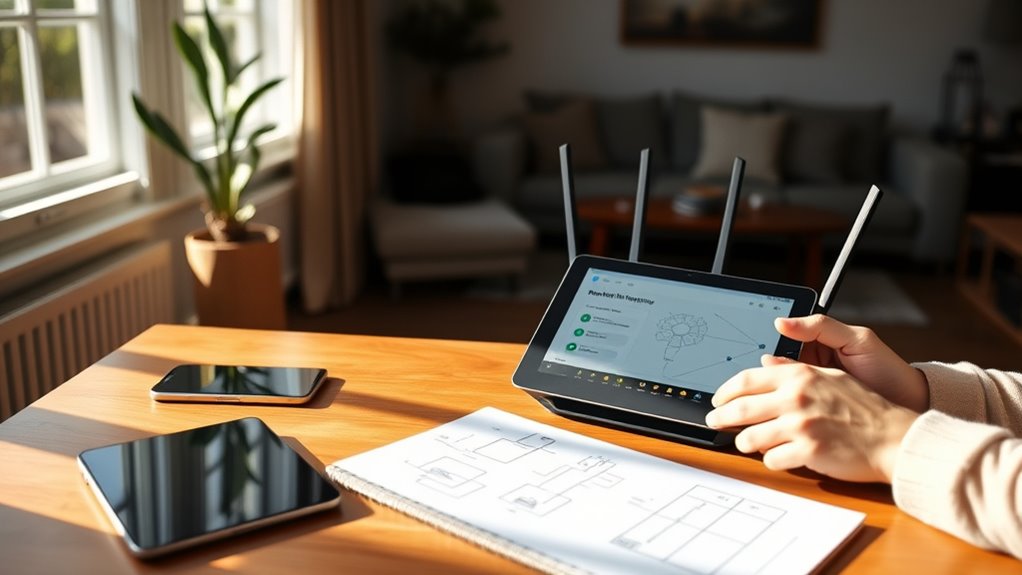
Even with effective measures in place for guest access, issues can still arise that disrupt the experience. Here are some common problems you might encounter and how to address them:
| Issue | Solution |
|---|---|
| Weak network signal | Move the router closer to the area or consider a Wi-Fi extender. |
| Device compatibility | Verify guests are using devices that support your network’s standards. |
| Frequent disconnections | Check for interference from other devices and adjust the channel settings. |
| Slow speeds | Limit bandwidth usage by restricting certain activities or limiting devices. |
| Security concerns | Regularly update your network passwords and enable guest network encryption to protect your main network. |
Adding network security measures can help prevent potential vulnerabilities and ensure a safer guest Wi-Fi experience. Additionally, implementing encryption protocols is essential for safeguarding sensitive data transmitted over the network. Ensuring your network utilizes standardized Wi-Fi protocols can improve compatibility and performance for all connected devices. Regularly reviewing and updating your extension cord standards can also help prevent security risks associated with outdated or unsafe equipment.
Ensuring a Seamless Experience for Your Guests
Ensuring a seamless experience for your guests, it’s essential to prioritize their connectivity needs from the moment they arrive. Focusing on guest satisfaction means providing them with reliable connectivity options. Here are three key steps to enhance their experience:
- Simple Access: Ascertain that the Wi-Fi network name and password are clearly displayed, making it easy for guests to connect without hassle.
- Strong Signal: Position your router strategically to cover all areas, reducing dead zones and ensuring a stable connection.
- Support Availability: Offer prompt assistance for any connectivity issues, whether through staff on-site or a dedicated helpline.
- Accountability and Goal-Setting: Implementing accountability measures can help in maintaining consistent network performance and addressing issues proactively.
Frequently Asked Questions
Can I Set up a Guest Wi-Fi on My Mobile Hotspot?
Yes, you can set up a guest Wi-Fi on your mobile hotspot, but there are limitations. Most mobile hotspots don’t support separate guest networks like traditional routers. To maintain guest network security, you might consider using a VPN to protect your data. Keep in mind that using a mobile hotspot might limit your speed and data usage, so monitor your connection to guarantee a smooth experience for your guests.
How Many Devices Can Connect to a Guest Wi-Fi Network?
You can typically connect around 10 to 50 devices to a guest Wi-Fi network, but this varies based on your router’s specifications. Keep in mind that as you increase the number of devices, connection stability may decrease. Too many devices can lead to slower speeds and dropped connections. It’s a good idea to check your router’s manual for specific device limits to guarantee peak performance for everyone connected.
Will a Guest Network Slow Down My Main Wi-Fi?
A guest network is like a separate room in your home; it keeps your main space secure while allowing visitors to connect. While it can impact your main Wi-Fi’s performance, it largely depends on bandwidth allocation. If you’ve got plenty of bandwidth, you won’t notice a significant slowdown. Proper network security measures help guarantee that guests can’t access your primary network, allowing you to enjoy both convenience and safety.
Can I Access My Main Network From the Guest Network?
No, you can’t access your main network from the guest network. Guest access is designed to enhance network security by isolating connected devices from your primary network. This keeps your main devices safe from potential vulnerabilities that guests might introduce. When you set up a guest network, it’s meant to provide internet access without compromising the integrity of your main network, ensuring you maintain control over your personal data and devices.
Is It Possible to Hide My Guest Wi-Fi Network?
Yes, you can totally hide your guest Wi-Fi network! It’s like putting a cloak of invisibility around your connection. By adjusting your router’s settings, you can disable the SSID broadcast, enhancing your network security. This means guests won’t see your network unless you give them the exact name. Just remember, while you’re providing guest access, keeping your main network safe is essential, so always stay vigilant with your settings!
Conclusion
Setting up a guest Wi-Fi network is like rolling out the welcome mat for your visitors—it’s an invitation to connect while keeping your home safe. By prioritizing security, customizing your network, and managing access, you create a seamless experience that leaves a positive impression. Don’t let connectivity issues spoil the moment; troubleshoot common problems to guarantee everything runs smoothly. With these steps, your guests can enjoy the digital world without compromising your privacy.
Fall Picks
fall essentials
As an affiliate, we earn on qualifying purchases.